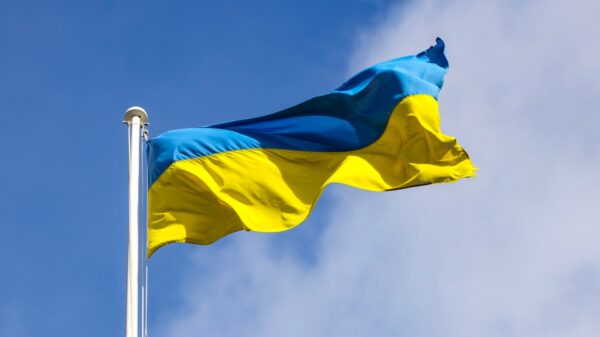
It has been more than four years since Russia’s full-scale invasion of Ukraine, and somehow, diplomatic efforts have not proven to bring any kind of success in restoring peace in the region. Despite numerous economic sanctions imposed on Russia and table negotiations headed by a variety of external actors, it seems the two European leaders struggle to find a path towards reconciliation. As of now, the Kremlin has announced that Russia is willing to resume US-mediated negotiations with Ukraine but is not ready to concede on territorial demands.
So the question one may ask is the following: Why, after so many attempts to bring Moscow and Kyiv to the negotiating table, does a genuine settlement remain so elusive? Perhaps we have been asking the wrong question about Vladimir Putin. In his newly revised book We Need to Talk About Putin, Russian politics expert and honorary professor at UCL Mark Galeotti argues that the West has consistently misunderstood the Russian president by treating him as a uniquely calculating mastermind. His analysis offers a different way of understanding why the war remains so difficult to end.
Putin isn’t Playing Chess
Many Western commentators assume Putin’s behaviour is guided by a grand masterplan, built on great philosophers’ ideologies, to take over Europe. In other words, every aspect of Russian foreign policy should be understood as a component of this framework. This assumption is very misleading. This is where Galeotti introduces the judoka metaphor. In simple terms, Putin identifies opportunities, exploits their weaknesses and adapts his strategy based on the situation.
Let’s look at the ongoing military campaign in Ukraine. When Putin decided to invade Ukraine in 2022, he expected the takeover to be completed quickly. Yet, here we are, four years later, and Russia has failed to occupy more than 20% of Ukrainian territory. Ukraine’s unexpected resistance drove Russia to adapt its tactics – prolong a war of attrition and exhausting Western countries in the hope they stop sending financial and military aid to Ukraine. As Galeotti thoroughly highlights, “He relies on quickly seizing any advantage he sees, rather than on a careful strategy”.
Putin’s Environment Has a Bigger Impact Than You Think
To understand the enigmatic leader, one must grasp the political environment surrounding him. It is important to remember that Putin is not Russia. In other words, he is not operating in a vacuum – political elites, economic interests, and security officials among others all exert some kind of influence over his decisions. Putin sets the broad direction, and then institutions inform him of their actions following these guidelines. In short, the system is personalised around him: a phenomenon Galeotti coins “Putin squared”. Nonetheless, four years on, it would give an incomplete picture to characterise the Ukraine invasion as a simple foreign policy decision. Indeed, the war has created new interests and incentives around continuing it.
In Russia, the war is framed to the public as a necessary mobilisation to confront the West, especially in countering European efforts to militarily or financially support Ukraine. Moreover, Putin puts much importance on saving face to Russian society. As Galeotti puts it, to Putin, “security and respect are based on strength, and a strong country needs strong state power”. In order to maintain such nationalist beliefs, Putin makes it his personal mission (supported by his environment) to keep the war going. As a result, admitting defeat is inconceivable for the leader.
On a more security and political dimension, the Russia-Ukraine war has brought to light domestic weaknesses. According to a report from RUSI, one of the most influential defense and security think tanks in the UK, a series of fatal terrorist attacks in Russia since the war began have not only highlighted notable intelligence failures and a deep distrust of the West but have also enhanced the Federal Security Service’s (FSB) pursuit of the state’s political opponents rather than investigating the terrorist threats themselves. Taken together, there has been a remarkable increase in blame culture that has identified Kyiv as Russia’s main adversary.
As such, the political system has increasingly created incentives against accepting a settlement that could be interpreted as defeat.
The Problem With “just give Putin what he wants”
Let’s imagine the scenario where Russia received the remaining part of Donetsk it was demanding, while Ukraine remained otherwise independent but subject to restrictions concerning its bid to join NATO and foreign military presence. Would that be enough for Putin? Probably not. Peace negotiations are stalling because Russia’s demands are not restricted to territorial concessions only. Ukraine would be limited in its military capabilities, would have to sign a legally binding agreement permanently abandoning its bid to join NATO and remain neutral, and all Western economic sanctions against Russia would have to be lifted. In short, Russia wants land but Ukraine wants security guarantees to deter future possible Russian aggression.
Up until early October, Ukraine’s refusal to accept territorial concessions and Russia’s decision to not budge have explained the lack of progress in negotiations. However, on 9 October, President Trump declared that he had struck a deal to purchase diesel oil from Russia, thereby undercutting Western economic pressure on Moscow while simultaneously straining an already fragile relationship with European allies. While this bold move can be interpreted as an incentive to bring back Russia into negotiations, Ukraine and some US lawmakers criticised Trump’s decision by arguing that such economic concessions may benefit Russia without securing meaningful compromises for Ukraine. Combined with America’s perceived decreased support for Ukraine, coming back to Galeotti’s framework, Putin may perhaps take advantage of this deal by exploiting changes in his opponents’ position.
Can Diplomacy Change Putin’s Calculations?
According to a key adviser to President Zelensky, the White House has restricted intelligence sharing on incoming Russian missile attacks on Ukraine, causing significant deaths in Kyiv. Moreover, last month, Ukraine abruptly lost access to military-grade Starlink services (a telecommunications subsidiary of SpaceX), on which Kyiv relies heavily on to provide connectivity for drones, helicopters and military communications. Trump’s administration was accused of being responsible for such cuts, which the former unsurprisingly denied. In simple terms, the Ukraine-US relationship may seem to be encountering some difficulties.
If Putin believes US support for Ukraine is becoming less reliable, he may calculate that continuing the war will improve Russia’s negotiating position. Conversely, if the war’s costs are rising or European support remains robust, he may have stronger reasons to compromise. All in all, the Kremlin’s perception of the balance of power matters. It remains hard to predict Putin’s next move but the deteriorating US-Ukraine relationship, or perceived deterioration, may influence the Russian leader’s risk assessment.
As Steve Witkoff, the US special envoy in ongoing discussions between both parties, has recently met with President Zelensky and President Putin, we can assume that he’s attempting to resume talks. Nonetheless, diplomacy can only do so much when both sides are determined to stick to their position. Getting Putin to negotiate is not the same as persuading him to accept a settlement Ukraine can live with.
So What Should We Aim For?
Understanding why peace remains elusive means looking beyond Putin’s stated demands to the incentives shaping his decisions. If the Kremlin believes that time, battlefield pressure and divisions among Ukraine’s allies will improve its position, diplomatic appeals alone may not be enough. The challenge for Western governments is therefore not just to bring Putin to the negotiating table, but to shape the conditions under which a durable settlement becomes preferable to continued war.
For more Comments and Feature pieces click here.
About the author