News Editor Holly Briggs analyses Nigel Farage’s resignation and the upcoming by-election.
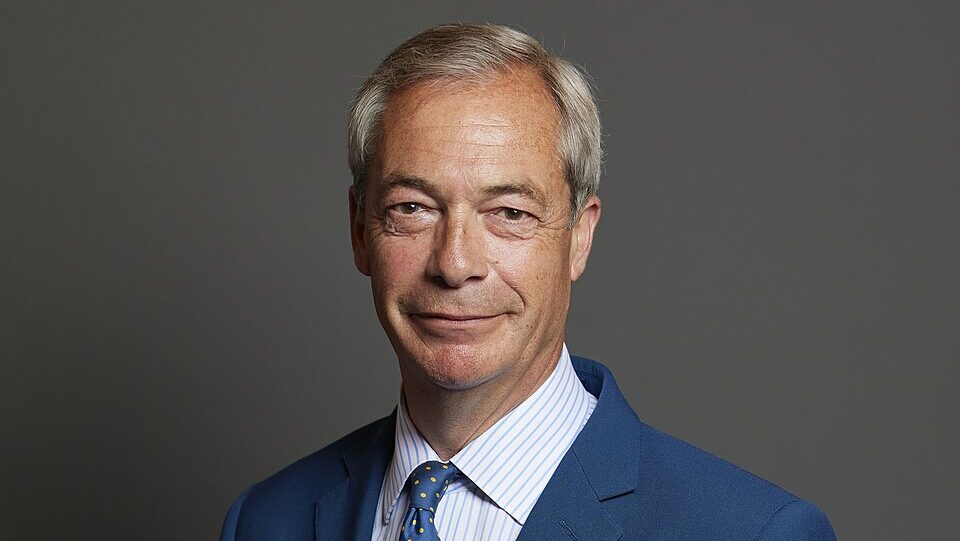
On 7 July, amid an investigation by Parliament’s standards watchdog into his finances, Nigel Farage resigned as MP for Clacton.
His resignation has triggered a by-election, something the British public has become increasingly familiar with. Recent by-elections have acted as indicators of public opinion, as seen with Andy Burnham’s success in Makerfield.
Despite resigning, Farage has confirmed he will stand in the by-election triggered by his own resignation.
Why did Farage resign?
Since May 2026, Farage has been under investigation by the Parliamentary Standards Commissioner for failing to declare a £5m gift he received from crypto billionaire Christopher Harborne.
On Saturday, 4 July 2026, The Sunday Times published an insight into Farage, claiming he did not declare benefits such as staff, security and housing by crypto-gambler George Cottrell, more commonly known as ‘Posh George’.
Cottrell was previously jailed for eight months in the US in 2017 after pleading guilty to a charge of wire fraud.
Farage has declared some support from Cottrell, a £9,253 trip to Belgium in April 2024, and a £15,276 donation for a US domestic flight in December 2024.
He has not declared any further support from Cottrell, nor the £5m gift from Harborne. Farage instead argues that he is not required to do so under the rules.
What does his resignation mean for Parliament’s investigation?
Once the by-election campaign officially begins, the investigation will be paused. If Farage is re-elected, it will resume.
However, if Farage is comfortably re-elected, it may weaken the political impact of the investigation by allowing him to claim voters are not concerned with the allegations.
In an ITV interview on 23rd June, Farage claimed that “no one cares” about the donation because it was intended for his protection, while simultaneously maintaining that he has not spent any of the money. A strong by-election victory would help strengthen his argument that the issue does not concern the electorate.
It is important to recognise that this by-election has not been called due to constituent disapproval; it is not a ‘vote of confidence’.
Is Farage doing his usual Trumpian tactic of distracting the media and thus the public from the investigation by dominating the media with by-election coverage? Is he hoping to also lighten the scrutiny of the £5m donation by using the potentially successful election results as evidence that the public indeed does not care, as he claims? I think the answer is yes.
However, this might not work out in his favour.
Will Farage benefit from the by-election?
The major parties, Labour, Conservatives, Liberal Democrats, Green Party and Restore Britain, have all ruled out running in the by-election.
Farage, in his resignation, called it a “people versus the establishment” by-election. Yet it is not a “people versus the establishment” by-election if the establishment isn’t running.
As of Friday, 17 July, Farage has a few challengers, including Count Binface, comedian Jonathan David Harvey’s novelty candidate and Independent Mr Fishfinger, a site engineer who dresses as a rectangular piece of breaded fish.
In addition to these novelty candidates, there is a collection of Independents running, including Piers Corbyn, Jeremy Corbyn’s brother, as well as members from the Forward Party, Reclaim Party, and British Democrats.
Will voters in Clacton, even those who dislike Farage, vote for a novelty candidate as their MP?
Despite the lack of a mainstream candidate running against Farage, the by-election could nevertheless strengthen his mandate. If the voter turnout is high and he wins a large majority of the vote, it will give him the mandate to help challenge media criticism surrounding his donation controversy.
While media coverage of the parliamentary investigation is likely to slow during the by-election campaign, that does not mean he can avoid scrutiny afterwards.
It should not be forgotten that unless Farage loses the by-election or permanently steps down as MP, the investigation will continue. He can delay but not prevent the investigation.
Many of Farage’s counterparts are also spinning the by-election in Farage’s favour. Speaking to BBC Radio Scotland, the leader of Reform UK in Scotland, Malcolm Offord, stated, “Nobody wants to fight Nigel Farage”, creating a narrative that the other parties are “running scared” of Farage, as echoed by Reform’s home affairs spokesman Zia Yusuf.
He further told BBC Radio 4’s Today programme that “The only reason they are choosing not to field a candidate is because they know in their hearts that they have virtually no chance of beating him.”
The major parties, however, have stated they don’t want to be a part of what Foreign Secretary Yvette Cooper called a “political tantrum”.
This polarisation is precisely what Farage wants. It leads the media narrative away from discussing his donation controversy.
This is known as the ‘dead cat manoeuvre’, a metaphor for a typical Trumpian strategy. If the media is focused on something damaging, change the conversation entirely, throw a dead cat on the table.
Will this stop the parliamentary investigation? Not if he is re-elected as MP.
However, it distracts the public, giving Farage more time to gain public support and sway public opinion in relation to his donation controversy.
Looking forward…
Is this stunt or “political tantrum” a risk for Farage? The answer is yes.
However, there is little doubt that pressure was mounting behind the scenes for Farage with the investigation into Harborne’s donation and the recent Sunday Times investigation into his further questionable relationships.
Will his resignation keep media scrutiny of his finances at bay? It is likely. Yet it’s not the end of the investigations, and Farage knows it.
Following typical Trumpian tactics of distraction can only get you so far. In a political climate that has seen the greatest number of leadership changes in all G7 countries in the past ten years, it is not naïve to suggest that Farage faces a greater risk of being ousted than Trump. Is it smart of him to follow similar tactics?
The by-election is set for 13 August 2026.
Over the coming month, attention will turn to whether any further candidates enter the race, whether any major party changes their mind on running, and whether Farage’s gamble will pay off.
The result of the by-election will likely play a defining role in both Farage’s political future and Reform’s prospects ahead of the expected 2029 General Election.
For more Comments and Feature pieces click here.
About the author