Staff Writer Zaynab Ali discusses recent major upheavals in British politics, arguing that these events may signal the beginning of a new era for the nation.
“A new dawn has broken, has it not?” Former Prime Minister Tony Blair famously declared after winning the 1997 general election, ending decades of Conservative rule in Britain.
Nearly 30 years later, those words again describe the state of British politics. With the recent by-elections in Makerfield, Aberdeen South and Arbroath, and Broughty Ferry, alongside the resignation of Sir Keir Starmer, Britain appears to be entering a new period of transformation. This could mark the beginning of a new dawn in British politics.
The Makerfield by-election

Beginning with our new Prime Minister Andy Burnham’s seismic electoral victory in early May 2026 in Makerfield, where he won 55% of the vote, a tremendous victory against Reform UK’s candidate Robert Kenyon, who won 35%. Despite the Reform gains in Wigan, the council that Makerfield sits in, this demonstrates Burnham’s immense popularity translating into a fantastic result.
Following his victory, Burnham stated that Labour had a “final chance to change” and that the by-election could be “the turning point”, as “everyone knows that politics isn’t working”. This is particularly pressing following recent findings by More in Common, a British research agency that aims to understand what Britons think. Research has found that 2/3rds (61%) of adults view the social contract between the state and citizens as broken.
This erosion of trust creates opportunities for populist and extremist movements to present themselves as credible alternatives to the political establishment. Burnham’s speech correctly identifies the growing disillusionment and apathy of the British electorate, who no longer view politics as working in their favour and deem it incapable of producing meaningful change.
Beyond Burnham’s personal popularity, the by-election signals a wider shift in voter sentiment. According to polling expert Sir John Curtice, Burnham succeeded in retaining 4 in 5 of the 2024 Labour voters despite national polling showing that a little over half of them would vote for the party again. Burnham’s ability to reconnect and rebuild support with former Labour supporters within Makerfield thus led to his victory in the by-election, despite what the national polls indicated.
The rise of Restore Britain

Although Reform gained 35% of the vote in the Makerfield by-election, a new right-wing party is emerging on the British political scene: Restore UK, led by Rupert Lowe, a former Reform MP, who was suspended by the party following allegations of workplace bullying, which he denies.
Restore seeks to distinguish itself from Reform by advocating for a harder-line stance on immigration, including policies to “abolish the asylum system” and “reverse mass migration” – anti-migrant populist rhetoric resonating with Reform’s far-right voters.
Despite Restore winning a mere 7% of the vote in the by-election, according to Politico, polling suggests that if Restore were to have a full slate of candidates at the next general election, Reform would lose 70 seats it could otherwise have won. This indicates the fragmentation of the right-wing vote, with Restore siphoning support away from Reform, weakening Reform’s electoral prospects.
Finally, the insurgency of Restore demonstrates that immigration has become one of the defining issues in British politics and an increasingly dividing line between right-wing parties. The rise of far-right populist parties like Restore reflects the growing concerns over border control and the perceived inability of successive governments to manage immigration effectively.
A recent YouGov poll conducted in April 2026 also shows that around 33% of Labour voters consider immigration an important issue ahead of the local and devolved elections. Whilst this poll was conducted before the 2026 local council elections, it suggests that Labour voters would like to see greater control over immigration and lower net migration.
However, concern about immigration does not necessarily translate into support for the more hardline policies advocated by far-right populist parties like Reform and Restore UK. Looking forward to Burnham’s Labour, it’s clear that to appease both the Reform and Restore voter base, the party will need to continue its hardline policies on immigration and asylum seekers.
The loss of a prime minister and the rise of another

The most significant consequence of the by-election was the pressure placed on Starmer’s premiership. This follows Labour’s extremely poor electoral performance in the local council elections, the resignations of various ministers, most prominently Wes Streeting as Health Secretary and John Healey as Defence Secretary and growing calls from backbench Labour MPs for Starmer’s resignation.
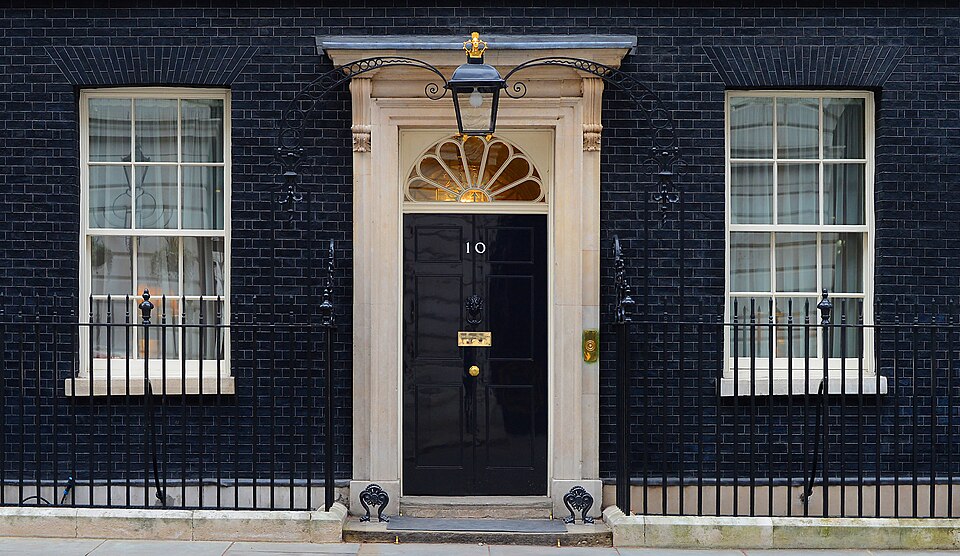
Consequently, in the early hours of 22 June, Starmer announced his resignation in front of 10 Downing Street, paving the way for Burnham to become Labour leader and Prime Minister.
In a speech setting out his policy agenda for the country, Burnham announced plans that include further devolution, creating a new Number 10 unit in Manchester, supporting the nationalisation of water and energy companies, and the creation of new council homes, which would become the “biggest council house building programme since the post-war period”.
With Starmer’s resignation, Burnham is the seventh Prime Minister in 10 years, indicating not only the fragility of British politics but also a growing fatigue with the incumbent government amongst a populace looking for something more radical to replace the Westminster establishment.
Whilst Burnham’s favourability has contributed to a rise in Labour’s favourability in the polls recently (also labelled the “Burnham bounce”), it remains uncertain whether he can deliver the change the Labour Party needs to regain public support amid the growing appeal of populist parties. Ultimately, the success of Burnham’s vision will depend not only on its electoral appeal, but also on whether it can rebuild trust in democratic institutions and convince disillusioned voters that the government is able to deliver meaningful change.
Aberdeen South by-election:

Moving on from the chaos of Starmer’s premiership in the aftermath of Makerfield, two other wins deserve particular attention: the victory of the SNP’s Lara Bird in the Arbroath and Broughty Ferry by-election and the Scottish Conservatives’ significant gain in the Aberdeen South by-election.
Douglas Lumsden, the Scottish Conservative candidate, was elected as the MP for Aberdeen South with around 14,000 votes, the first Scottish Conservative candidate to win a Westminster by-election since 1973. Whilst this result indicates the electoral revival of the Conservative Party under its leader, Kemi Badenoch, the by-election has also raised awareness of the issue of energy, which could grow in importance.
Currently, Aberdeen South is the home of Great British Energy (GB Energy), a publicly owned energy company created under Foreign Secretary Ed Miliband, who at the time was the Secretary for Energy Security and Net Zero. Yet, Aberdeen South is also at the heart of the North Sea oil and gas industry, allowing the Conservatives to centre their campaign on protecting the sector. With the current government’s plans to invest in renewables to deliver Clean Power by 2030, Badenoch claims that this is “illogical”, with a “thousand jobs” being lost in the oil and gas industry in Scotland, urging for North Sea oil drilling.
The Conservatives emphasised their opposition to restrictions on oil and gas drilling to protect local jobs, with Badenoch arguing that the “industry is the economic lifeblood of the North East”, abandoning the party’s prior commitment to Net Zero.
Through this campaign, the debate on North Sea oil drilling has evidently resurfaced, with prominent figures like Blair urging the current Labour Party to reconsider its stance on the North Sea amid growing geopolitical tensions involving Iran and the Trump administration.
With this by-election seen as a “referendum” on the future of oil and gas drilling, it’s clear that the Conservatives maintain a strong grip on voters over energy, with the wider contest reflecting new positive attitudes to North Sea drilling.
Therefore, the result demonstrates that energy policies have become intertwined with concerns over the cost of living and employment, particularly in regions dependent on the oil and gas industry. The victory of the Tories in Aberdeen South reveals how crucial the oil and gas industry has become to voters who rely on it for economic security, which the by-election has raised awareness of.
Recent political developments in the UK, ranging from changing Prime Ministers to the emergence of new populist parties and renewed debates on energy policy, make it clear that the British political scene continues to unravel. These recent events, ranging from by-elections, resignations, and the rise of new populist right-wing parties, should not be viewed in a vacuum.
Together, these events reveal the fragility and vulnerability of British electoral politics through the rapid turnover of prime ministers and voters turning to radical parties against the “establishment”, revealing a public increasingly willing to change the political status quo. Whilst the “new dawn” invoked by Blair in the aftermath of the 1997 election gave way to stability brought by the Labour Party in the aftermath of Conservative rule, today the “new dawn” is defined by political change on a scale not seen for decades.
For more Comments and Feature pieces click here.
About the author