Culture Editor Sabrina Hau visits The Courtyard Theatre to investigate the exploration of the sexuality, identity, and gender power dynamics in the one woman play ‘Succubus‘.
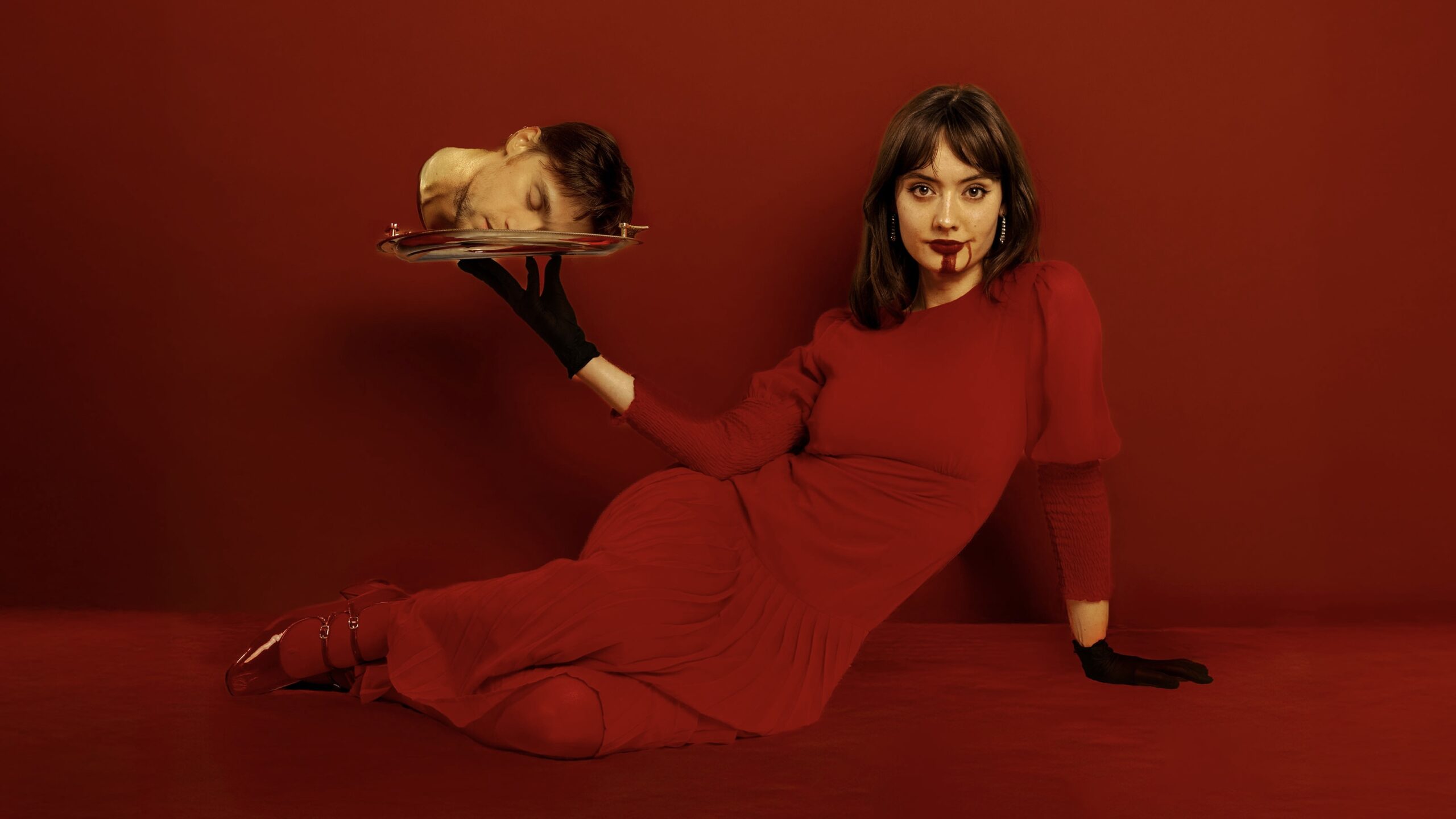
A sea of red clothing, an arm on top of a platter of candy ropes. Even before entering the theatre, the audience is invited to snack on the human remains of the victims. Plastic sheets on all 3 walls of the stage, lit up by a strong neon light, unsure if we have entered an erotic den or a murderer’s cult. Together, the audience is entrapped into the journey of this Succubus’s life — the transformation from an awkward 25 year old to a hungry and powerful ‘womaniser’ figure. Yet ultimately her fate is to become alone in a world that is consistently forcing her to hide her truest self.
Inspired by classic teen horror such as ‘Jennifer’s Body‘ on the relationship between sexuality and cannibalism, ‘Succubus’ draws from a range of urges that explores the carnal side of desire. While beginning the show as a large flashback, the audience follows the character’s journey as they first begin to transform. From an uncontrolled want for sexual attention, to a darker urge for the physical act of eating human meat.
Yet, the show cleverly sprinkles in comedic moments, with a widening smile that never leaves her face. Whether it be her awkward demeanour or the use of dramatic irony to hint at the fates of her feasts, the play blends the genres of gore and comedy seamlessly, thus leaving the audience in a constant trance of laughter.

Though categorised as a one woman show, she is not the only voice presented. Several interjections of her male counterparts insert their way into her dialogue as she speaks to the audience directly. As if we, the viewer, embody the role of the societal misogyny that often subject women to certain commentaries and experiences. The show grasps into modern day dating culture realities—a bad date turned into a hungry feast—a reclaiming of power for women and their ability to fight back.
Collins mentioned how she had imagined the succubus as a symbol of reclamation and resistance against the misogynistic ideals that continuously adapt and play into a woman’s lived experiences. As male-supremacist subcultures continue to influence young men and boys through social media algorithms, the show acts as a mirror to an alternate reality that proposes the question: what if women can protect themselves?

What struck out to me was the storytelling of her relationship with another succubus (with a heavy slavic accent). The switch between her shyness and the other’s boldness created a unique contrast that deviated from the conventional imagery of the alluring demon. Though both played by the same actor, there was not a moment where I was unable to tell who was who, allowing the audience glimpses into both character’s minds alongside their growing fondness of each other.
Speaking to star and writer of the show, Georgina Collins, she mentioned how this relationship was an ode to her own queer identity and the exploration of LGBTQ relationships in modern society. Not only is their relationship an exploration of queerness, but also a way to show how women are able to uplift each other in times of distress.
It is somewhat debated whether this figure is real—her ultimate departure showed the selfishness and destruction of empathy when living a life of darkness. At the same time, it served as the climax to her ultimate acceptance of self, her true self, the one shrouded in hunger and power, yet free of the expectance of society.
Though with a run time of one hour, I left with an unexpected joyful experience and sudden hunger for a meaty cheeseburger. In the end, there is a succubus hidden deep within all of us women—a hope that one can flaunt and become free of the expectations of the world and its realities.
About the author