Staff Writer Sukaina Ali reviews ‘Beetlejuice The Musical’, where high-energy stagecraft and modern viral culture meet the West End.
Beetlejuice, Beetlejuice, Beetlejuice!
Saying his name three times might summon the “ghost with the most”, but walking towards the Prince Edward Theatre – amid a sea of lime green and black and white stripes – it was clear the audience was already bewitched. The crowd’s excitement highlighted the cult classic’s enduring popularity, making its appearance in London’s West End a welcome addition to an already beloved favourite.
Adapting Tim Burton’s 1988 dark comedy film into a modern-day musical feels ironic yet fitting, earning a prime spot on many Londoners’ must-see lists. Bringing a story centred on death and ghosts to the West End with its dark humour and supernatural elements offers a refreshing counterweight to traditional stage productions, giving this show a distinct identity – driven largely by its lead.
David Fynn, who plays Beetlejuice, delivers a hilarious portrayal of the ghost that is chaotic and unhinged. Early on in ‘The Whole “Being Dead” Thing’, Fynn sets out the ground rules by weaving theatre etiquette directly into the song – playfully threatening to murder anyone whose phone rings during the show and sarcastically questioning why a musical number about death is inviting enthusiastic applause.
The production uses his character to immerse the audience, making the show interactive and consistently engaging. By directly singling out audience members and reacting to the room in real time, Fynn gives the performance an electric, unpredictable edge that ensures no two performances feel identical. Remaining in character throughout, he navigates the line between theatrical actor and crowd controller with on-point comedic timing.
Yet while Fynn as Beetlejuice commands the spotlight, the surrounding cast delivers equally exceptional performances. Hannah Nordberg is completely Tim Burton-coded in both her look and her performance of Lydia, capturing the character’s gothic angst and deadpan humour. The entire ensemble leans completely into the ‘Beetlejuice’ madness. Ultimately, the whole show is packed with high-energy, consistent humour and dramatic choreography.
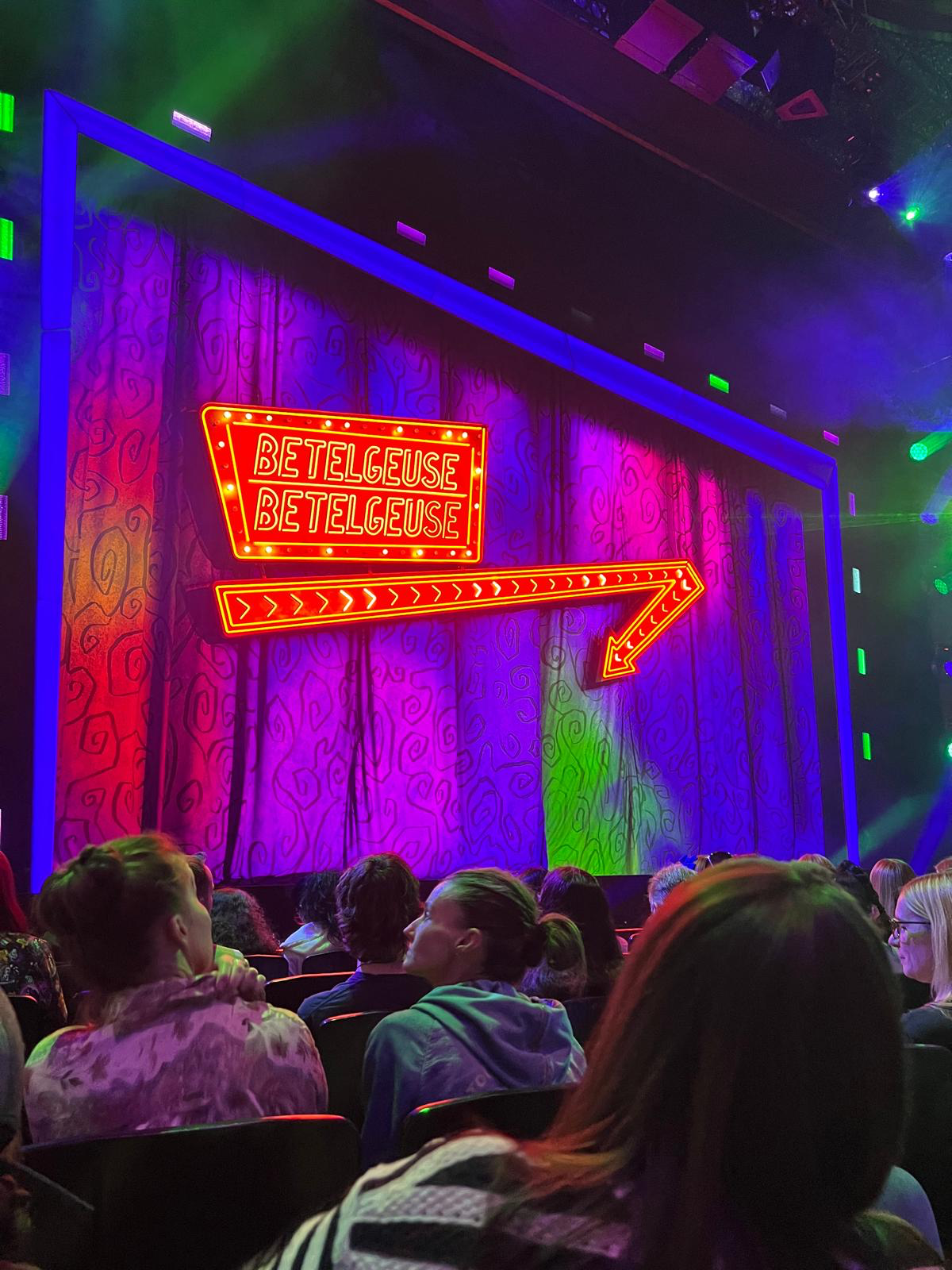
Visually, the production opts for a 3D, cartoon-like set design. The Maitland house morphs dynamically on stage as the narrative progresses, transforming from a quiet suburban home into a twisted monochrome haunted house. Rather than relying heavily on digital projections or CGI, the special effects lean into traditional and hands-on stage mechanics, including massive set pieces like the iconic giant sandworm bursting onto the stage. Practical illusions, manual prop movements, and visible stagehands give the tricks a nostalgic weight, proving that high-tech digital screens aren’t needed to evoke genuine theatrical fun.
What distinguishes the stage adaptation from the original film is its spontaneous script, balancing nostalgic 80s comedy with contemporary updates. ‘Beetlejuice’ incorporates several in-the-moment pop-culture references, including an unexpected running joke targeting the British icon Paddington Bear. During Beetlejuice’s monologue reprise song ‘Invisible’, he comedically breaks into Journey’s ‘Don’t Stop Believin’, belting out the line “just a small-town girl” mid-song.
This self-aware humour reflects how the show captured a broader digital audience. ‘Beetlejuice’ experienced a surge in online popularity mainly across platforms like TikTok and Instagram, alongside major cultural revivals in 2019 and 2024. When the theatre show initially launched in the US in 2019, the cast recording and performance clips went viral, introducing Gen Z and younger audiences to the gothic story. In particular, songs from the hit film such as ‘Say My Name’ and the iconic dinner party spectacle ‘Day-O (The Banana Boat Song)’ were used for dances and background music across countless videos. ‘Beetlejuice’ became part of the viral culture, reminding loyal fans of their nostalgic favourite while building a vibrant youth fanbase.
Thanks to modern viral culture, the interest in Beetlejuice fuelled fan demand, ultimately paving the way for the film sequel, ‘Beetlejuice Beetlejuice’. The film sequel relied heavily on original cast members alongside modern gothic and Tim Burton-coded icons like Jenna Ortega to reel in younger viewers. While the stage show’s blend of 80s nostalgia and modern social media trends ultimately helped reignite the franchise, it raises a broader question for West End theatre: why do we keep returning to past favourites for new stage adaptations, and can revival culture genuinely give classic stories a fresh, necessary update? In the case of ‘Beetlejuice’, technology served as the initial invitation, but its genuine, collective nostalgia is what brings theatregoers into the room.
About the author