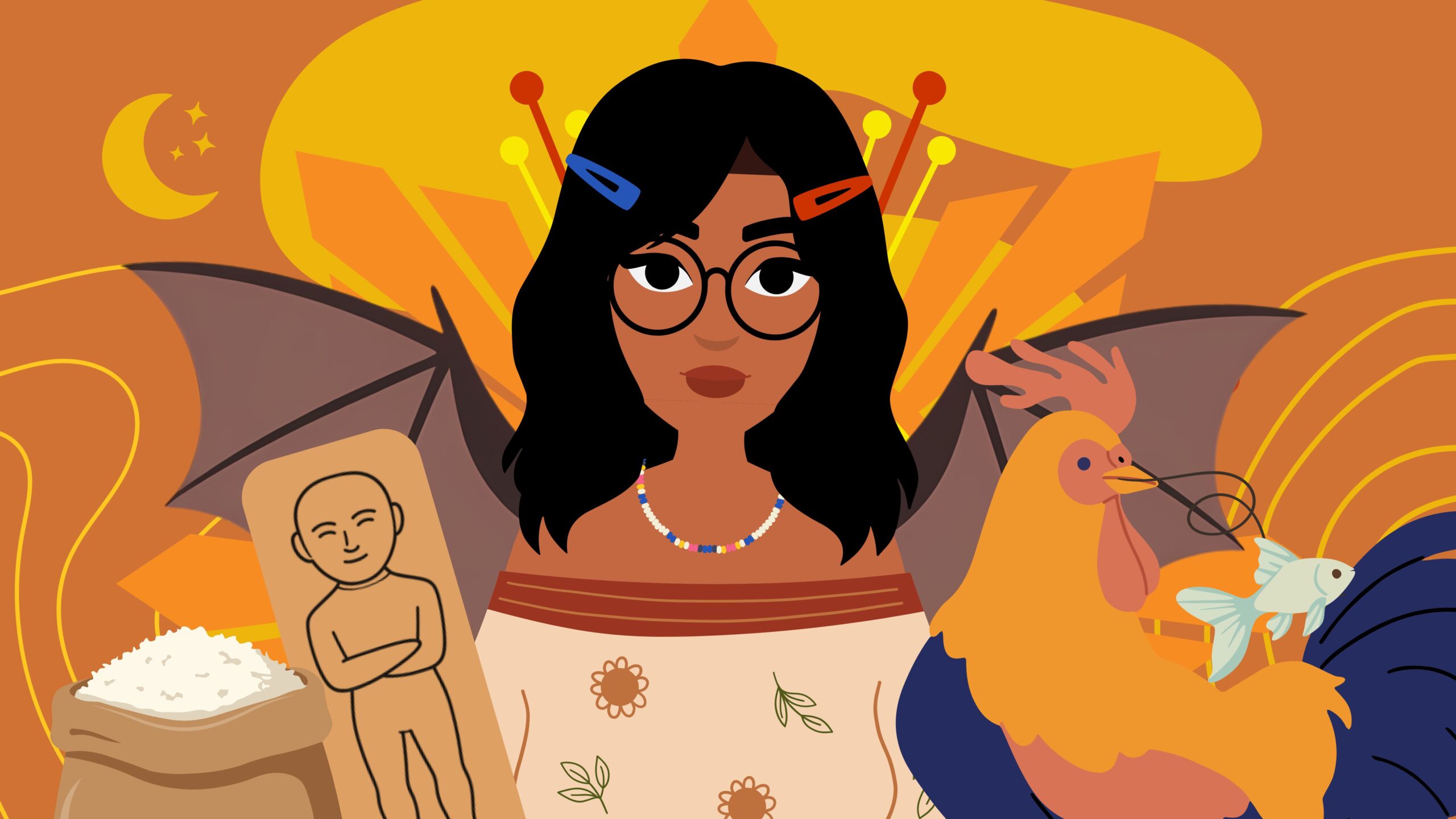
Staff Writer Dannica Batoon examines the precolonial figures and cultural symbolism featured in DreamWorks’ first Forgotten Island Trailer.
The Philippines is frequently portrayed through its Catholic identity, a legacy of over 300 years of Spanish colonial rule. Yet, this framing obscures the diverse cosmologies that predated the arrival of the Legazpi–Urdaneta Expedition in 1565. Across the archipelago, priestesses or ritual specialists known as ‘babaylans‘ mediated relationships between communities, ancestors, and the spirit world. Powerful non-human creatures subsumed under the colonial term ‘engkantos‘ (from the Spanish term encantado, meaning ‘enchanted’) inhabited forests, rivers, and mountains.
DreamWorks Animation’s Forgotten Island revisits these traditions by drawing on precolonial Filipino folklore that colonial narratives have long reduced to mere superstition. This article examines the precolonial figures and cultural symbolism featured in the film’s trailer, situating them within their historical and folkloric contexts.
Blood Pact and Cultural Memory
Forgotten Island’s first official trailer begins outside the principal’s office and immediately introduces the ‘sandugo’ (shortened from ‘isang dugo’), or blood pact. Among some precolonial Philippine societies, this was a ritual to formalise alliances, friendships, or political agreements and was used as a diplomatic practice. The best-known example in the Philippines is the 1565 blood compact between Spain’s Miguel López de Legazpi and Datu Sikatuna.
Although the trailer introduces the ‘sandugo’, the ritual is never performed because the protagonist explicitly opposes its violence. This narrative choice positions the blood pact as a rejected act in the film’s fictional world, preserving indigenous cultural memory through the friendship bracelet instead.
The act suggests that if the blood pact had never happened, the archipelago could have retained its waning cultural memories, encapsulated in Raissa and Joy’s friendship bracelet. In this sense, Raissa and Joy’s bracelet may be read as suggesting a different way of carrying cultural memory forward, one rooted in friendship, continuity, and nonviolence.
The Manananggal and Colonial Gender Politics
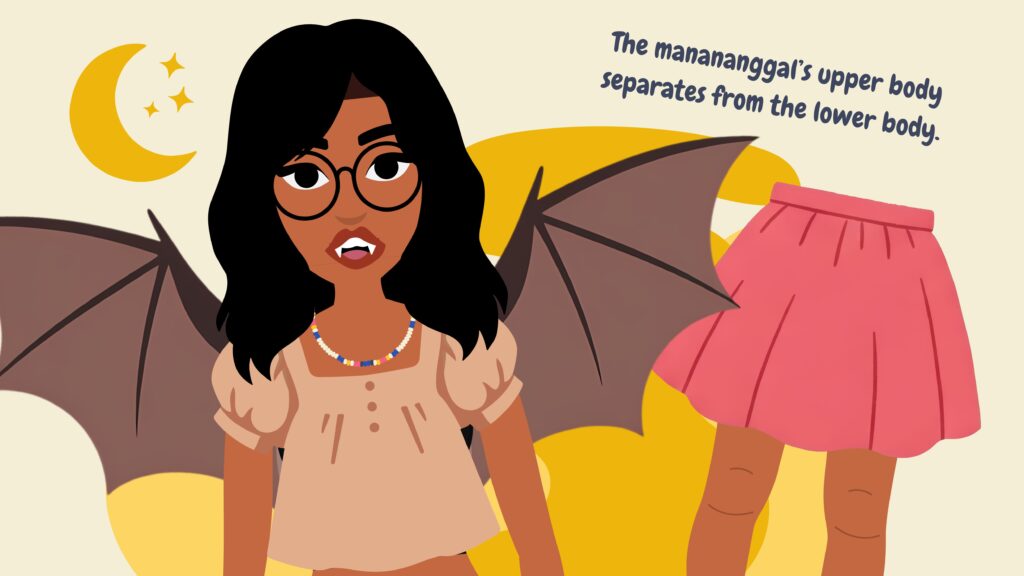
One of the most important characters in the film’s trailer is the ‘manananggal’, a half-bat and half-female monster that roams around at night, known in Philippine folklore for attacking pregnant women to eat their fetuses. It is exemplified by Joy flying after Raissa and symbolised by a bat on their friendship bracelet. According to The Manila Times, the main protagonist of the film is the ‘mananggal’, which feeds on the memories of those staying in the fantastical island of Nakali.
However, a recent UC Riverside scholarship argued that this female demon may not be precolonial, since it has emerged as a modern version of the ‘aswang’, which predates Spanish rule. Yet, this does not diminish the significance of the ‘manananggal’ in Philippine folklore. The female monster can be interpreted as symbolising the defiance against the expected roles of motherhood, domesticity, and femininity.
This interpretation becomes more significant when viewed in the context of Spanish colonial gender norms. Before the Educational Decree of 1863, Filipino women attended convent schools and beaterios run by Catholic religious orders. Their curriculum reflected the gender ideals of colonial Spanish society, such as domestic arts, etiquette, and moral conduct. But women in the archipelago used to hold leadership as priestesses and were well respected by local communities. ‘Babaylans‘ were painted as witches and devils, and therefore persecuted. Others survived by incorporating their pagan practices into Catholic symbolism and practices.
Sacred Guardians of Forgotten Island
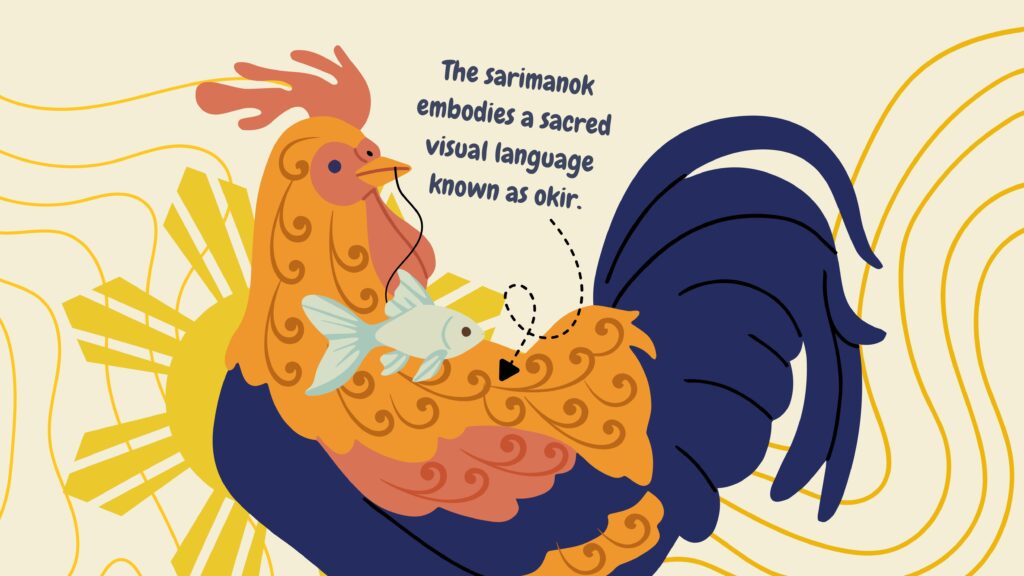
In the trailer, Raissa and Joy fall into a sun-shaped hole inspired by the Philippine flag, bringing global audiences into the world of Filipino oral tradition. Then, they encounter a ‘sarimanok’, a colourful bird from the Maranao culture. Unlike many lowland Philippine traditions that underwent extensive Christianisation under Spanish rule, the ‘sarimanok’ survived largely because it originated in Muslim Mindanao, where Spanish colonial authority was limited and contested. Known for its bright, colourful feathers and okir embellishments, the bird symbolises prosperity and nobility and serves as a protective figure.

The trailer introduces the ‘sarimanok’ alongside the Ifugao ‘bul-ul’ at the island’s portal-like entrance, framing both as guardians of the passage into a space governed by indigenous beliefs. The ‘bul-ul’ are represented in the trailer as human-shaped boulders that line the island’s shores. They are believed to protect the rice harvest in the Philippines’ Cordillera region, which the Americans alone conquered. The Spaniards failed to subjugate the highland communities. They also symbolise fertility and abundance.
Together, the ‘bul-ul’ and the ‘sarimanok’ foreground the Philippines’ rich indigenous cultural heritage while symbolising Jo and Raissa’s enduring friendship, one sustained through mutual protection, resilience, and a shared refusal to let their bond or the island’s cultural memory be forgotten.
The full representations of these precolonial traditions remain to be seen. But if DreamWorks’ Forgotten Island encourages audiences to look beyond folklore and rediscover the histories behind these stories, it will have done more than entertain—it will have revived long-overlooked conversations.
About the author