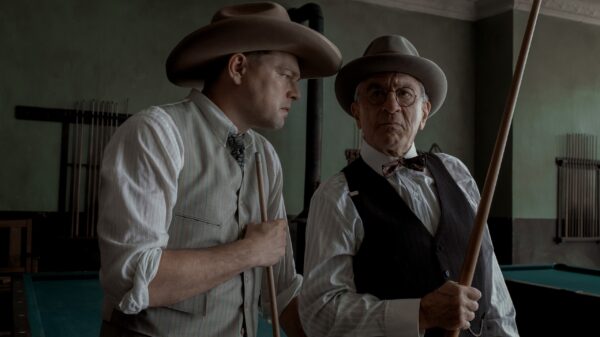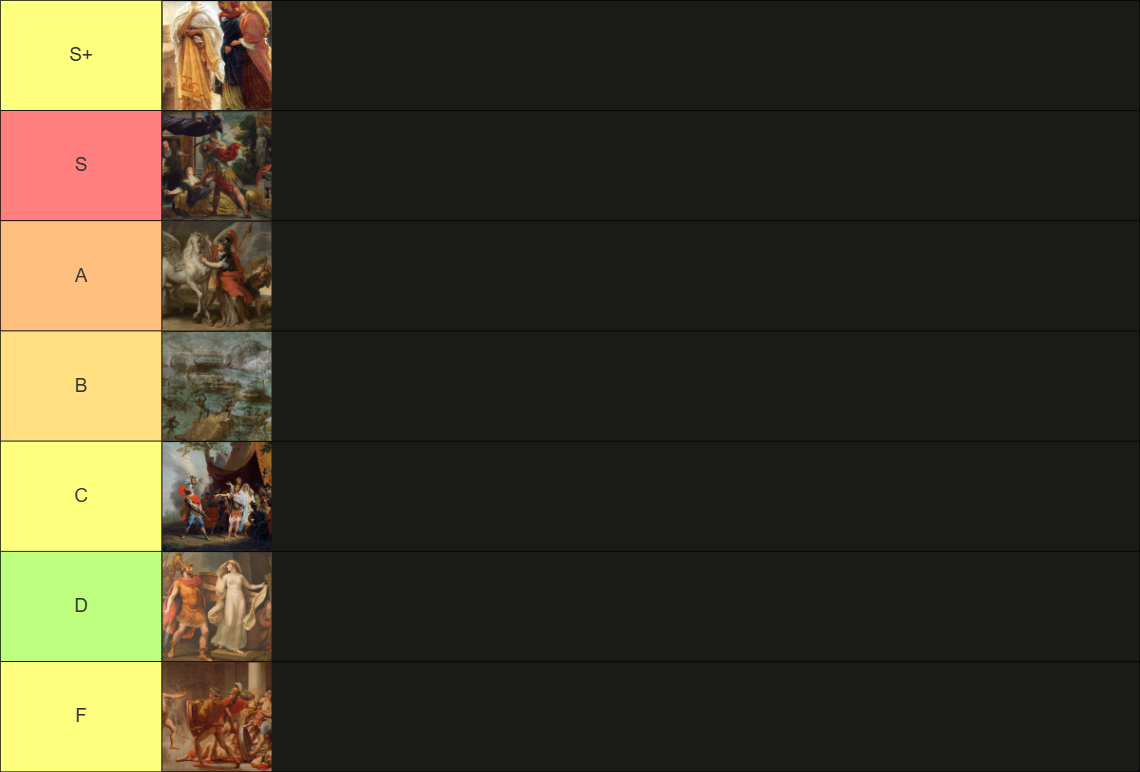
Staff Writer Guy de Basto ranks the characters from The Odyssey according to the original Homeric poem and Christopher Nolan’s 2026 adaptation.
The Odyssey is one of the oldest and most enduring stories ever told, following Odysseus’s decade-long journey home after the Trojan War, encountering the wrath of gods, monsters, and temptations at every turn. Even today, the story is recounted and reinterpreted millennia after the poem was first recorded.
Christopher Nolan’s 2026 film adaptation rewrites the most notable moments in the hero’s voyage, casting A-list stars such as Matt Damon (Odysseus), Anne Hathaway (Penelope), Zendaya (Athena), and many others in an enormous ensemble. So, as a bored man during the summer, I have decided the best way to analyse this movie’s characters through the most Gen-Z way possible: an ‘aura’ tier list (S+ to F).
In this article, ‘aura’ here refers to a character’s overall presence and impact, or how much weight and influence they carry within the story just by existing in it, regardless of whether their actions are heroic or villainous (or somewhere in between).
Here are my criteria: Homer’s poem is the fundamental starting point for every ranking, with the original text as the floor each character starts from. From there, Nolan’s depiction is allowed to push a character up or down a single tier, but only when something specific in the film occurs (e.g., a scene or a reinterpretation) will it change their weight. Other than that, the film’s evidence for the characters will not contribute to a boost or reduction.
Quick note: there are spoilers ahead for both Homer’s original text and the new film. On the bright side, you’ve had about 2,600 years to read about it.
S+ — Helen of Troy
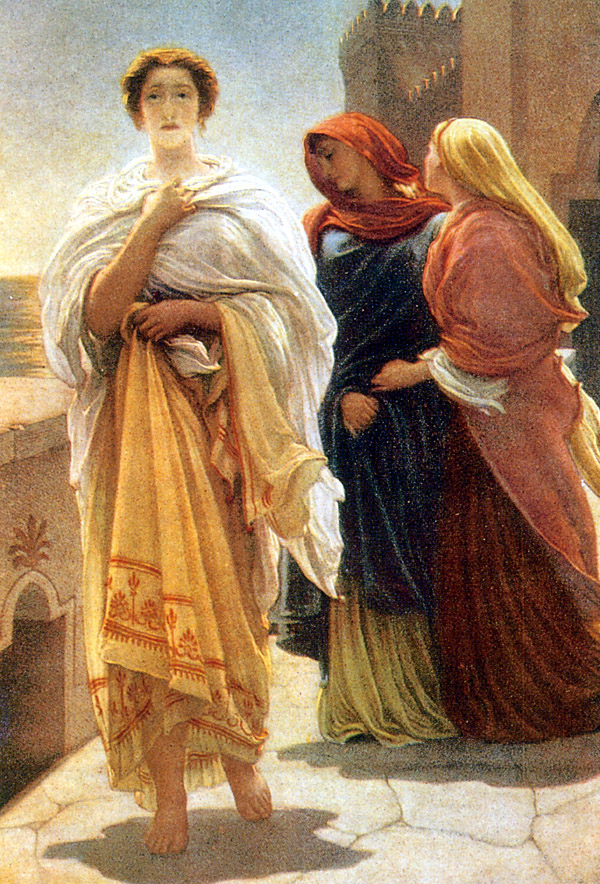
Starting controversially, I have Helen, wife of Menelaus, in S+ tier. Her real power in the Odyssey lies almost entirely not in what she does, but in what her departure with Paris is ultimately blamed for: a war that consumed a decade and thousands of lives.
In the poem, audiences are left wondering whether she left gladly with Menelaus after Troy fell, or whether her return to Sparta was forced. She appears at Menelaus’s side during the wedding celebration sequence, with her backstory left as ambiguous as in the original. Nolan casting Lupita Nyong’o as both Helen and Clytemnestra also helps visually link the two women most blamed for the ruin of powerful men—one for starting a war and one for ending a king’s life after it—creating a deliberate echo that diminishes both characters to tragedies of war.
Yet, we must not ignore the fact that neither version provides valuable insight into her character because she’s never been given a voice. Though framed as “the face that launched a thousand ships“, she is forced to bear the war’s consequences, reducing her to a cause rather than an actual person. Thus, Helen embodies a profound paradox: her silence strips her of agency and turns her into a blank canvas for male vanity, and nevertheless transforms her into a haunting, powerful myth that endures across millennia.
S — Odysseus

Tell me about a complicated man. Odysseus is the epitome of cunning rather than brute strength, quite rightly earning the epithet “man of twists and turns,” which stemmed from the Greek polytropos, for his endless capacity to deceive, adapt, and survive. He has no shortage of close calls throughout his voyage, and being the only mortal man alive who has heard the Sirens’ song massively contributes to his aura.
In the epic, our warrior thrives on and is renowned for his glory and fame. Facing his first real obstacle on the voyage home, he tells Polyphemus, son of Poseidon, his real name out of immense pride, despite escaping the island, leading to him and his crew being cursed by the god. Once back in Ithaca, he is still unable to let his guard down. Disguising himself as a beggar to test the loyalty of his wife, son, and elderly father before slaughtering the suitors who had overrun his household, his sheer dominance in the final battle heightens his aura tenfold.
In the movie, however, Nolan casts him as a deeply remorseful hero, forever burdened by the Trojan War and the deaths he caused. His aura is heightened by the increased devotion to his wife, but his overall aura as a man of trickery has to decline.
Though the persistence that keeps him alive mirrors the stubbornness that drags out a curse he could’ve avoided, it reflects how his hubris isn’t some separate flaw sitting alongside his heroism. Rather, I would argue that it’s the same refusal to yield that gets him home in the first place, which is why he sits just below Helen in overall narrative weight in S tier.
A — Athena

Though a goddess, Homer delineates Athena as Odysseus’s personal patron throughout the epic, repeatedly intervening on his behalf while other gods either ignore him or actively work against him. Throughout the 24 books, she disguises herself as several different mortals to guide both Odysseus and his son Telemachus without drawing the attention of rival deities. She is also the driving force behind the first several books (I-IV, a.k.a Telemachy), which follow Telemachus’s own coming-of-age journey to seek news of his father.
Meanwhile, Nolan’s Athena, played by Zendaya, is placed in a purely reactive position, relying solely on her expressions to convey approval or disapproval, rather than intervening directly. Notably, in Odysseus’s war flashbacks, the audience learns that Athena’s physical presence is a reincarnated image of the priestess of Athena, who is killed before his eyes, revealing his guilt over their destruction of Athena’s temple to the goddess herself. This pivotal moment adds a layer of unspoken weight to her appearances that Homer’s version just doesn’t carry, and thus adds to her aura.
The contrasting portrayals of constant, unseen influence versus the scheming presence for quiet approval prove that patronage can carry as much weight as intervention, which is certainly enough to land her in A.
B — Laestrygonians

Introduced in Book X, the Laestrygonians are a tribe of giant cannibals, descendants of Poseidon. Their attack on Odysseus’s fleet is certainly the single most devastating encounter in the entire journey home. Not only did they destroy eleven of his twelve ships by hurling massive boulders down from cliffs onto the harbour, but they also waded in to spear and eat the trapped sailors.
Despite this scale of destruction, however, they receive comparatively little attention in retellings and popular culture. And if people aren’t talking about you, I can’t put them any higher than B, despite their epic kill count.
In the film, their entrance is astounding, though summoned by a child. Nolan’s use of 7-foot actors and female stunt doubles to replace the crew was incredible. Every shot that dwarfs Odysseus and his crew against these actors builds a slow, looming dread that we feel, so that by the time the violence starts, the audience inevitably feels the same helplessness the soldiers did. The physical stunts heightened the scene’s sense of urgency and destruction, which only adds to their image.
Notwithstanding that their impact on Odysseus’s remaining crew was the most consequential loss of the entire voyage, they are still overshadowed by the other major obstacles. Nolan does a fantastic job of including them, but for lack of notoriety besides that, I have decided to stick them in B tier.
C — Agamemnon

King Agamemnon is commander of the Achaean forces at Troy, but his personal story in the Odyssey primarily functions as a grim cautionary counterpoint to Odysseus’s own homecoming. Before the war even begins, he sacrifices his daughter Iphigenia to secure favourable winds for the fleet’s voyage to Troy, which, all things considered, is probably an aura loss. He survives ten years of war, only to succumb to the most undignified death amongst the other heroes—in the hands of his wife Clytemnestra and her lover Aegisthus—invoked as a warning to returning kings. The duality between being commander of the Greek forces and his demeaning death reduces the prestige we associate with him as a confident, strong military strategist, giving him a legacy that’s more tragic than heroic. On the poem alone, that puts him at D tier.
Judging from the film, the gates-of-Troy sequence is, in the eyes of many cinephiles and the general public alike, the strongest single visual moment given to any character in the movie. Nolan holds on Agamemnon at the head of the full Achaean army as the gates finally give way after ten years of siege. The scale of the army dwarfs the frame, the camera lingering on him as the man who outlasted the wall. It’s the closest the film gets to a single coronation shot. Thus, this earns a small boost in aura, pulling him up to a C.
D — Menelaus
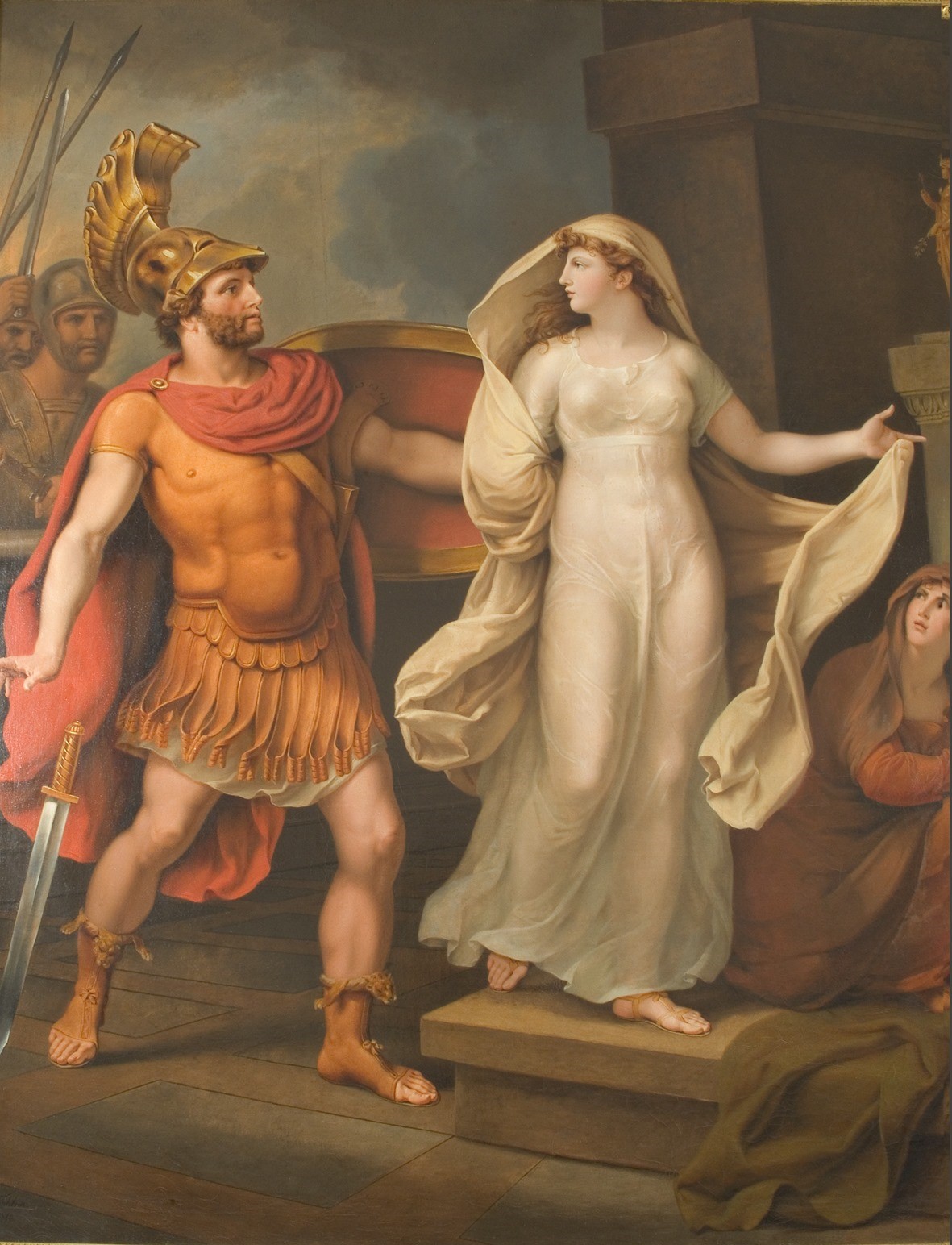
Menelaus, King of Sparta, brother of Agamemnon, husband of Helen. By the time of the Odyssey’s narrative present, he and Helen have just about reconciled and are ruling Sparta together in (apparent) domestic stability. In Book IV, he hosts Telemachus at his palace and recounts detailed stories from the war and of Odysseus’s role, giving Telemachus valuable information about his missing father. His positioning as a supporting figure whose importance lies in the hospitality he provides rather than any direct influence over events leads to a small aura gain.
On screen, Jon Bernthal presents Menelaus as a charismatic and generous figure abiding by Zeus’s law and acts warmly towards the son of Odysseus, not dissimilar to the poem.
So you may be wondering why someone this consistently gracious still ends up in D? Though Menelaus is fairly helpful, regardless of his efforts, Telemachus’s quest would proceed with or without his hospitality, which only positions him as a passive character. Being pleasant while remaining structurally optional is exactly what keeps his aura low as he remains largely secondary: second as the son of Atreus, second in command despite great fighting abilities, and even second in importance to his own wife. Thus, D tier is the perfect spot for him.
F — Antinous
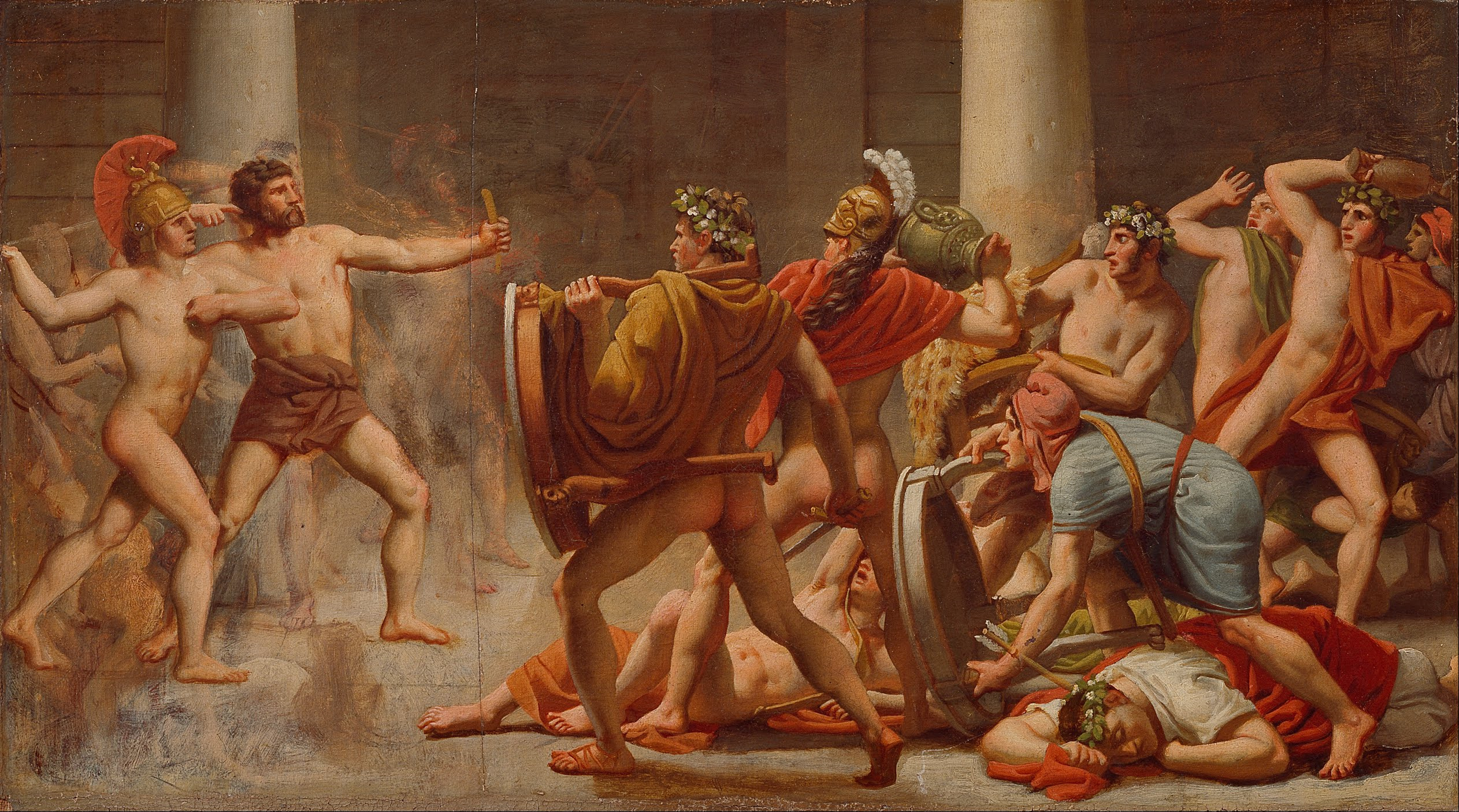
Antinous is, on paper, the single most dangerous suitor in Odysseus’s house. The de facto ringleader of the men occupying his home, eating his food, courting his wife in his absence. He’s the one who first proposes ambushing Telemachus before his return, and fittingly, he’s the first suitor Odysseus kills once he reveals himself, with an arrow through the throat. By every measure of plot function, he should carry real weight and thus place highly, right?
And yet he has almost none. Antinous is depicted as one of the many antagonists Homer needed but is not rendered memorable. In both depictions, he threatens, he sneers, he plots, and yet faces the same fate as all the other suitors. Simply put, he acts only as the “worst of the suitors” so Odysseus’s vengeance had a first target. Compare him to aura-heavy villains such as the Laestrygonians, who all leave some specific, memorable image behind; Antinous leaves nothing but a cowardly figure.
To some degree, Robert Pattinson’s Antinous provides more weight than Homer ever gave him. He manipulates Sinon into going off to die at Troy (and leaves Sinon’s father to die in poverty); he’s needlessly cruel to swineherd Eumaeus and to sweetheart Argos, Odysseus’s old dog. But alas, he still schemes in place of fighting, ordering other men rather than confronting problems himself. In the film’s biggest insult of all, Nolan leaves him to be killed last, suffering the most humiliating death of all.
A nice way to think of it is as follows: Homer’s Antinous is forgettable because he’s barely written. Nolan’s Antinous is expanded for three hours and still forgettable, because cowardice was never something more screen time could fix.
What This All Shows
What’s clear across both the poem and the film is that aura doesn’t always track with how much page time or screen time a character gets. Helen and Agamemnon shape the entire story despite limited direct involvement, while someone like Antonius, who’s actually a key character in the poem, still ends up at the bottom. If nothing else, putting this list together confirmed that 2,600 years later, this story still has more than enough chaos, betrayal, and questionable decision-making to argue about.
About the author