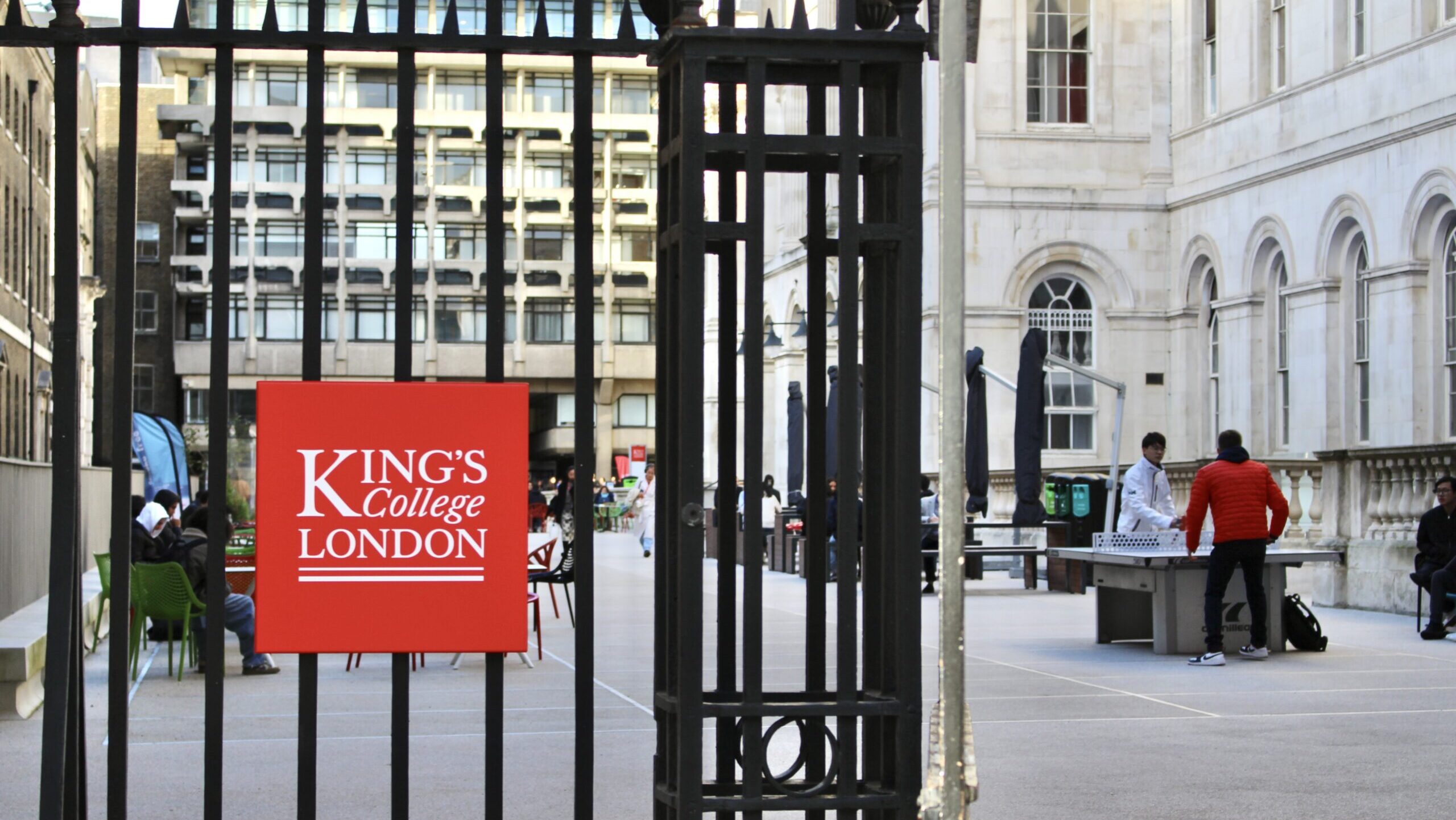
King’s College London (KCL) has fallen for the second consecutive year to 40th in the Times Higher Education (THE) World University Rankings, down two places from the 2026 issue.
THE ranks universities on 17 criteria, grouped into five core pillars: teaching, research environment, research quality, international outlook and industry. This year, the rankings considered 2,297 universities across 118 countries.
How King’s scored
King’s performed especially well on international outlook, scoring 95.7 out of 100. The measure reflects a university’s ability to attract undergraduates, postgraduates and faculty from around the world. King’s also scored 95.3 for research quality, which reflects how influential a university’s research is and how widely it is cited by other academics. However, lower scores for teaching (65.4) and research environment (73.4) meant King’s still fell in the overall rankings.
King’s still ranks highly among THE, with their website stating that:
“KCL is now the largest healthcare learning centre in Europe, incorporating three teaching hospitals and providing a home to more than 27,000 students (including nearly 10,500 postgraduates) from 150 countries who also benefit from its strengths in law, the humanities and social sciences.”
Furthermore KCL’s research notoriety was explicitly mentioned with THE saying:
“KCL is a major research university. In the 2014 Research Excellence Framework, it was ranked 6th nationally in the ‘power’ ranking, which takes into account the quality and quantity of research activity.”
A shifting global picture
The most striking change this year is the rise of Asian universities. In a list historically dominated by British and American institutions, Asia now outnumbers continental Europe in the top 15 for the first time, with three Asian universities placing there.
Alongside King’s, three other London universities finished in the top 50 globally. Imperial placed 8th, extending its run of top ten finishes to five consecutive years. UCL rose four places to 17th, tied with Baltimore-based Johns Hopkins University. The London School of Economics (LSE) was the last of the capital’s universities to make the top 50, finishing 47th, up five places from 52nd last year.
King’s now sits 13 places below its highest-ever ranking of 27th, which it reached in 2016.
Subject rankings and sustainable impact
In the subject tables, King’s performed strongest in Psychology, ranking 9th in the world. Medicine and Health followed at 15th, with Arts & Humanities at 24th and Law at 26th.
However, the picture for sustainable impact is more disparaging. After ranking 9th in the world in 2020, King’s has fallen dramatically and now sits in the 101–200 band in the 2026 edition. This ranking itself is a global ranking that is an indicator as to how well universities across the globe are advancing sustainability in line with the Sustainable Development Goals (SDGs), which were created by the UN in 2015.
About the authors