11 February is celebrated as the International Day of Women and Girls in Science. Science Editor Anoushka Sinha highlights the work of some of the pioneering women scientists at King’s College London (KCL).
Women have often been underrepresented in the scientific community, being denied opportunities which were afforded to their male counterparts. Despite these structural barriers, many women have made lasting and transformative contributions to science, including several whose work is closely connected to King’s.
Florence Nightingale
Florence Nightingale is widely known for her work as a nurse during the Crimean War. St Thomas’ Hospital was founded in the 12th century CE and was merged with KCL in 1998. In 1860, Nightingale founded the first training school for nurses at St Thomas’ Hospital – a ground-breaking achievement at a time when being a nurse was considered to be a man’s job.
Nightingale’s legacy is inherited by KCL today, as our nursing department has been officially known as the Florence Nightingale Faculty of Nursing, Midwifery & Palliative Care since 2017.
Hertha Ayrton
While suffragette Hertha Ayrton studied at Cambridge University, she received a bachelor’s degree from the University of London in 1881, as Cambridge did not award full degrees to women at the time.
The physicist became the first woman nominated to be a fellow of the Royal Society. She was ultimately denied the opportunity but continued her work regardless. During WW1, she invented the cotton fan to disperse poison gas from the trenches. These were later used in mines and sewers. Her life-saving work received little recognition during her life but her passion for Physics never seemed to wane.
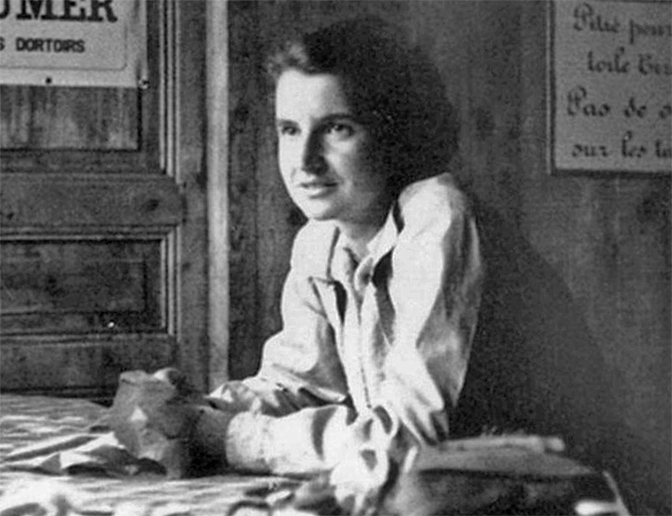
Rosalind Franklin
In May 1952, Rosalind Franklin photographed DNA molecules using X-ray crystallography at KCL. She showed the structure of DNA, allowing James Watson and Francis Crick to build the first DNA model. Her colleague Maurice Wilkins showed the photograph to James Watson without her consent and the three aforementioned men received a Nobel Prize for their work on DNA in 1962.
Today she is widely recognised for our understanding of the spiral nature of DNA and KCL honours her most notably with the naming of the Franklin-Wilkins Building in Waterloo.
Elena Simperl
Artificial Intelligence (AI) expert Elena Simperl has been at KCL since 2020 and she is co-director of the King’s Institute for AI.
Her work largely comprises of making AI more safe, accessible and reliable for users. She is a recognised expert in her field and was named in the top 100 most influential scholars of the last decade. Having written over 300 papers during her 18 year career, Simperl is definitely a woman in STEM to keep your eye on.
Nicola Bailey
Nicola Bailey has been at KCL since 2023. She specialises in assistive technology, creating upper limb prosthetics. She has worked closely with Alex Lewis, a quadruple amputee who was awarded an honorary degree by KCL’s Department of Engineering in 2025.
From Florence Nightingale to Nicola Bailey, the impact women scientists have had on the world is invaluable.
Today, over half of all students at KCL are female. KCL holds Athena SWAN Awards in numerous departments including NMES, the Faculty of Dentistry, Oral & Craniofacial Sciences and the Faculty of Nursing, Midwifery & Palliative Care. The Athena SWAN Award recognises efforts toward gender equality.
In 2025, six of KCL’s women researchers were ranked among the best female scientists in the world.
About the author