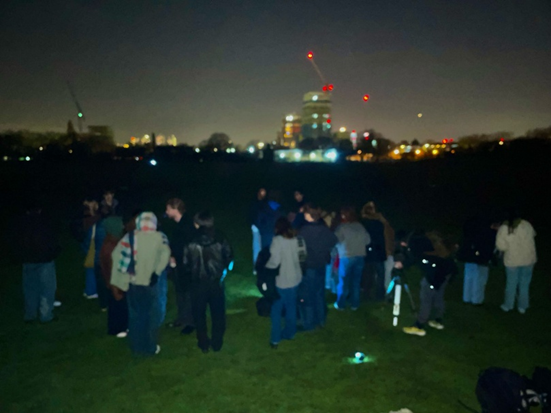
On 28 February, the newly-established KCL Astronomica society held a stargazing event to view the rare planet parade.
Run by President Thomas Bolton and Vice-President Sam Espin, the society was established just in time to view last month’s Planet Parade.
KCL Astronomica is the student-led observatory at King’s College London. Their activities include stargazing events, astrophotography and talks held by astronomers and physicists.
Our objective is to make astronomy accessible and worth it in London.
Thomas Bolton
Around fifteen students gathered outside Somerset House after lectures on 28 February. They all caught a bus to Burgess Park, and began setting up their telescopes around 7pm. By the time the telescopes were ready, the number of attendees huddled around the park sipping their hot chocolate had doubled.
Last month’s coveted ‘Planet Parade’ was a sight to behold. The planets aligned almost perfectly in the night sky – all except Mercury, the smallest planet in our solar system, which was not visible in the night sky until mid-February.
Having all seven planets visible at once has not been recorded before.
Even rarer, London skies were clear that night!
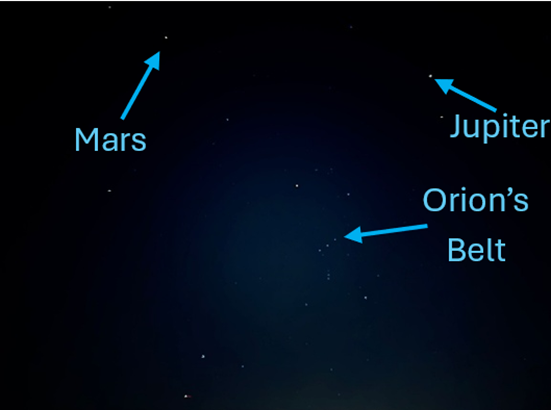
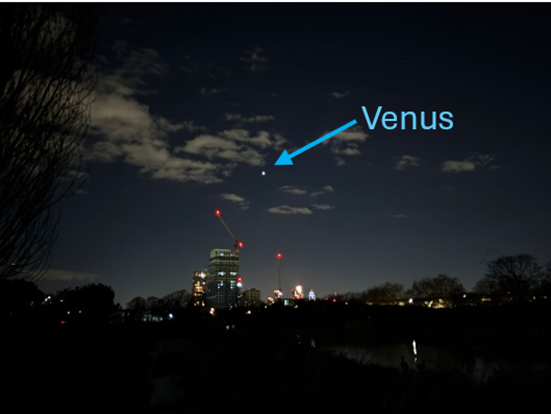
Unfortunately, by the time we were set up, a few planets had already dipped under the horizon in the West, setting with the Sun. We did however manage to capture images of Venus and Jupiter.
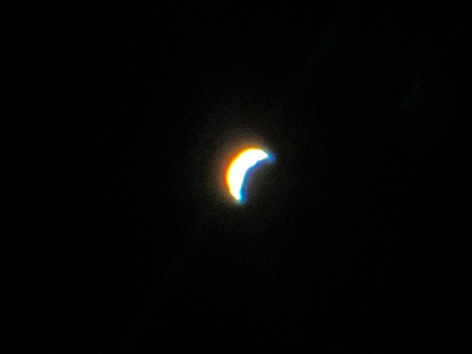
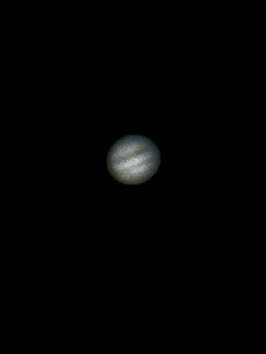
Despite being merely a crescent from our perspective, Venus appeared exceptionally bright with the naked eye. Jupiter was above Orion, and Mars to its left. Neptune and Uranus were also there, but impossible to view with the naked eye.
The 28th was the last day that Saturn would be visible in the night sky. Mercury will disappear in mid-March.
Planetary alignments are extremely rare events, and the ability to view all the planets simultaneously has not been recorded before this year’s Planet Parade.
All planets have different orbital periods around the Sun, making their likelihood of aligning small.
The next time this astronomical event will happen again is 2040.
Let’s hope it’s clear that night too!
About the author