Staff writer Guy de Basto analyses Group C of the 2026 FIFA World Cup ahead of the opening match between heavyweights Brazil and Morocco on 13 June.
Introduction:
Group C might just be the most poetic draw of the entire World Cup. Brazil arrive as five-time champions, chasing a sixth star under manager Carlo Ancelotti, twenty-four years removed from their last triumph. Morocco return as African champions and reigning semi-finalists, even if their manager won’t be there to see it through. Scotland are back at the World Cup for the first time in 28 years — and have, unbelievably, been drawn against the exact same two opponents who eliminated them in 1998. And Haiti, fifty-two years on from their only previous appearance, arrive with a coach who has never even set foot in the country he represents.
It’s a group absolutely packed with redemption arcs, second chances, and unfinished business, with four very different stories colliding in the same six group-stage matches. On paper, it looks settled. In practice, this could be one of the most emotionally charged groups of the entire tournament.
Brazil:

O Sexto?
The only nation to have appeared in every World Cup and the most decorated team in World Cup history, Brazil are looking to extend their lead with a sixth title. That said, they haven’t lifted the trophy since 2002, a drought that the nation is confident it can end this time. Eliminated by Croatia on penalties in the quarter finals in 2022, the pressure to finally end the wait has never felt heavier.
The Italian Job, Brazilian Style
A man who needs no introduction. Carlo Ancelotti takes charge of his first-ever World Cup, tasked with returning Brazil to the summit after more than two decades. His CV speaks for itself, with highly successful spells at Real Madrid, AC Milan, PSG, Bayern Munich and Chelsea, meaning he is unique in how he has won every one of Europe’s top five leagues, though international management is uncharted territory. Don Carlo’s recent connection to Real Madrid, having managed them from 2021 to 2025, means several key players are already familiar with his methods, which should ease the transition to the international stage.
The Men to Watch
Vinícius Júnior enters this competition as the centrepiece of Ancelotti’s project and is the player Brazil will look to for moments of magic. The biggest story, though, is Neymar’s inclusion at 34. It will mark his fourth World Cup appearance and likely his last, despite being absent from international football since 2023. His selection was met with ecstasy among football fans and Ancelotti has described him as an important player for the tournament, citing his improved fitness and continuity over recent months. In midfield, Casemiro, now 34, is expected to partner Bruno Guimarães, giving the side a blend of steel and creativity through the middle that any team would love to have. The team looks set to blend their traditional flair with a more pragmatic, possession-based structure, which is the hallmark of the Italian’s approach, balancing control and creativity. Expect a 4-2-4 or 4-3-3 built around fluid attacking rotations in the final third, expertly underpinned by a disciplined double pivot in midfield.
The Weight of the Yellow Shirt
Marquinhos captains a squad blending seasoned veterans with promising young talent, and on paper, this is one of the most star-studded line-ups at the entire tournament. It is worth noting that this is a situation Brazil has found itself in far too often — favourites who fell short. The key difference this time is Ancelotti, a manager with nothing left to prove domestically, chasing the one prize that has eluded him throughout his long and illustrious career. The first game against Morocco will be a good indicator of signs to come.
Predicted finish: First With the most talented squad in the group and a fantastic manager, anything less than topping Group C emphatically would be considered a disappointment.
Haiti:
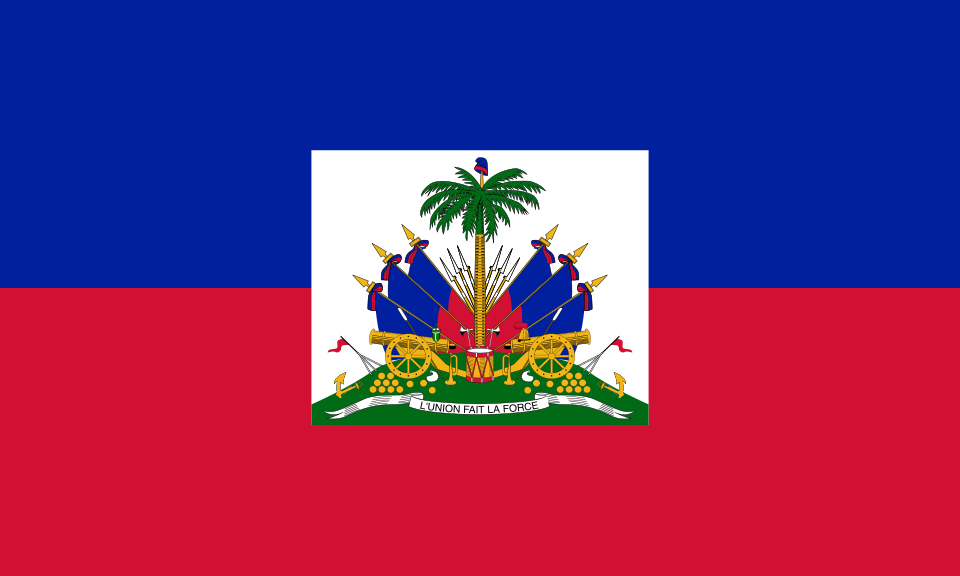
Five Decades in the Making
Massive underdogs Haiti will make only their second-ever World Cup appearance, and their first in 52 years. Their solitary previous showing came in West Germany in 1974, where they lost all three group games and shipped 14 goals. Qualification was sealed with a 2-0 win over Nicaragua, sparking celebrations across the Haitian diaspora for a moment more than half a century in the making. Remarkably, all of Haiti’s qualifying matches were played outside the country, being forced to Curaçao 500 miles away due to ongoing domestic unrest.
The Coach Who’s Never Been Home
The 53-year-old Frenchman Sébastien Migné took charge in June 2024, bringing extensive international experience from spells in charge of Kenya, Congo and Equatorial Guinea, including guiding Kenya to the 2019 Africa Cup of Nations (AFCON). Under him, Haiti won all six matches in the 2024/25 Concacaf Nations League and topped their qualifying group ahead of some very competent Honduras and Costa Rica squads. A slight drawback is that his squad is shaped almost entirely by the diaspora, with players drawn from clubs across Europe, North America, South America and Asia, and only one from Haiti’s domestic league. They operate best in either a 4-2-3-1 or a 4-4-2 so be on the lookout for that.
The Men to Watch
No player scored more goals in Concacaf qualifying than Duckens Nazon, with six — including a hat-trick off the bench against Costa Rica. Wolves midfielder Jean-Ricner Bellegarde, who switched allegiance from France as recently as August 2025, is also expected to play a starring role, while Sunderland striker Wilson Isidor adds further Premier League quality up front after a similar switch, following fan lobbying. Veteran goalkeeper and captain Johny Placide leads the side.
Beyond the Result
As the country continues to grapple with gang violence, political instability and economic hardship, Les Grenadiers have become a rare source of national unity and pride. Only two Haitian goals have ever been scored at a World Cup. Adding to that tally, as well as gaining the first World Cup point in its history, would be a landmark moment in itself.
Predicted finish: Fourth. Simply being here is the achievement — competing with three sides of this calibre will likely prove a step too far on their long awaited World Cup return.
Morocco:

The Atlas Lions Roar Again…
Morocco, once underdogs, now arrive as African champions and were the first African team to qualify for the 2026 World Cup, topping their CAF qualifying group with eight wins from eight, scoring 22 and conceding just two. Having attended six World Cups, 2022 remains their finest hour — the first African nation ever to reach a World Cup semi-final, eliminating Spain and Portugal along the way before falling to France. Expectations have never been higher.
but without their tamer
In a genuine late shock, Walid Regragui — architect of Morocco’s rise over the last four years — has resigned just months before the tournament, following defeat to Senegal in the Africa Cup of Nations final, though Morocco were later controversially awarded the win due to Senegal’s on-field protests. In steps Mohamed Ouahbi, fresh from leading Morocco’s Under-20s to World Cup glory, beating Argentina 2-0 in the final — his first senior head coaching role. He favours a high-pressing 4-1-4-1 that shifts into a 4-3-3 with overlapping full-backs, a shift from Regragui’s more compact, transition-based system, though the senior squad already knows his methods from their time together in the youth setup.
The Men to Watch
Captain Achraf Hakimi remains the standout name — a world-class right-back fresh off Champions League glory, now the most decorated African player in history with 19 major trophies. Nine players from the 2022 semi-final squad return, including Hakimi, goalkeeper Yassine Bounou, and Sofyan Amrabat. Brahim Díaz, one of the squad’s brightest stars, will be eager to make amends after missing a crucial penalty in the AFCON final.
Same again, please!
Morocco arrive ranked seventh in the world, with a squad drawn heavily from Europe’s top leagues. The change in coach so close to kickoff is a genuine risk, but the spine of the side that shocked the world in Qatar remains intact. Few teams outside the traditional powerhouses look as dangerous.
Predicted finish: Second The core of the 2022 semi-finalists remains intact, and that quality should be enough to see off Scotland and Haiti even with a new coach settling in.
Scotland:

Scotland Flag via Wikimedia Commons, available at https://commons.wikimedia.org/wiki/File:Flag_of_Scotland.svg
Twenty-eight Years of Hurt
Scotland has ended a twenty-eight year absence from the World Cup finals, sealed in extraordinary fashion: a 4-2 win over Denmark at Hampden Park, with the decisive goal scored from the halfway line, in a match Scotland had to win to qualify outright. They topped their qualifying group with four wins, a draw and one defeat, scoring 13 goals across six matches. The draw, though, brought a bitter twist of fate — Group C reunites Scotland with Brazil and Morocco, the very same opponents who ended their 1998 campaign and the very same opponents they lost both matches to 28 years ago.
Is Clarke the Man?
Steve Clarke took charge in May 2019, transforming Scotland from also-rans into consistent qualifiers — delivering their first major tournament since 1998 at Euro 2020, followed by Euro 2024. Having narrowly missed out on a World Cup as a player in 1990, Clarke has spoken of the lingering hurt of never reaching one with his country, making this achievement deeply personal as much as professional. They are likely to play a compact 4-3-3 but have also experimented with a 3-4-2-1, which would truly be mesmerising to watch.
The Men to Watch
Former Liverpool man Andy Robertson captains the side as its most experienced player with 94 caps, just eight short of Kenny Dalglish’s all-time record, and will be wanting to hit the ground running before his transfer to Tottenham comes to fruition after the tournament. Serie A Player of the Season Scott McTominay of Napoli is the midfield talisman, while 43-year-old goalkeeper Craig Gordon is set to become the second-oldest player ever to appear at a World Cup. Seven Premier League players make the trip in total.
Unfinished Business
Scotland have come agonisingly close to the knockout rounds before, missing out on goal difference in 1974, 1978 and 1982. At the ninth time of asking, Clarke’s side will be desperate to finally become the most successful Scotland team in history.
Predicted finish: Third A talented, well-organised side, but their two group fixtures against Brazil and Morocco are the same matches that ended their World Cup dream in 1998. To quote Mark Twain, history doesn’t repeat itself, but it often rhymes. Just don’t be surprised when they make a deeper run than you might expect.
Conclusion:
Group C has no shortage of heavyweights — which is exactly what makes it so dangerous. Brazil arrive as the clear favourites, but favourites have stumbled in this group before. Morocco carry genuine pedigree and a squad capable of repeating their 2022 heroics, even amid late upheaval. Scotland return with real quality and a point to prove against the very ghosts of their past. And Haiti, against all odds, are simply happy to be here — though stranger things have happened at World Cups. Two spots in the last 16 are up for grabs, but here it feels like the order is largely set. Don’t be surprised, though, if this is the group where the script gets torn up.
About the author