Staff writer Anoushka Sinha guides readers through the recent ‘planet parade’ – a rare phenomenon where planets appear to be aligned in the night sky.
Astronomers across the UK – amateur and professional – all gazed up at the sky in wonder this week to see the much anticipated ‘planet parade’.
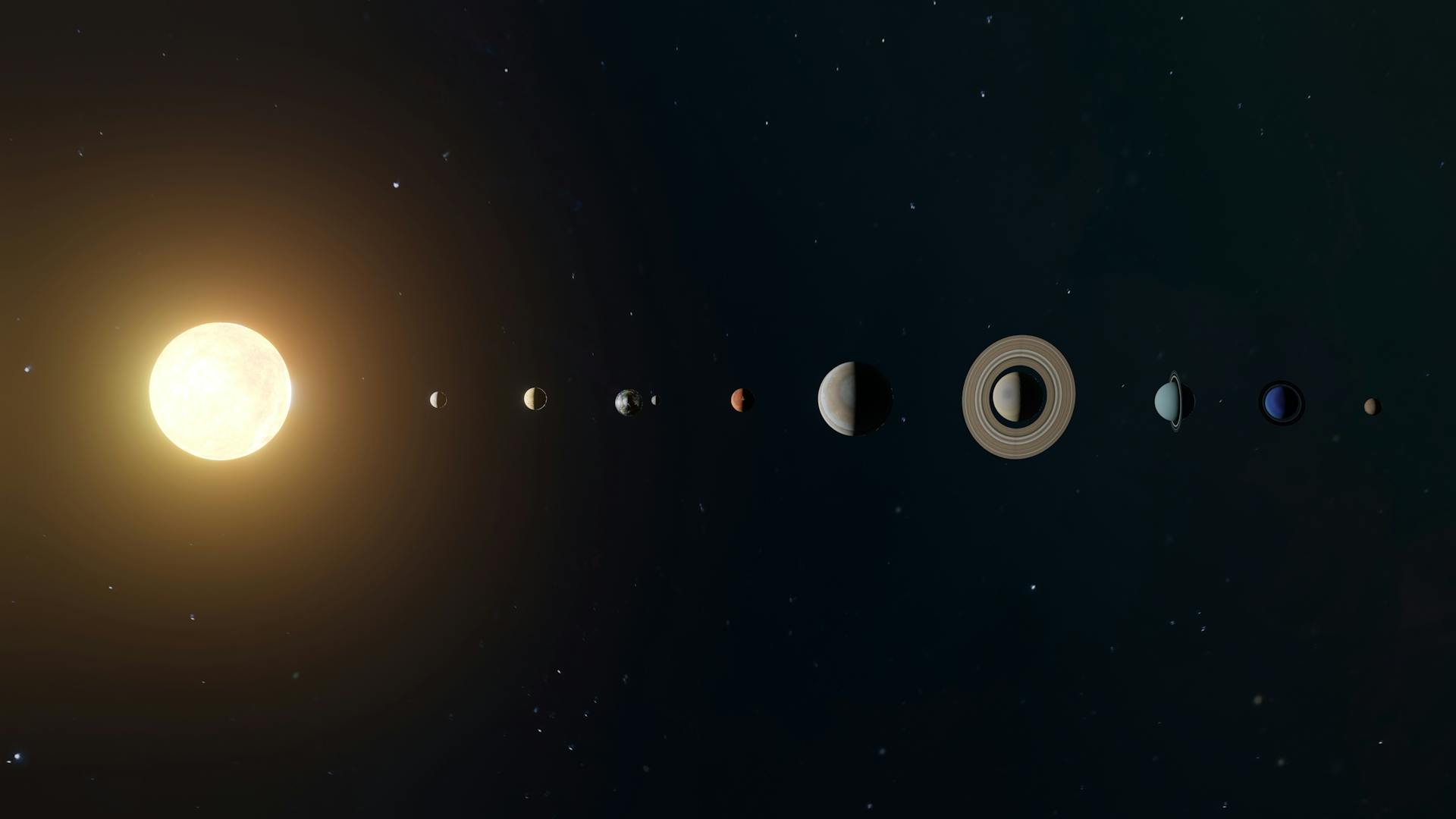
Due to the different orbital periods of the planets, it is rare to be able to see all the planets at once in the night sky. This only occurs when the planets are roughly lined up on the same side of the Sun.
Unfortunately, two of the planets (Uranus and Neptune) are not visible to the naked eye, but Jupiter, Mars, Saturn, and Venus can all be seen with the naked eye. On 25 February, Mercury will also become briefly visible.
The planets fully aligned on 21 January, but the ‘parade’ can be seen on the days after. If you are reading this in the early evening after dark, step outside and turn to the South-East. There are three bright stars visible in a line, known as Orion’s Belt. Above this belt is the bright star Bellatrix (also part of the Orion constellation), and above Bellatrix is Jupiter.
Now turn 90 degrees to your right. See those two bright points, at the same height as Orion’s Belt? Those are Venus and Saturn.
Jupiter, Venus, and Saturn all appear as bright spots in the night sky. An easy way to differentiate planets from stars is to notice that planets do not twinkle like stars do.
If you were to turn your attention back to Orion’s belt, and turn about 45 degrees to the left, there is a red spot known as Mars.
Unfortunately, Mercury will only become visible in the latter half of February, just before dawn.
Mercury and Venus are particularly hard to see as since they are closer to the Sun than the Earth, they often rise with the Sun. However, when they are visible, they both appear as bright white spots, with Venus shining especially bright compared to other nearby objects.
For anyone looking for other interesting objects in the night sky this time of year, the super bright star below Orion’s Belt is Sirius; the brightest star observed from Earth.

For other observations, applications like Stellarium are highly recommended by many. The last planetary alignment happened in June 2022, involving Mercury, Venus, Mars, Jupiter, and Saturn. The one before that happened in 2004 – the same year the author of this article was born!
The alignment of the planets is not a magical astrology event, simply a coincidence which occurs in our night sky every once in a blue moon (pun intended). However, viewing the planets is always a special event, whether the viewer is a professional astronomer, or just a curious stargazer.
About the author