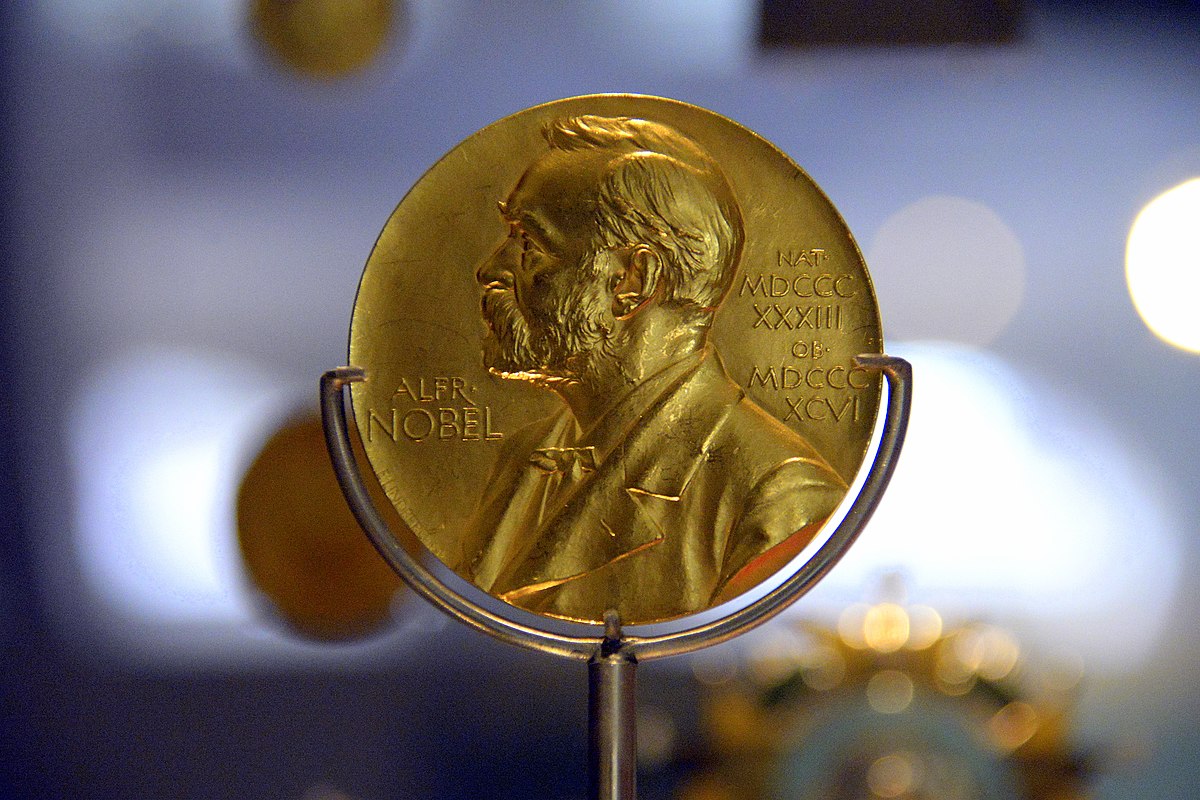
Every year, the most outstanding achievements in science are awarded to leaders in their respective fields. Science Editor Anoushka Sinha discusses the significance of this year’s winners in Medicine, Physics and Chemistry.
Medicine
This year’s Nobel Prize winners in Physiology or Medicine are Mary E. Brunkow, Fred Ramsdell and Shimon Sakaguchi.
Their work on investigating peripheral immune tolerance (how the immune system is regulated) will aid cancer research and give a better understanding of why many people suffer from autoimmune diseases – and how to prevent them.
Sakaguchi discovered a new class of immune cells in 1995, changing the tide of immune research. Brunkow and Ramsdell made another discovery in 2001 when experimenting on mice; they found that mutations in the gene IPEX (Foxp3 in mice) causes autoimmune disease.
Autoimmune disease affects 10% of the population and some 6% of young people in the UK. Approximately one in two people in the UK will be diagnosed with cancer at some point in their lives. The work of Brunkow, Ramsdell and Sakaguchi is therefore vital to improving treatments for a variety of chronic or potentially terminal diseases.
“For students living with various immune-related disabilities, it offers hope for treatments that could one day be more precise, even as we continue to wait for those breakthroughs to become accessible in our everyday care”
Disabled Students’ Society
Physics
This year’s Nobel Prize winners in Physics are John Clarke, Michel H Devoret and John M Martinis.
Quantum physicists everywhere have many unanswered questions – a significant one being how large a system can be before it stops showing quantum behaviour. Using an electrical circuit, this year’s winners were able to demonstrate quantum tunnelling and quantised energy levels in large systems.
In 1985, Clarke, Devoret and Martinis used superconductors to build a circuit where they could control many parameters. They found that the charged particles in the superconductor behaved like a large singular particle. Through quantum tunnelling (particles jumping through energy barriers), this collective quantum state was able to manifest its own voltage.
“This year’s Physics Nobel prize honours discoveries from four decades ago, which laid the foundation for modern developments in quantum computing… This is a truly amazing demonstration that quantum mechanics is universal”
Dr Mark Mitchison, Senior Research Fellow in Physics specialising in Quantum Technologies at King’s College London
“Discovery, in the field of quantum, has deep roots in international collaboration which makes use of all the different strengths of the various education systems worldwide. This Nobel prize is proof of this, with a French, an English and an American who worked together rather than apart.”
Dr Eleanor Crane, Lecturer in Physics specialising in Quantum Computing at King’s College London
Chemistry
This year’s Nobel Prize winners in Chemistry are Susumu Kitagawa, Richard Robson and Omar M Yaghi.
Their work focuses on using porous materials to build structures which can act as traps for chemicals. These ‘metal-organic frameworks’ (MOFs) have the potential to absorb water from desert air, capture and store toxic gas or speed up chemical reactions.
In 1989, Robson used copper and organic linkers to create crystals filled with cavities. Picture a sponge, with all its holes allowing it to absorb water – now imagine that sponge is made of metal. In the decades following, Kitagawa and Yaghi separately built on Robson’s discovery; they found that gases can flow in and out of the frameworks and improved upon the initial design.
Dr David Pugh of the Chemistry department explained that “MOFs were quickly identified as materials which could store large amounts of gases like CO2, with the obvious environmental benefits in carbon capture and storage. But other applications have come on stream which weren’t predicted in early studies, for example MOFs are used as ‘crystalline sponges’ which has enabled scientists to determine the structure of molecules which can’t be obtained using other methods.”
“It is great to see that Kitagawa, Robson and Yaghi have finally been rewarded for their outstanding work in this field… This versatility is just the tip of the iceberg and MOFs will continue to find new uses in the years to come.”
Dr David Pugh, lecturer in Inorganic Chemistry Education at King’s College London
About the author