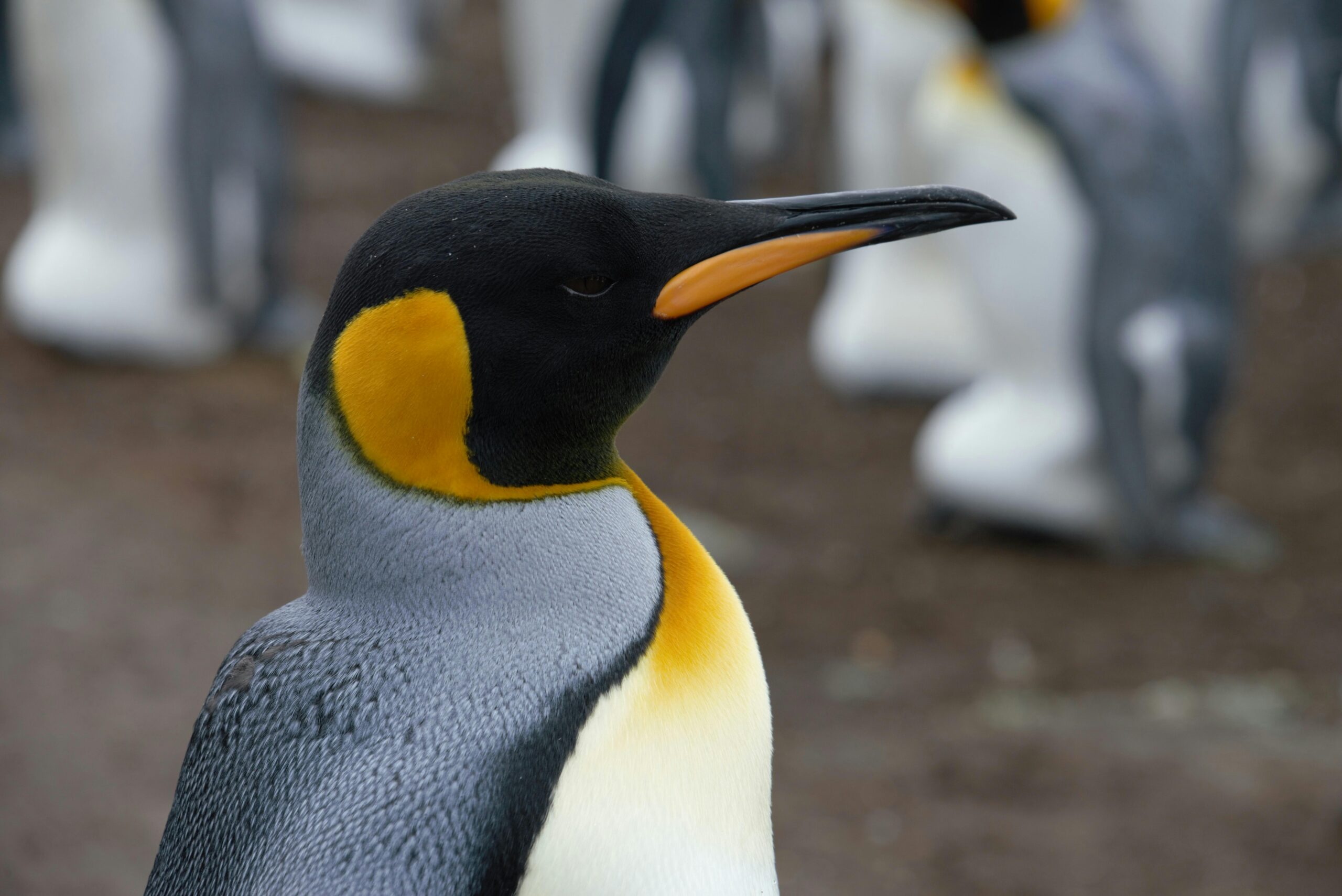
As of 9 April 2026, the International Union for Conservation of Nature (IUCN) Red List of Threatened Species have marked the emperor penguin, alongside the Antarctic fur seal, as ‘Endangered’.
This announcement was made just four months after marking the 124th anniversary of its discovery by British explorer, Captain Robert Falcon Scott.
Emperor penguins, more widely known as the ‘Kings of Antarctica’, are the tallest and heaviest living penguin species on Earth. While they may look slightly clumsy on land, these penguins have the deepest and longest dives of any bird, reaching depths of over 200 meters.
Despite these biological advantages, a recent analysis of satellite imagery from the British Antarctic Survey suggests that their population declined by 22% over a 15-year period (2009-2024), with computer-modelled projections indicating that the species could approach extinction by the year 2100.
Such dramatic population declines are primarily attributed to global warming. Emperor penguins, like most penguins, depend on ‘fast ice’ – sea ice that is attached or fastened to the Antarctic coastline.
Fast ice is important for the biodiversity of Antarctica. hosting breeding grounds for important species such as penguins and seals. It’s also thought that in some cases, it can be important for restraining the flow of glaciers, pushing up against it.
Dr Alex Bradley, Lecturer in Climate and Environmental Science at King’s College London
Emperor penguins require stable fast ice from January to April, where their fluffy chicks hatch and develop until they grow waterproof feathers. Adults also undergo an annual moult, and rely on this ice as a safe refuge while their swimming feathers regrow.
We don’t yet know whether loss of fast ice specifically is due to climate change, but loss of Antarctic sea ice, which forms by similar mechanisms is a robust signal of climate change.
Dr Alex Bradley, Lecturer in Climate and Environmental Science at King’s College London
But when sea ice breaks too early, entire colonies can fall into the ocean, leaving the chicks to drown. Research from Cambridge University has shown that, following major calving events that disrupted breeding sites, some colonies have attempted to relocate to new embayments. However, these new locations often leave them more vulnerable to early ice breakups or force them to travel distances to forage.
In addition, rising ocean temperatures around Antarctica are pushing krill further offshore and into deeper, colder waters. As a result, emperor penguins must dive deeper and travel further to find food, increasing the energy demands on an already stressed population.
Whether emperor penguins can remain the ‘Kings of Antarctica’ by the end of this century may ultimately depend not only on their ability to adapt, but on our willingness to act upon a warming climate.
Their decline is a harsh reminder that even the most remote and biologically extraordinary species are not insulated from climate change – they are in fact, on thin ice.
About the author