Staff writer Billy Nunn reflects on the role of the Science Gallery London with its expected closure.
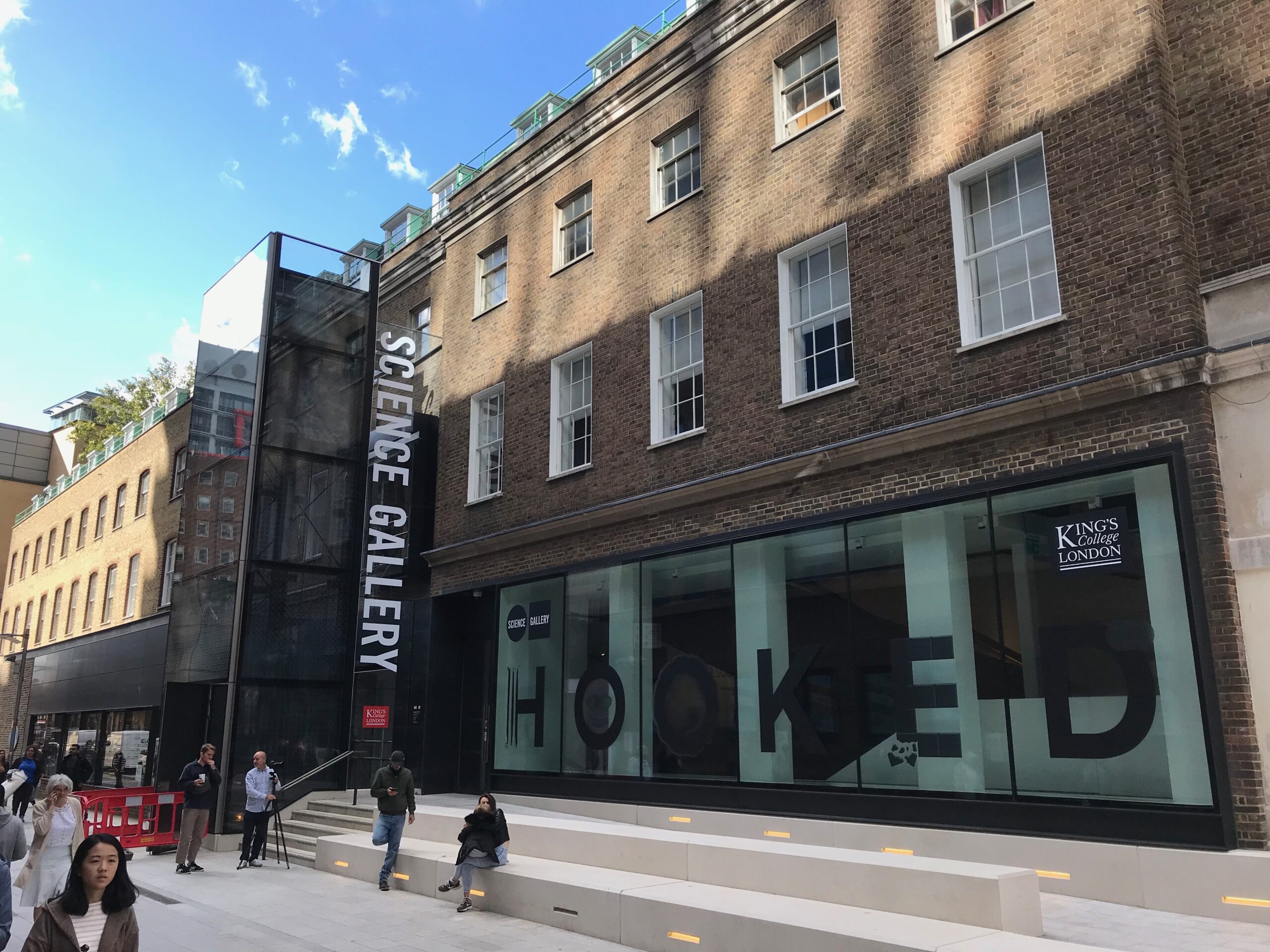
If you’ve ever found yourself wandering across Guys Campus, you may have stumbled across a restored brick building, with a glass-fronted ground floor offering a glimpse of some striking, and often unusual, exhibits inside – this is Science Gallery London.
However, by the end of the 2025-26 academic year, that glimpse of science will be replaced by a disappointing and rather dull sight of boarded-up panels. This follows King’s College London’s (KCL) announcement on 17 April 2026 that it will close the Science Gallery.
This announcement comes as part of KCL’s effort to “redirect institutional resources towards its core priorities in education, research and innovation, in line with its Strategy 2030.”. Despite Science Gallery London aligning with all three priorities, increasing financial pressures on higher education have made it difficult for the space to remain open.
Marking the end of an era
Launched in September 2018, Science Gallery London was founded to represent a wider mission: to bring university research and public imagination into genuine, creative conversation. Hosting a range of exhibitions and workshops, the gallery marked a significant step towards making science more accessible and engaging for a wider public audience.
One notable exhibition, “Dementia Journeys: Towards Better End of Life Dementia Care,” explored the incredibly compelling experiences of those caring for individuals with dementia at the end of life. It unmasked the ways care could be significantly improved. The exhibition stemmed from a six-year collaboration between KCL’s Cicely Saunders Institute and University College London (UCL), aiming to drive meaningful change in dementia care. The exhibition created a safe space where academic research was translated into lived experiences, allowing visitors to connect emotionally with the findings presented.
Another standout success was the “Quantum Untangled” exhibition, which attracted more than 40,000 visitors from around the world. It was recognised by Londonist and TimeOut as one of the top exhibitions to see in London. Amongst many of its highlights were visually stunning and spectacular installations. This includes Robin Baumgarten’s “Quantum Jungle”, which used dynamic lighting effects to mimic the behaviour of quantum particles. If you had the privilege to see this spectacle, you would’ve also seen the amazing sculptural installations by Alistair McClymont.
Public reactions to the closure
As expected, the collective reaction to the closure of Science Gallery has been overwhelmingly negative, with widespread opposition to KCL’s decision. Roar spoke to individuals who participated in previous exhibitions at the gallery, as well as students who regularly visited the gallery.
“The closing of the gallery is an unfortunate outcome for everyone, whether it is a student or researchers getting their research showcased in the gallery, or whether it is the publics ability to experience contemporary issues.” – Aswin Esaichelvan , BSc Geography & Environmental Science Student
Esaichelvan went on to add, “it is a step back in the progress towards growth and access in new science and culture research”. This view is shared by many, who saw the gallery as a “fun and interactive space”. Regular visitors from the wider public have expressed similar disappointment, having frequently attended its exhibitions.
“As a London Blue Badge Tourist Guide, I see public galleries as vital bridges between academic knowledge and everyday curiosity. The closure of Science Gallery London feels like a real loss, because spaces like this help students, visitors, and the wider public engage with science in a visible, accessible, and inspiring way.” – Koray Atlan, London Blue Badge Tourist Guide
These voices highlight a broader concern that the closure represents more than just a physical loss for students and the wider community that the gallery has built.
What does this mean for universities across the UK?
The closure of Science Gallery London raises broader concerns regarding the future of public engagement within universities across the country. As financial pressures continue to grow across the higher education sector, universities are compelled to focus on activities that generate material returns. This is reflective of the approach reflected in King’s new Strategy 2030.
Accompanying this is a risk that universities are shifting away from the civic institutions they once were. Instead, they are becoming more focused on teaching outputs and research metrics. While these are important, they do not fully capture the role these institutions play in allowing the public to engage in research.
Ultimately, the closure of Science Gallery London serves as a stark reminder of the current and future challenges faced by KCL.
About the author