Culture Editor Thomas Deakin praises the BBC Proms for bringing music lovers together, celebrating the work of both British and worldwide performers.
Despite growing up in a highly musical family, I initially found the sound of classical music a distant and mechanical counterpoint to the lyrical developments in the 20th and 21st century. However, when I went to the BBC Proms in 2022 with my aunt, a professional contralto singer, seeing Zubin Mehta’s Australian World Orchestra perform live at the Royal Albert Hall awakened me to the poetry of such an art form, utilising a cacophony of sounds to realise feelings that words do not adequately convey.
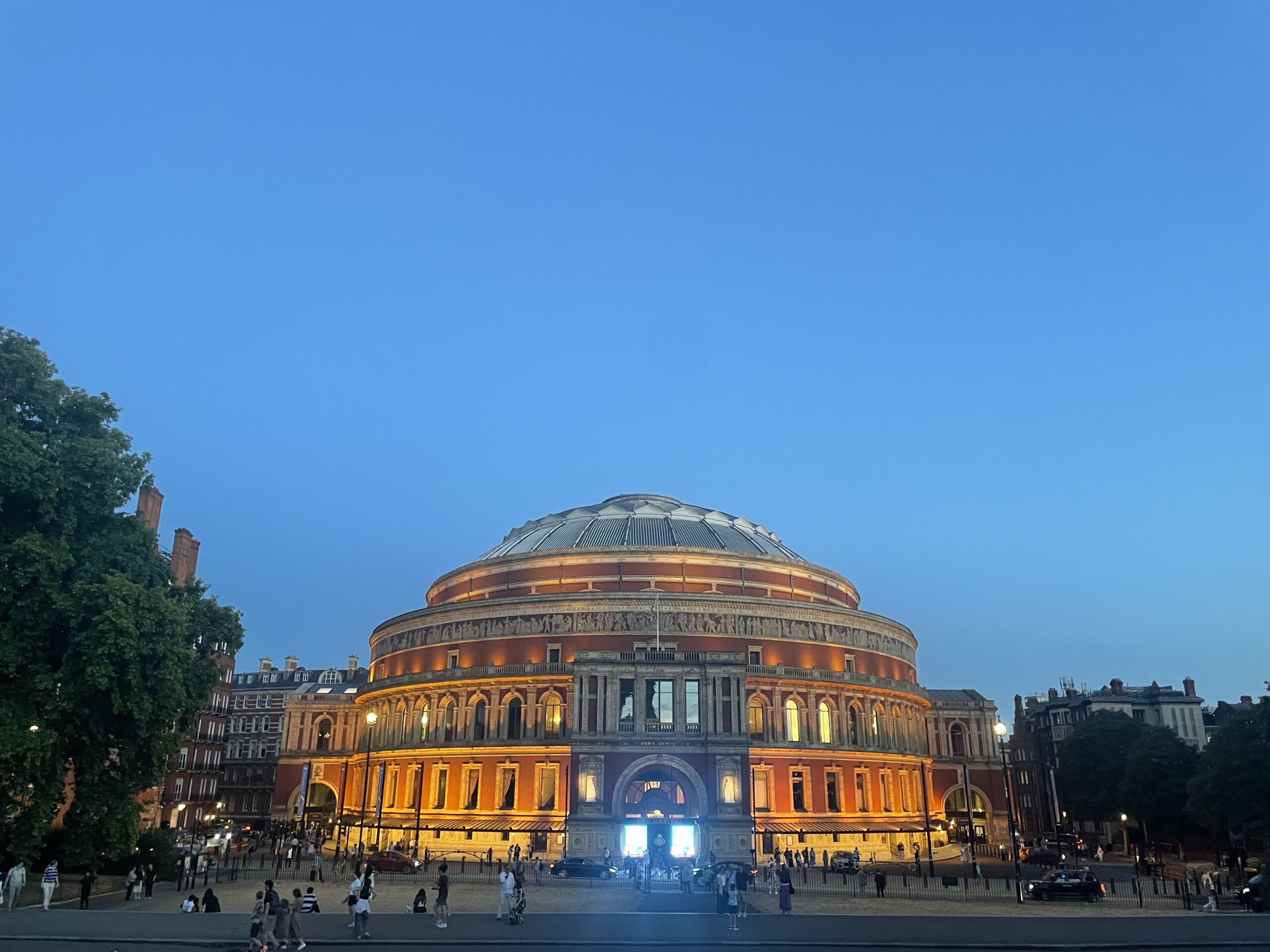
Taking place predominantly inside the Royal Albert Hall, the BBC Proms is a yearly summerly classical music festival, comprising of 86 concerts over eight weeks. Founded in 1895 by impresario Robert Newman and conductor Henry Wood, the ‘proms’ is short for ‘promenade’ concerts, where people could casually and inexpensively stand and listen to classical music. Whilst many proms attendees are now seated, this spirit of inclusivity is maintained by the festival’s privileging of both talented British musicians and those from different cultures around the globe.
In addition, the success of the BBC Proms has enabled the festival to expand its repertoire beyond its conventional associations with classical music. For example, the most recent season of the proms featured a Prog Rock Prom on 18 July 2026 described as A Fanfare for the Common Man that featured arrangements of artists such as Genesis and Jethro Tull.
This expansion has also seen the BBC Proms occasionally shift outside of London to other areas of the UK. A recent example of this was a BBC Proms concert at Middlesborough Town Hall on 23 July 2026 headlining songs shaped by the North. Featuring Northumbrian folk duo The Unthanks and the internationally renowned Royal Northern Sinfonia chamber orchestra among others, this fusion of Northumbrian music scenes demonstrates the BBC Proms’ continuing ability to promote British music as something unique, diverse, and inherently multicultural.
Beyond exhibiting the beauty of multiculturalism within the UK, the prom that I attended, once again with my aunt, on 27 July 2026 at the Royal Albert Hall proved the importance of the BBC Proms as not just a British institution, but a festival with international influence. Titled From The Alps to the Auvergne, this luminous concert focussed on music relating to the simultaneously tranquil and chaotic ambiance of forests and mountains in Northern and Western Europe.
The concert opened with the London Philharmonic Orchestra performing the ‘Between Trees’ by Kristine Tjøgersen, a brilliant and short modern piece that enveloped the listeners within a Nordic forest. The juxtaposition of this then arrived with a rendition of French composer Joseph Canteloube’s ‘Songs of the Auvergne’, sung excellently by British soprano Louise Alder, that provided a jubilant celebration of the unity found in the nature of the forest.
After a short interval, the London Philharmonic Orchestra performed Richard Strauss’ ‘An Alpine Symphony’. Sonically channeling a long mountain climb, this diverse spectacle reminded me of what I had realised 4 years previously: the power of classical music is a sublime more emotionally resonant than describable in words alone. Strauss’ piece thus served as the apotheosis of this journey back through history that reasserted how the BBC Proms’ mode of musical performance is shaped by multiculturalism.
The 2026 Festival of the BBC Proms then finished perfectly with the Last Night of the Proms on 12 September 2026. Containing tributes to Dolly Parton and tenor Nicky Spence’s fantastic tartan trousers that doubled as a pride flag, this event of musical chaos typified that British music should be neither nationalistic nor restrictive. Instead, the music of the BBC Proms embraces how musical performance is most enlightening when it allows for numerous cultures to come together and reject simplicity in favour of respect and originality.
To read more of Roar’s articles about music, press here.
About the author