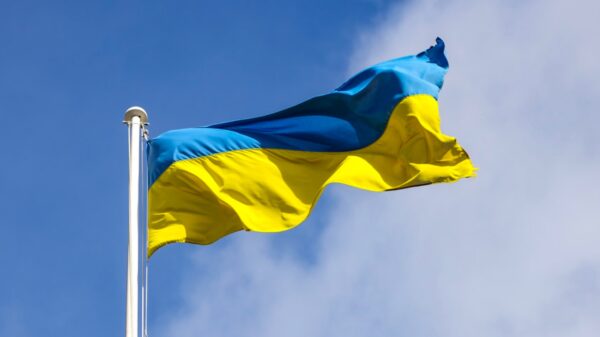
Roar writer Dinh Nguyen on how Vladimir Putin’s invasion of Ukraine has brought unprecedented unity to Europe and the westÂ
On the cold, winter morning of February 24, columns of Russian tanks slowly rolled through the Ukrainian countryside headed for its capital Kyiv. President Vladimir Putin’s war on Ukraine was underway. Their mission, he claims, is to “denazify” and “demilitarise” Ukraine. Putin ordered the biggest invasion Europe has ever seen since WWII. However, in his eerie speech lamenting the world power that was once the USSR, the true cause of the invasion becomes clear: Putin seeks to stop the growth of NATO and the democratic west.
Ukraine’s relationship with the West changed after the Maidan Revolution of 2014, which saw the country toppling the Russia-friendly government of President Viktor Yanukovych. The new government renounced Ukraine’s non-bloc status and put it on a path to joining NATO, in line with the changing public opinion about the nation’s relationship with its western allies. The process has been slow and, even today, Ukraine is neither a NATO or EU member. However, what’s ironic is that because of his choice to invade Ukraine, Putin’s fear of a stronger, more united Europe may have become a self-fulfilling prophecy.
One of the first signs of the strengthening of relations between European countries were seen when news broke out about a build-up of troops along the Ukraine-Russia and Ukraine-Belarus borders. The UK, France, Germany and other European countries sent anti-tank weapons, small arms, body armours, aid and other military resources to Ukraine. More importantly, however, the invasion sparked a shift away from neutrality. On the 26th of February, Germany reversed its post-WWII stance on supplying foreign countries with weapons by agreeing to send anti-tank weapons to Ukraine.
Sweden and Finland, who have traditionally stayed away from supporting any parties in foreign conflicts, have also sent arms to Kyiv. The swift response from neighbouring countries hoping to strengthen Ukraine’s defence capabilities, in part out of self-preservation for their own against possible similar Russian aggression has tightened the bonds between European countries. The invasion also shocked Germany into abandoning its other post-war commitment to maintain only a bare-bones military service. German Chancellor Olaf Scholz pledged a €100 billion investment as well as an increase in the annual budget into Germany’s defence, saying that Germany “has entered a new eraâ€. This will undoubtedly benefit NATO as a whole in the long run.
Countries were also quick to come together to deliver waves of sanctions onto Russia. The decision to cut Russia from the global banking SWIFT system comes as a cost to European business and the same could be said for Germany’s suspension of the Nord Stream 2 pipeline project. Other sanctions, while intended to hurt Russian businesses, will ultimately also affect businesses based in other countries. Within a week, however, trades dried up as foreign businesses leave Russia. The response from the EU shows that the alliance will not hesitance to sacrifice in the face of external threats.
The greatest signal of a strengthening of NATO and the EU, however, come as a direct result of Putin’s invasion. Following Ukraine’s application to the EU, both Moldova and Georgia have submitted their own last week. Along with that, in Finland and Sweden, there has been a renewed public interest in joining NATO. Polls show that there has been a jump in favour of the two countries joining the alliance following the invasion.
Putin’s invasion of Ukraine to stop them from joining NATO and prevent the enlargement of the Western alliance has, thus far, achieved the opposite. In the face of an imminent threat from an aggressive Russia, bordering countries seek support and security from the West. This, coupled with the waves of sanctions and support by European countries, shows that Putin has successfully brought Europe together making himself the very war-mongering, dictator they united to stand against.
About the author