Staff Writer Biraj Khadka outlines how USAID cuts have impacted Nepal.
Since President Trump’s stroke of a pen set in motion the effective shuttering of USAID and resulted in thousands of employees out of work, the effects have reverberated throughout developing countries heavily reliant on foreign aid.For Nepal, a nation nestled amongst the Himalayas and far from the corridors of power in Washington, the consequences have been acute, with an array of programs halted, ranging from health work to initiatives centred on promoting greater democracy.
The Shuttering
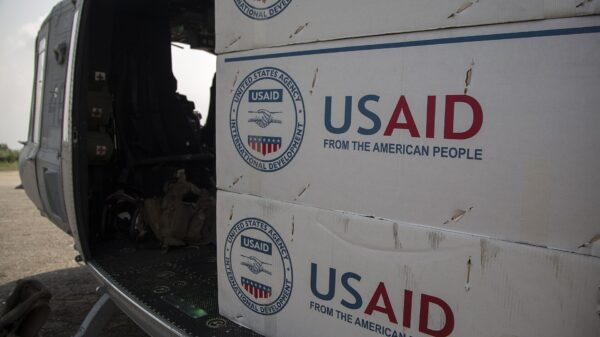
On January 20 2025, the day of his inauguration, Trump signed Executive Order 14169, which paused all U.S. foreign assistance pending a 90-day review to ensure that all aid aligned with the administration’s ‘America First’ objectives. By March, more than 80% of USAID’s programs had been cancelled, and the sign bearing the agency’s name at the entrance to its Washington, D.C. headquarters had been removed. Thousands of nonprofit organisations around the world whose work USAID was involved with received stop-work orders, and the agency’s website proclaimed that all employees had been placed on leave.
The agency, established in 1961 by then President John F. Kennedy to administer foreign aid on behalf of the U.S., had met its demise in rapid fashion. With that, the life-saving humanitarian work that the agency engaged in, saving up to 5.6 million lives annually, had come to a screeching halt.
The Impact on Nepal
Since the very beginning of U.S.-Nepal diplomatic relations in 1947, U.S. Assistance to Nepal has been at a forefront of cooperation between the two countries: predecessor aid organizations to USAID had been operating in Nepal as early as 1951. The U.S. has provided Nepal with $1.5 billion in foreign aid since then, with $212 million alone being channeled into the country in 2024.This aid was vital in encouraging social and economic inclusion for minorities, delivering essential health services in rural areas, and providing education to children from underprivileged backgrounds. In a nation often imperiled by nature – Nepal is prone to earthquakes, and faces the looming threat of its Himalayan glaciers melting due to global warming – USAID funded crucial schemes aimed at disaster risk mitigation. All of these programs have now been shuttered.
Over 300 nonprofit organizations in Nepal received funds from USAID to implement humanitarian and democracy-building work. Amongst the initiatives affected by the funding freeze was a program by The Asia Foundation centred on training journalists in order to bolster independent media organizations. There is a worry amongst many that even as countries like China step in to replace some of USAID’s development work, initiatives prioritising democracy and human rights, such as the media scheme, will no longer be prioritised. China’s foreign aid policy does not place an emphasis on democracy building, and is often more transactional than that of Western democracies.
The repercussions for Nepal’s economy have been grave, impacting sectors far beyond development alone. 600 properties across Kathmandu that were associated with USAID are now sitting empty. Up to 35,000 local jobs have been impacted by the halts in funding, putting the livelihoods of thousands of people who were previously employed by nonprofits at risk. With hundreds of USAID associated properties now empty, landlords and businesses once dependent on rent from these organizations also face uncertainty.
I have watched friends of my parents abruptly lose their jobs as one aid contract after the other was cancelled. Throughout 2025, discussion about which ‘waves’ of nonprofit layoffs were coming dominated conversations in Kathmandu. The owner of a restaurant popular with diplomats and foreign workers began to wonder how long her business would survive as her usual lunchtime crowds thinned. Hotel reservations declined, and airlines began cutting flights to remote districts as the number of aid workers flying for fieldwork dwindled.
Wider Repercussions
The situation in Nepal shows how widespread the impacts of the shuttering of USAID have been. Of course, it is only one of many examples from around the world, from HIV care disappearing in Zimbabwe to absences of aid workers in earthquake ravaged countries. Even more troubling is the fact that such drastic transformations occur without any input from those worst affected. While supporters of such reductions may argue that the U.S. is not obliged to provide assistance to foreign countries at U.S. taxpayers’ expense, such rationalisations become obsolete when considering that foreign assistance accounted for less than 1% of the U.S. total annual budget.
The benefits that foreign aid reaped for Americans – such as improved perceptions of the U.S. abroad, and greater incentives for developing countries to turn to the U.S. instead of embracing competitors like China – were plenty, and far outweighed any costs to American taxpayers. Assistance aimed at preventing disease outbreaks abroad, for instance, helped ensure that dangerous pathogens were contained well before they reached American shores, ultimately keeping Americans safe.
A year after the unraveling of USAID was unleashed, the ramifications of what is perhaps the most consequential development of Trump’s second term have only just begun. This rings especially true for nations like Nepal, which are left at the mercy of decisions made far away.
About the author