The location of William Shakespeare’s “missing” London house, which he bought in his later life, has been mapped out after floor plans were found by a King’s professor.
Professor Lucy Munro, a Shakespeare expert, discovered the previously unknown floorplan in the London Archives using documents from the Bard’s relatives about the sale of his house.
The house, located at 5 St Andrew’s Hill in Blackfriars, central London, was a “substantial” property just a stone’s throw from St Paul’s Cathedral. It was destroyed in the Great Fire of London of 1666.
Aged 48, Shakespeare (who would die four years later) bought his first and only property in London. Despite famously being of Stratford-upon-Avon, he had, for much of his professional life, worked in London, most notably involving the Globe Theatre in Southwark.
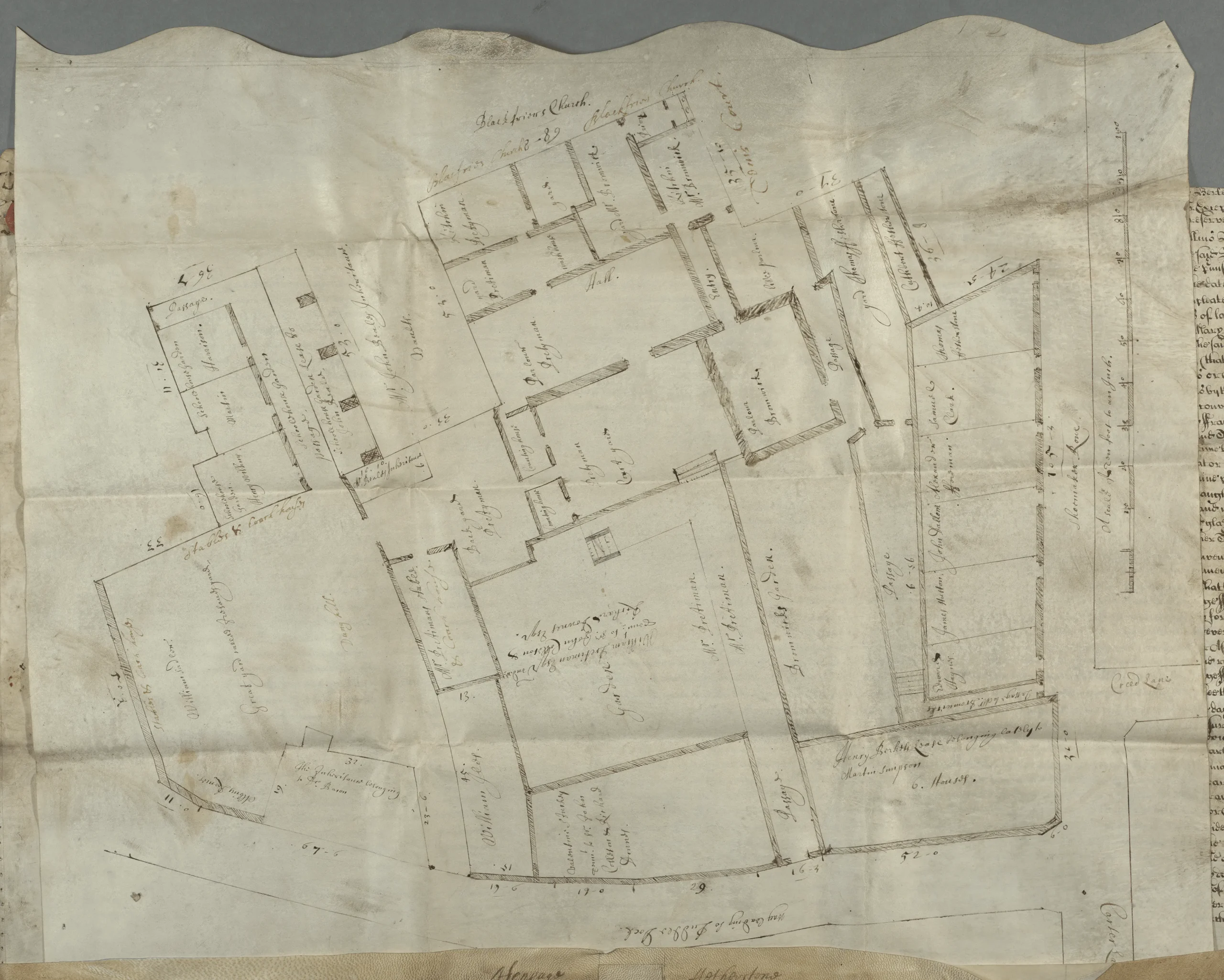
Professor Munro, who teaches in the Department of English at King’s, cross-referenced documents relating to Shakespeare’s estate in the National Archives with records in the London Archives in order to find the plan.
“I was doing research as part of a wider project and couldn’t believe it when I realised what I was looking at – the floor plan of Shakespeare’s Blackfriars house”, she said.
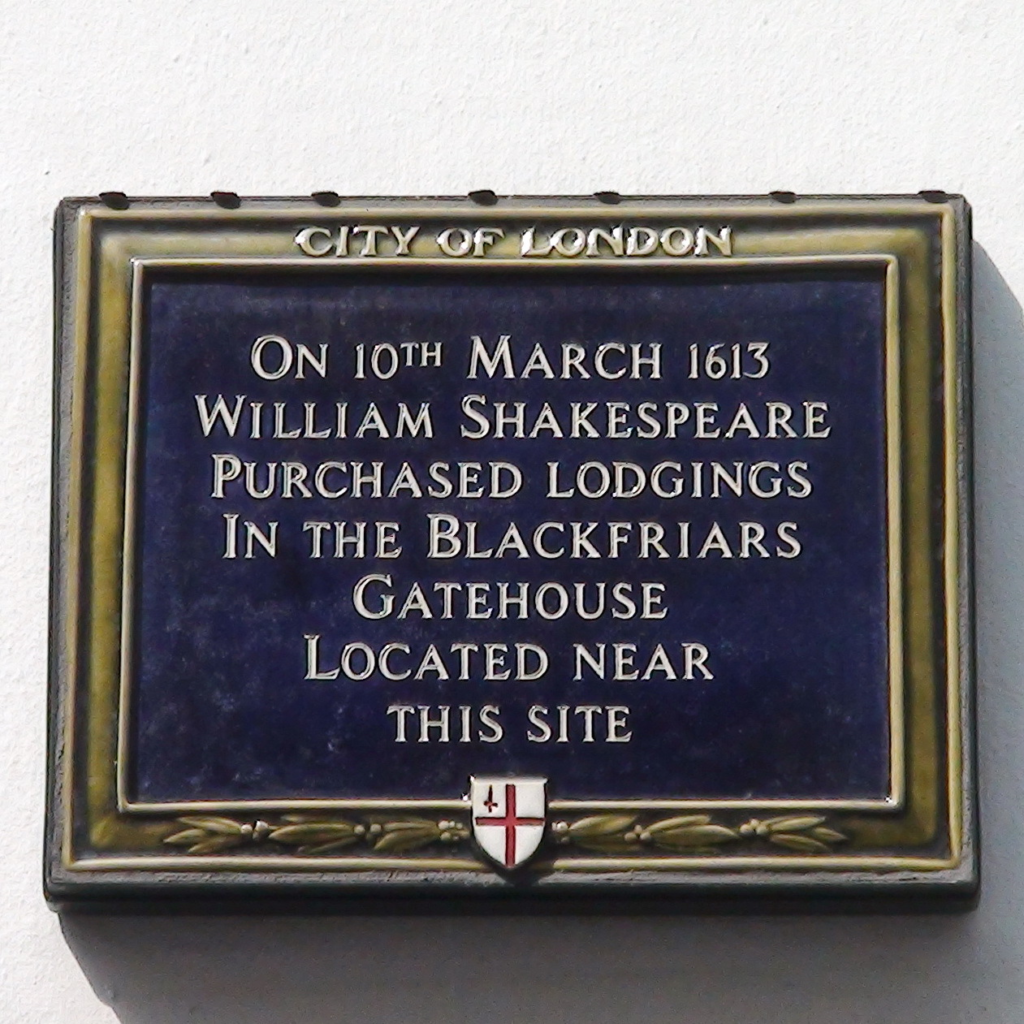
Whilst Victorian scholars had already discovered that Shakespeare lived in the Blackfriars area, this is the first time that his house can be located with certainty. A blue plaque, installed in 2013, can now be confirmed as being correctly located.
It remains uncertain whether Shakespeare actually lived in the house or merely bought it as an investment. At the time of his death in 1616 he was renting it out – perhaps his original intentions of living there were scuppered by his ill health and financial difficulties, suggested Prof Munro.
“This discovery throws into question the narrative that Shakespeare simply retired to Stratford and spent no more time in the city”, she said. “It has sometimes been thought that he bought his Blackfriars property merely as an investment, but we don’t know that this is true, or that he never used it for himself.”
After Shakespeare’s death, the house passed to his eldest daughter, Susanna with the condition that it would subsequently pass on to her daughter Elizabeth and her husband.
A fight as to who was to inherit the house ultimately produced some of the key documents in locating the plans found by Prof Munro. After the Great Fire of London, the land was sold off and redeveloped.
Dr Will Tosh, Director of Education at Shakespeare’s Globe, said, “Professor Munro’s fantastic discovery proves there’s no replacement for human graft in the archive, and our reward for her hard work is a dazzling new sense of Shakespeare the London writer.
“She’s helped us to understand how much the city meant to our greatest ever dramatist, as a professional and personal home.”
About the author