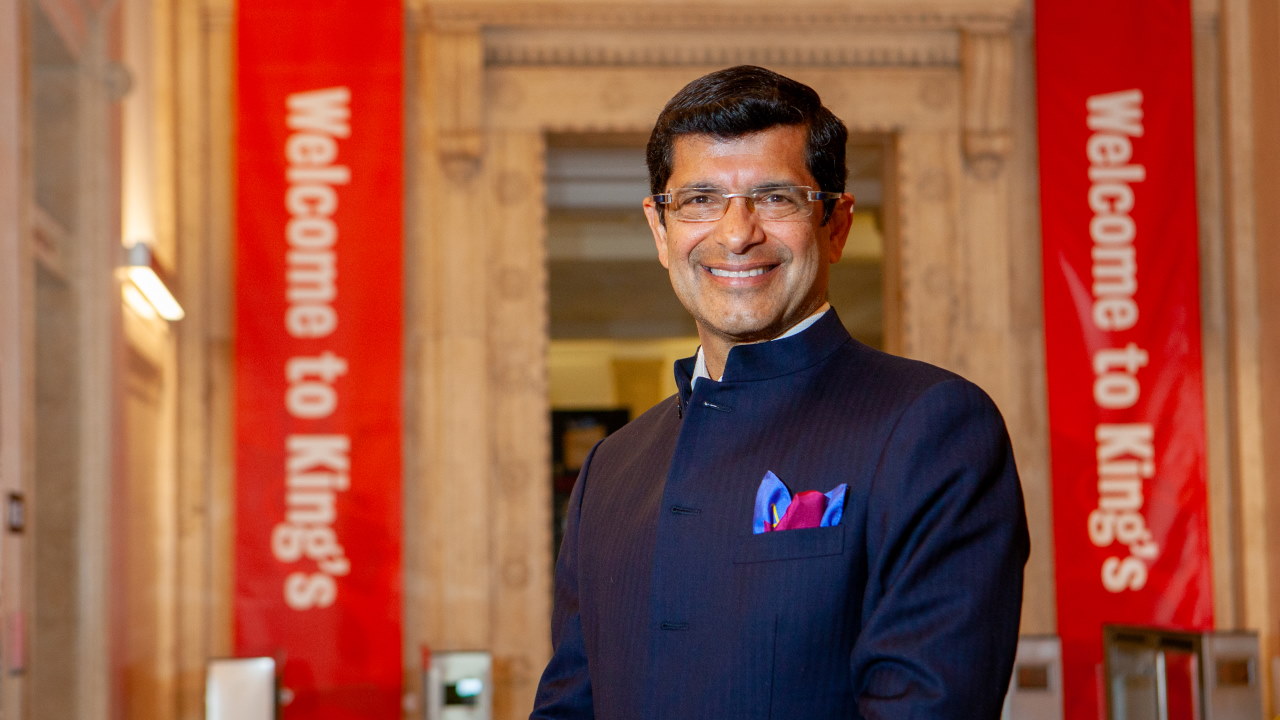
King’s College London (KCL) Vice Chancellor and President, Professor Shitji Kapur, voiced his concerns that a degree no longer guarantees a good job for graduates in the current competitive graduate job landscape, with universities requiring more support amid government changes.
Kapur told The Guardian that a degree is now like “having a visa” as an alternative to a “passport to social mobility” that it once was, in today’s deeply competitive graduate market.
The Vice Chancellor blamed AI, the stalling of the economy and the overabundance of graduates for altering the “simple promise of a good job if you get a university degree,” which he said has now become “conditional on which university you went to, which course you took.”
He continued, “If you got a degree, you were almost certain to get a job as a socially mobile citizen. Now it has become a visa for social mobility – it gives you the chance to visit the arena that has graduate jobs and the related social mobility, but whether you can make it there is not a guarantee.”
In his interview, the Vice Chancellor voiced his concerns that the UK may be reaching a point where the graduate premium will decrease, while university education becomes a prerequisite for entering the job market.
Graduate vacancies are declining as competition for entry-level opportunities continues to rise, and demand for post-university experience is soaring.
However, recent government data shows graduates continue to outperform non-graduates, with a median working age salary of £42,000 compared to £30,500 for non-graduates. Working-age graduates are significantly more likely to hold high-skilled jobs, with 67.9% in high-skilled employment compared to just 23.7% of non-graduates.
74% of 548 students surveyed by Roar said they feel negative about their prospects after graduation, with 9% feeling positive and 17% expressing neutrality.
Roar spoke to current and former King’s students, revealing a broad spectrum of experiences. One former student emphasised the “grind” and “challenge” of finding a graduate job, while another noted they were “pretty lucky,” being offered the first job they applied for.
“Trying to get into a graduate scheme right now feels like a second full-time job,” a graduate student told Roar. “I’ve been applying constantly, tailoring my CV for every position, doing tests and interviews, and it’s still incredibly competitive.
“I genuinely thought being in London and being a King’s graduate would enhance my opportunities, but I feel as though I’m in the same boat as everyone else.”
In his interview, Kapur reflected on the government’s international student levy, which will see King’s lose £22 million a year. He encouraged wider recognition of the valuable contribution from international students to domestic students and university research:
“International students are not some sort of oddity or indulgence of our universities. They are now a fundamental feature of our system. Not only does it benefit the international students, it greatly benefits our domestic students, in addition to UK as a nation.” – Kapur speaking to The Guardian
About the author