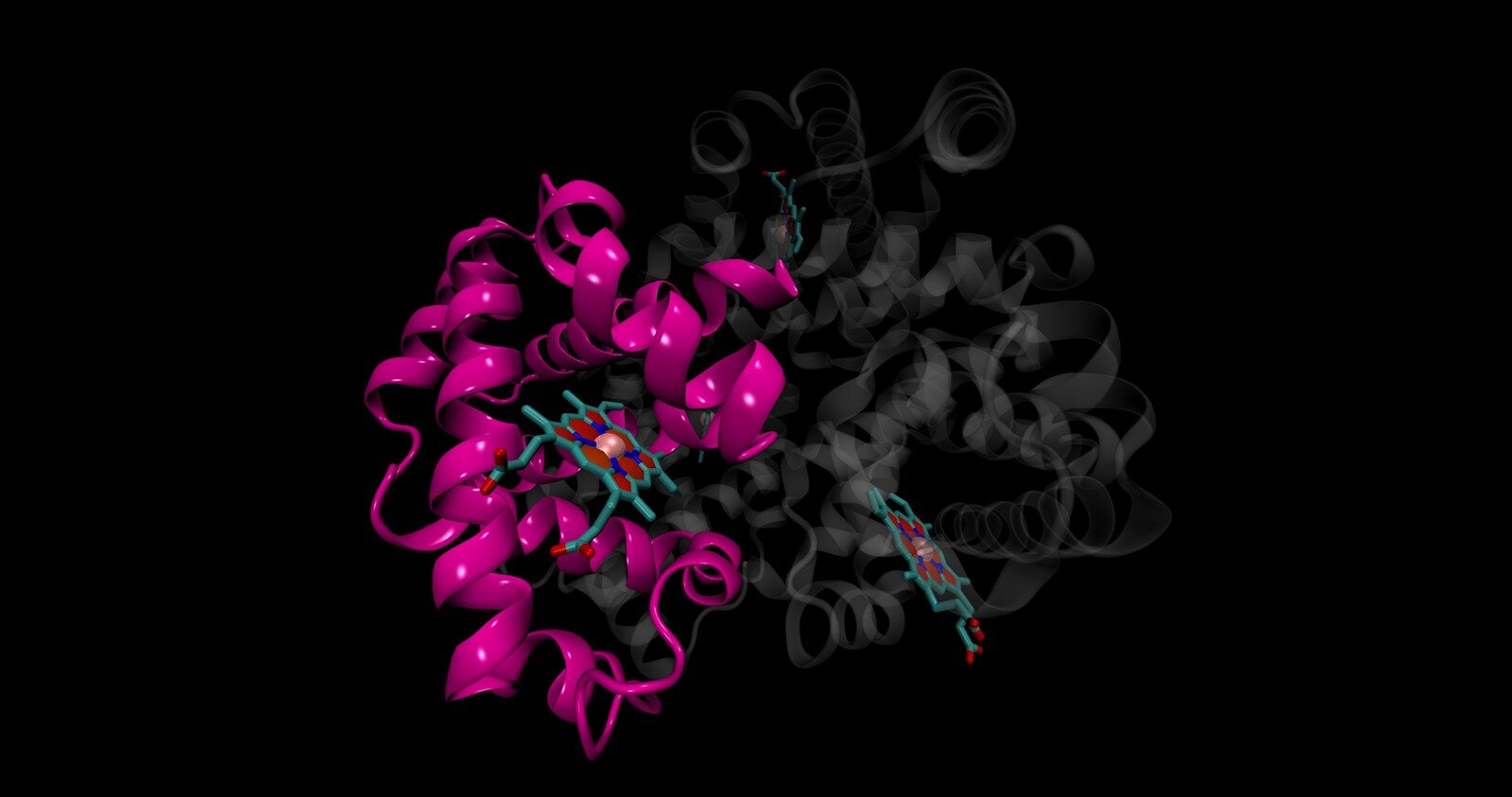
Staff writer Chloe Roger discusses the implication of the recent research grant awarded to designer protein researchers.
King’s College London researchers along with the University of Bristol have recently been awarded a £5 million grant, during the Advanced Research and Invention Agency’s (ARIA) Universal Fabricators programme.
The team comprises, on the King’s College London side, of Dr Aliaksandra Rakovich, a senior lecturer in the Department of Physics and Dr Wayne Dickson, reader in Experimental Nanophotonics. The project was led by Professor Mark Wallace, a chemistry professor and Associate Dean for Research Infrastructure.
On the University of Bristol side, it is Dr Aimee Boyle, and Professor Dek Woolfson, both from the School of Chemistry.
“It is a real privilege to work with Mark and the team in Bristol. They bring extraordinary expertise in protein design and self-assembly, while we can ask what these structures might do when they interact with light.”
Dr Wayne Dickson, King’s College London, reader in Experimental Nanophotonics
The stars of the show are, as usual, proteins.
Over the last decade, billions of dollars have been invested in research surrounding proteins, especially with the expeditious development of artificial intelligence systems.
For context, protein engineering is one of the most promising fields in the limelight, due to both its interdisciplinary nature and versatility. They can be designed from the ground up, personalised and tailored to a tee for various purposes. Pharmaceuticals, nutrition, genetics and now materials with this new grant, the possibilities seem endless.
“What excites me is the possibility of letting biology do the nanofabrication on our behalf. We know how to design extraordinary optical materials computationally, but manufacturing them over large areas with nanometric precision is extremely challenging.”
Dr Wayne Dickson, King’s College London, reader in Experimental Nanophotonics
The Universal Fabricators programme stems from the desire to move away from protein engineering as simply drugs or biological functions. Rather, the field is moving into this new dimension of materials with proteins as ‘Universal Fabricators’.
The programme highlighted three objectives, with the aim of assembling these designer proteins into materials and scaling up the process into industrial sized endeavours.
The team will target two central applications: Molecular filtration and large-area plasmonic metasurfaces.
Molecular filtration consists, as the name implies, of removing unwanted gases and vapours from the air around, notably of volatile organic compounds. Generally achieved through entrapment and chemical neutralisation, it is paramount for a number of reasons, such as health and safety concerns, corrosion instigated by the compounds or decontamination.
Here the focus is on separating lithium ions for battery manufacturing. Lithium, as a lightweight metal with a high electrochemical potential, is an efficient way of storing consequent amounts of energy in spaces of reduced size and mass.
The process presently in use is inefficient in terms of time and energy. Designing a protein membrane capable of filtering the lithium ions would make this more sustainable, cheaper and faster.
On a global scale, it could also enable more nations to develop lithium processing.
Plasmonic metasurfaces are two dimensional optical materials that manipulate light through plasmon resonance, which is the oscillation of free electrons in metals. Yet, they have the sensitivity necessary to detect several biomarkers associated with diseases or pollutants.
Both of these themes could offer cheap, fast and sustainable alternatives to many processes that have become indispensable today.
Proteins are the building blocks of life and keep showing us how much more they can accomplish.
About the author