Culture writer Teddy D’Ancona reviews the BFI London Film Festival ahead of the Oscar’s.
Here we are again. In the drifts of award season, what 2025 in film will be remembered for is taking shape. The first part of this review covered a number of what are set to be some of the finest films of last year. The London Film Festival’s independent offerings were absolute standouts of their 69th annual event, the yet unreleased Bad Apples, Twinless and She’s the He! having signalled their future as cult classics to come. That, of course, leaves the blockbustered prestige of everything I attended.
Fuelled by major studio power, the latter half of these films boasted star-studded casts and veteran directors at their helm. No matter where or how early, their screenings would naturally sell out in a matter of minutes. At the time, managing to book a preview felt only akin to winning a golden ticket. Being able to view them among packed crowds at the BFI Southbank, Picturehouse Central and Royal Festival Hall were spectacular cinematic experiences. And yet, the majority of these flagship selections greatly underwhelmed upon first viewing.
As these five films prove, the “benefit” of hindsight can be a double-edged sword. Crossing over with both Netflix’s “Season of Visionary Directors” and the nominations for next month’s Academy Awards, they’ve been poised for – and unevenly received – acclaim. Now widely available to view on streaming and in cinemas, their artistic standing still remains very much in development. At awards-season circuit’s end, the festival leaves us to consider the line between spectacle and artistry in the headlining selections below.
Frankenstein

So rarely do a director and source material seem so apt a match as Guillermo del Toro and Mary Shelley’s Frankenstein. With a decorated career in filmmaking spanning almost four decades, it’s something of a surprise del Toro had yet to adapt the timeless story. A lifelong fan of the novel, he would label Shelley’s creation as his “Bible” in influencing his darkly fantastical cinematic style. Now in his eleventh feature film, del Toro has returned the favour.
Frankenstein is a mosaic of parts that only momentarily fit together. The creative push-and-pull between its utterly plodding story and gorgeous spectacle make for a viewing experience that’s more frustrating than anything in its inconsistency. The titular character is perhaps the most baffling among these failures. This clearly isn’t due to miscasting, with Oscar Isaac having previously excelled in the role of a god-complexed scientist in Alex Garland’s Ex Machina. Be that as it may, the otherwise superb actor is gravely squandered in the role. His overblown accent and bombastic delivery are nothing short of Nicholas Cage–level histrionics. In trying to capture the character’s emotional immaturity, the writing neglects the charismatic abilities of its lead performer, his promethean arrogance amounting to little more than temper tantrums.
Thematically, the film offers little room for moral interpretation. The line “You are the monster” to Victor encapsulates this handholding, reducing any nuance from the original story to blunt, almost laughable statements. Almost in spite of his superb performance as The Creature, Jacob Elordi is more constrained by this quality of writing than any layer of makeup worn. For lack of a better term, its alterations simply feel “Hollywood”. Make no mistake: faithful adaptations aren’t about verbatim details. They’re about honouring the heart of their story, and del Toro’s film barely scratches the surface of Frankenstein. It’s certainly no monstrosity — just a lingering disappointment.
Bugonia

Two basement dwelling conspiracy theorists abduct a pharmaceutical company CEO, holding her hostage with a four-day ultimatum to confess she’s an alien imposter sent to destroy humanity and broker a meeting with her Andromeda galaxy’s emperor. What sounds like the set-up to a highly convoluted, and oddly specific joke is Yorgos Lanthimos’ absurdist black comedy Bugonia, an American remake of Jang Joon-hwan’s Save the Green Planet!
As one would expect, not a single character is likeable, or particularly sane for that matter, cramming humanity’s vilest depths into a single basement. Jesse Plemons as the aptly named Teddy might well be the standout, the actor having built his signature niche as unassuming sociopaths. There’s a constant doubt which Plemons captures in Teddy’s unhinged mind, effectively lying to himself in a bid for control, under the pretense of serving the greater good. His manipulative relationship with his autistic cousin and unwitting accomplice Don paints the pitiful picture of a man obsessed with asserting power, despite ostensibly opposing systems of authority. Driven by ambiguous grief, his character needs a villain and a master plan to account for his suffering, though late stage capitalism offers no such design — only meaningless cruelty.
Emma Stone is cunningly brilliant as the face of this system, her performance as Michelle marking her fourth collaboration with Lanthimos and cementing her record as the youngest actress to receive seven Oscar nominations. Portraying Michelle showcases an unprecedented side of Stone’s talent as a cold-blooded, elitist and allegedly extraterrestrial corporate executive. It’s deserved of the endless praise it’s received, but I can’t help but note Lanthimos continues his deeply troubling pattern putting her characters through exploitative torment. With lesser-known any other director at the helm it wouldn’t be tolerated, let alone acclaimed as an “auteurial staple”. There’s a difference between not shying away from onscreen abuse and indulging in it. Lanthimos appears increasingly willing to wallow in this content simply to spark controversy, a disturbing trend that’s only become more apparent with his yearly releases.
Bugonia is a compelling parable trapped within a decent film. A nihilistic reckoning at humanity’s self-destructive failures, the commentary is clear, if ever so slightly blunt: corporate capitalism may as well be alien in its inhumanity. Yet, at times Lanthimos and writer Will Tracy can’t help but thematically contradict themselves, forcing a twist utterly robs the film of any ambiguity that made it interesting to begin with. While true to Save the Green Planet’s! ending, it feels thematically cheap in remade execution, undercutting what came before for the sake of signature oddity.
Hedda

From one of today’s most talented young filmmakers, Nia DaCosta’s Hedda is a lavishly bold reimagining of the 19th-century stage classic. For the most part, Costa’s legacy sequels have been glimmers of artistry amid uninspired remakes, having written and directed Candyman and, mostly recently, 28 Days Later: The Bone Temple to merited recognition. Following an admitted dud with The Marvels, her latest bourgeois tragedy is a thrilling return to form for the Brooklyn-Born filmmaker.
Set in the 1950s, the bottle-drama takes place across four acts and one increasingly intoxicated party in the aristocratic English countryside. Hosted by Hedda, the night of patronising pleasantries soon reveals its ulterior motive: to land her indebted husband a professorship. Tessa Thompson turns in a career highlight as the titular anti-heroine, embodying a stunning blend of narcissism and vulnerability. A prisoner of social captivity, Hedda’s character is fascinating in contradiction, her evening of restless plotting being a Machiavellian cry for control. Thwarted by the return of Hedda’s former lover Eileen Lovborg (Nina Hoss) – DaCosta explicitly canonising the play’s queer subtext – the evening descends into a chaotic ballet of unspoken resentment, ambition and desire.
Hedda is a fiercely headstrong adaptation that demands to be seen – only fitting of its lead character. It’s a fizz-kissed night terror of a film that bubbles with energy throughout its darkest moments, the nightlong melodrama never slackening or stalling in pace. As meaninglessly trite as the term may have become, DaCosta has once again defined what a cinematic “re-interpretation” can achieve, both in faithfulness and reinvention.
Jay Kelly
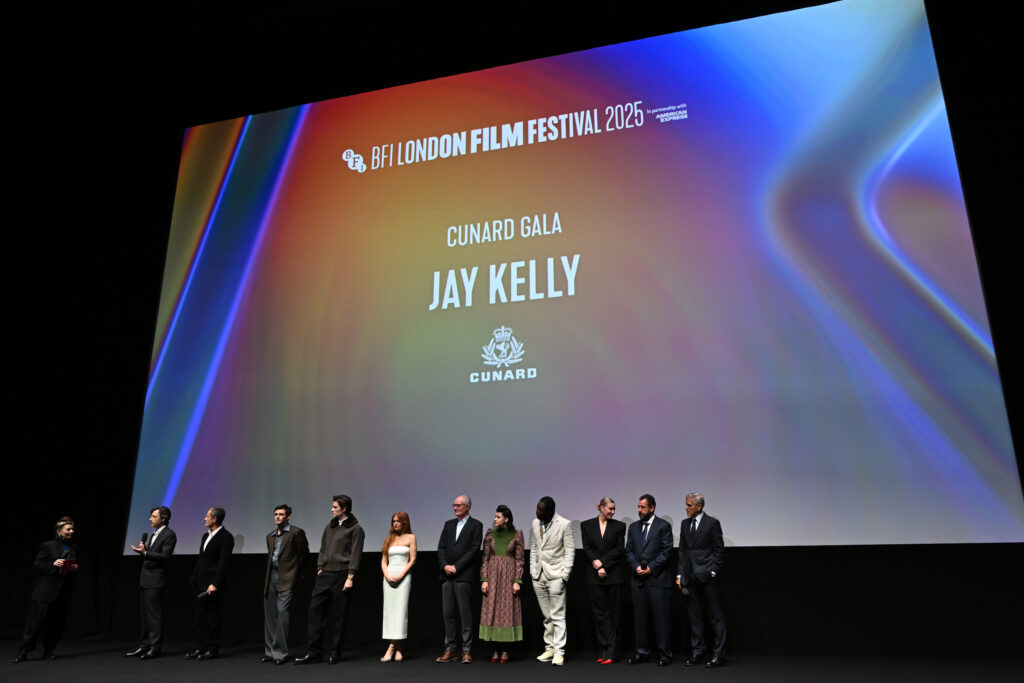
Where to start? Jay Kelly is a self-indulgent circlejerk of cinema, boasting so much, but saying so little. Following Marriage Story, his first directorial outing under Netflix and one of 2019’s finest features, it seemed the only way was up for Noah Baumbach, later collaborating with his wife Greta Gerwig to co-write Barbie. And yet, opposed to any wit, creativity or semblance of sincerity, Baumbach’s latest feature is everything these films are not across its exasperating 132 minute runtime
No actor encompasses the term “good (in the right role)” more than George Clooney. Before writing this, his esteem had always quite eluded me. This is by no means to insult Clooney’s unquestionably admirable character, but as an actor, his recent filmography could be mistaken for Nespresso adverts in their performative range. Having rewatched and sought out more of his supposed great work for this review, it goes without saying that the man has talent (so much so a two hour vanity fest has been made in his honour). But you won’t see it here. For a story feigning any retrospection on identity and persona at fame’s cost, Jay Kelly is no more than a facsimile of what once made Clooney charming and likeable.
True to the film he’s named for, the character is a one-note bore to watch. His mid-life crisis and ensuing cross-country journey “to find himself” and “what truly matters” is as uninspired to sit through as it is to describe. We are expected to care about Kelly for Clooney’s sake, but the film never takes the time to develop him beyond the very celebrity veneer it admonishes. Jay Kelly chugs along in pretentious pseudo-comedy and forced pathos to the bitter end, its finale remarkably failing to say anything at all about the industry it claims to satirise. Its closing plea to “go again?” comes across as more of a threat than a sentiment. Ending on a shrug of regret is quite fitting for a film that leaves you with nothing but your own.
The Ballad of a Small Player
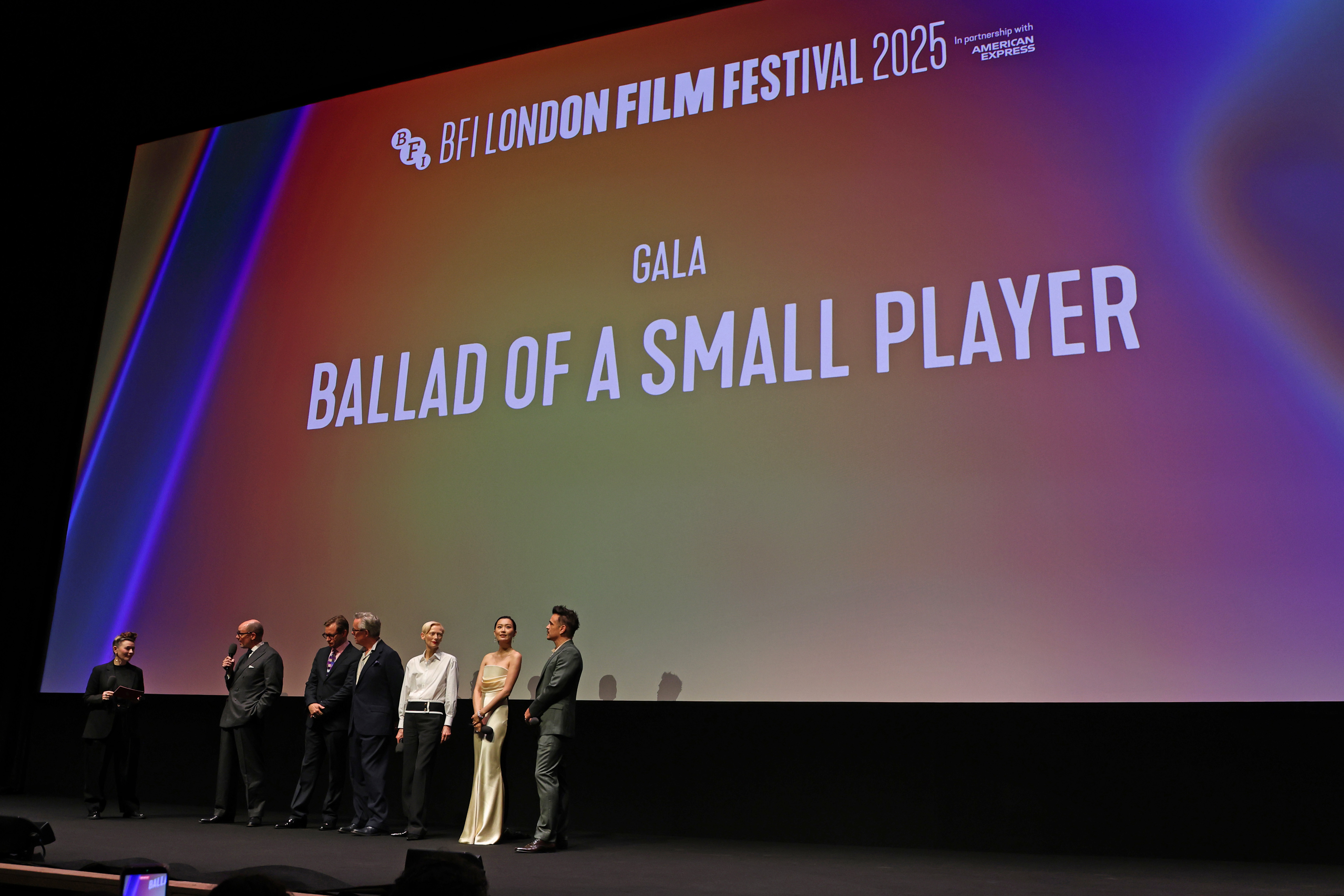
From the overhyped, to the underappreciated, Edward Berger’s The Ballad of a Small Player is an avant-garde panic attack of a film. The psychologically-suffocating thriller stars Colin Farrell as “Lord Doyle” Brendan Reilly, a majestic mess of gambling addict held together by the thin veneer of gentility. Across three days in Macau, Brendan battles against the odds to save himself from financial ruin in an odyssey of self-destruction.
The Ballad of a Small Player is a campfire story set in a hypercapitalistic dystopia. No matter how vast the landscape or tasteless displays of wealth, there’s something claustrophobic, and almost sickening in the city’s casino culture. True to his talents, Farrell embodies the role of a man decidedly ensnared by the hollow logic of this world. Doyle is, for lack of a better term, a loser, a pathetic junkie endlessly chasing the dragon of his losses. Drawing from Buddhist cosmology, Doyle is allegorised as a hungry ghost, spirits condemned to endlessly starve in karmic retribution for their past greed and selfishness. The film deconstructs what truly is a “lost soul” in the face of this seemingly inescapable doomed fate, making for one of the most powerful endings of the year. In atoning for this life or the next, The Ballad of a Small Player frames redemption as an act of personal responsibility, not straightforward forgiveness for one’s own moral failings.
Having directed both All Quiet on the Western Front and Conclave to near-universal praise, Berger’s latest venture has been released to a surprisingly lukewarm response. His fifth feature film is certainly not perfect, and may unfortunately come to be forgotten in an otherwise acclaimed filmography. But in a season of “Visionary Directors”, this outing unexpectedly stands out as a flawed, but fascinating, cinematic gamble. As The Ballad of a Small Player proves, it’s better to trip on new challenges, than trudge through familiar mediocrity.