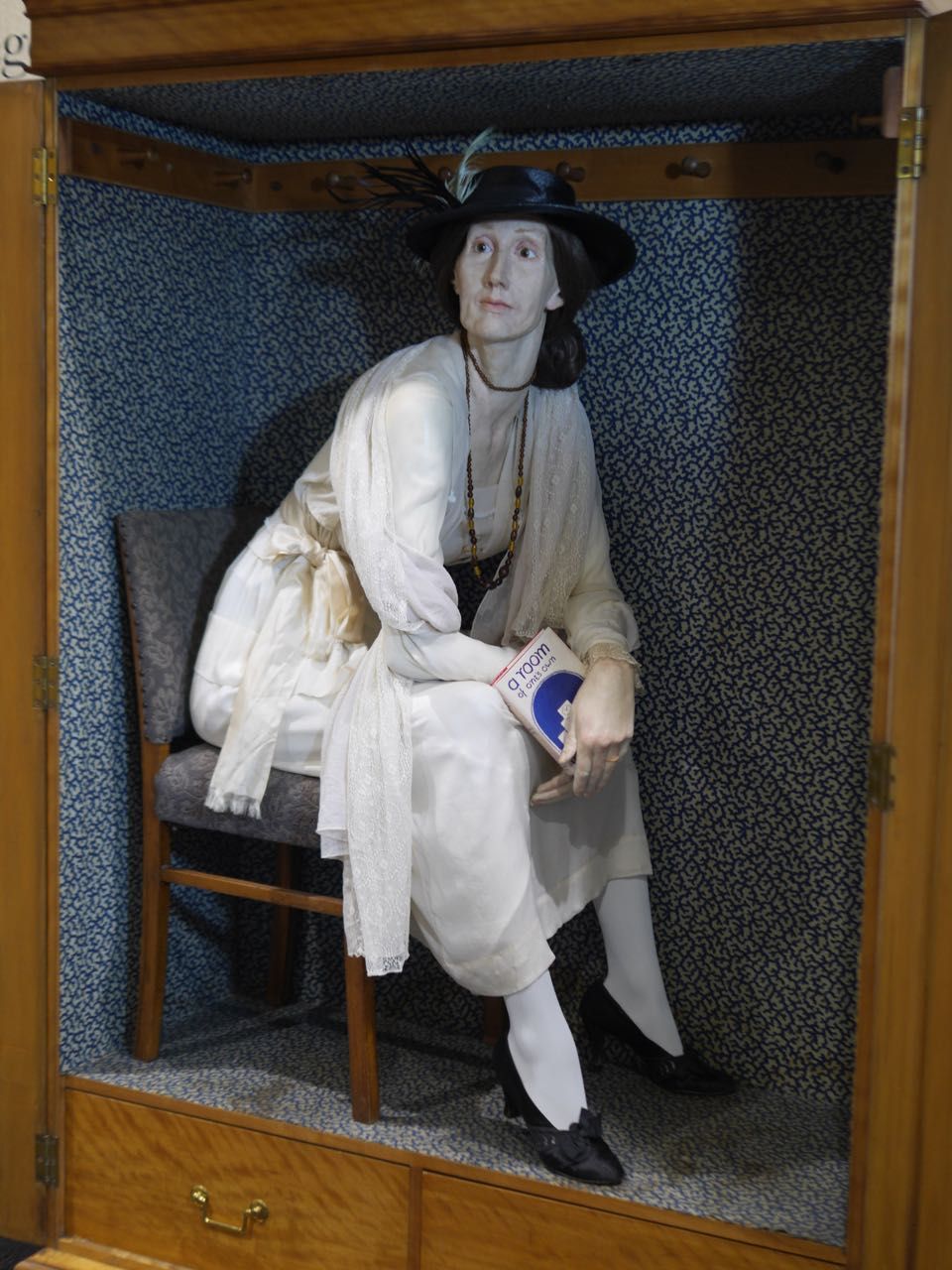
The famous wax model of Virginia Woolf, which once resided in the Virginia Woolf Building at King’s College London (KCL), has been permanently moved to the University of Sussex.
KCL’s lease on the Virginia Woolf Building ended this year. Offices and classrooms have been relocated to other areas on campus. Earlier this year, King’s converted floors seven and eight of Bush House, which used to be popular spaces for students to socialise, into staff offices.
The Virginia Woolf Building was also well known among students for the wax model of its namesake. The model was located in the foyer of the building, next to the entrance and the lifts. The wax model was once described by The Tab as “terrorising unsuspecting freshers every year” due to its placement and uncanny realism.
However, the model has not been moved alongside the rest of the building’s contents to other areas of Strand Campus. Instead, the wax model was transported from its old home to the University of Sussex over the summer, where it will stay permanently.
Sussex included the sculpture in an exhibition over the summer, called ‘Pressing Matters: Printing with Virginia Woolf’. The University described the exhibition on its website:
“The exhibition presents a vibrant mix of contemporary works inspired by Woolf’s legacy as both writer and publisher. Highlights include embroidered insults, a large-scale hand-printed poetry installation responding to Nancy Cunard’s Parallax (published by Woolf in 1925), an artist’s book, and visual interpretations of Orlando.”
The event aligned with the 34th Annual Conference on Virginia Woolf, co-hosted by the University of Sussex and KCL. The University of Sussex Library owns an expansive range of translations of Woolf’s work, which were included in the exhibition.
KCL said goodbye to one of its most famous statues by hosting an event called ‘Waxing Virginia’. Organised by KCL’s Dr Lizzie Stewart and Professor Anna Snaith alongside the Istanbul Queer Art Collective, the event included readings from Woolf’s stories, letters and essays. The wax model watched over the event and was included in the performance as a “found object”. Professor Snaith told KCL about the event:
“It has been such an honour to work in the Virginia Woolf Building, named following the discovery of Woolf’s studies in History, Greek, Latin and German at King’s as a teenager.
“While it is sad that we will lose the building name, Lizzie Stewart and Tuna Erdem and Seda Ergul of the Istanbul Queer Art Collective provided us with such a creative and moving performance to mark our departure.
“Hearing the polyphonic voicing of Woolf’s words echoing through the building foyer, and around the statue of Wax Virginia, was a mesmerising and unforgettable experience.”
Sculptor Eleanor Crook created the wax model in 2015 based on photographs of Virginia Woolf throughout her life. She spent 120 hours on research and sculpting. Over the years, it became an iconic and beloved part of KCL’s art collection.
About the author