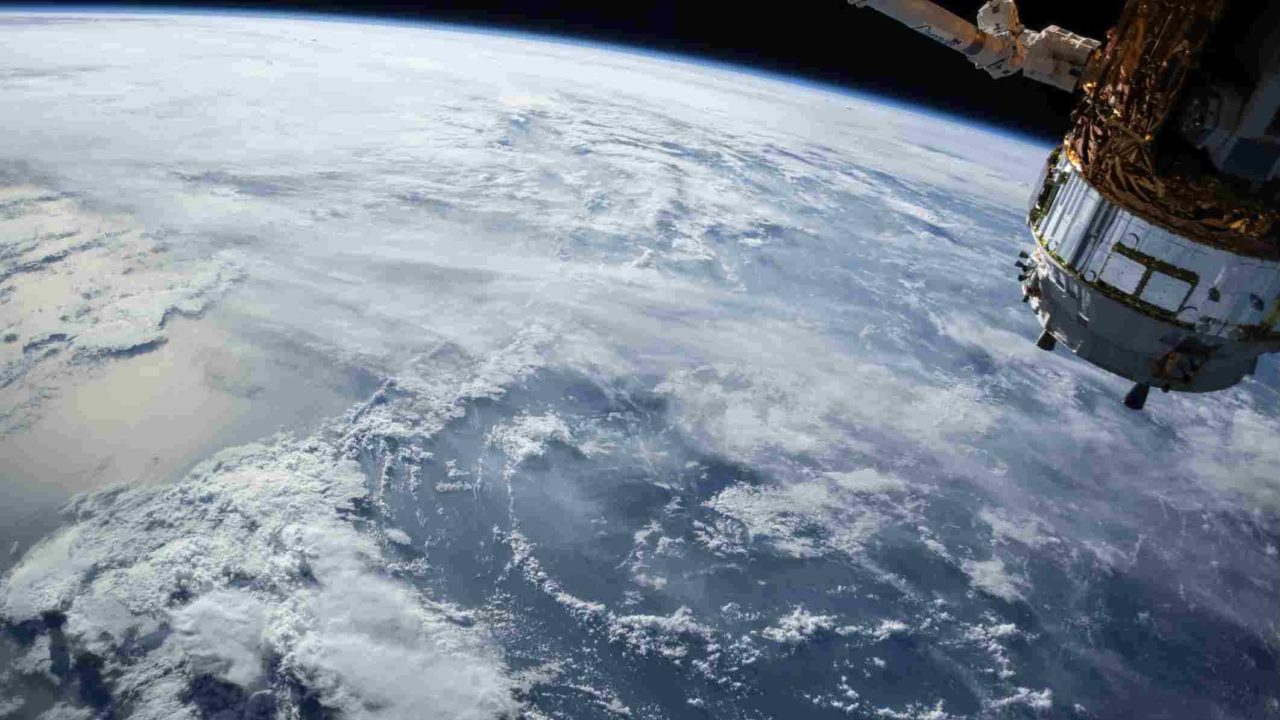
Staff writer Anoushka Sinha discusses the recent announcement of the decommissioning of the International Space Station.
On 20 November 1998, the first segment of the International Space Station (ISS) was launched into space. On 2 November 2000, the first crew of astronauts and cosmonauts began living on the ISS.
Now, after thirty years of service, the ISS will be decommissioned and sent on a crash course with the Pacific Ocean in 2031.
At the moment, the ISS requires regular boosts from the Russian Progress Spacecraft to remain at its specific height in the sky, so it does not fall out of orbit.
The primary system which keeps the ISS running cannot be upgraded and maintained forever so, while NASA will keep it running throughout 2030, they have signed a deal with SpaceX worth over $800 million (£600 million) to push the satellite out of orbit and into Point Nemo in the Pacific.
Point Nemo is a remote part of the Pacific Ocean, often used by NASA for such projects to avoid endangering people and property. Without SpaceX’s guidance, the ISS would risk falling into the Earth, posing a major risk to human lives.
NASA did consider attempting to safely retrieve the satellite and transport it, part by part, back to Earth. However, considering the sheer size of the ISS (108m wide) and the large, delicate surface area of the solar plates, it was concluded that it would not be economically efficient or sustainable to do.
Having been built in the 1990s and 2000s, most of the technology on the ISS is outdated and no longer compatible with current and future technology.
Students at King’s have had an extensive history with the ISS as they entered and succeeded in the Mission Discovery Programme, designing experiments to be taken out on the satellite. These took place in 2013, 2014, 2018, and 2022.
The programme, run by the International Space Station Educational Trust (ISSET), is aimed at teenagers and, once projects are selected, they are developed by King’s students to be able to be carried out by the ISS crew.
The ISSET works in partnership with King’s College London, NASA, SpaceX and Oxford University.
The experiments done on the ISS have ranged from dark matter to plant growth.
What could possibly replace this laboratory in the sky?
Companies like SpaceX and Axiom have been looking into building their own commercial space stations.
NASA, on the other hand, is shifting its attention to the Gateway Space Station which will orbit the moon. This will be vital as the Artemis mission focuses on humans returning to the moon.
About the author