Staff Writer Angela Alberti shares the much-needed recipe for an antidote to eco-anxiety — some good news and heartfelt poetry.
This article was originally published in print on 28 November 2024.
Reconnecting to Nature in a Disconnected World
Henri Matisse once wrote, “When we speak of Nature it is wrong to forget that we are ourselves a part of Nature”. Today, there is a huge rift between our fast-paced lives and nature itself. We see ourselves as separate from it and this mistaken belief has driven us to take way more from the Earth than we really need.
Although we feel so out of touch with nature, we have known of our impact on the planet for quite some time. The first conscious steps taken to protect the environment date back to the mid-19th century. Unfortunately, all the actions taken so far haven’t been enough to stop the rise of climate change.
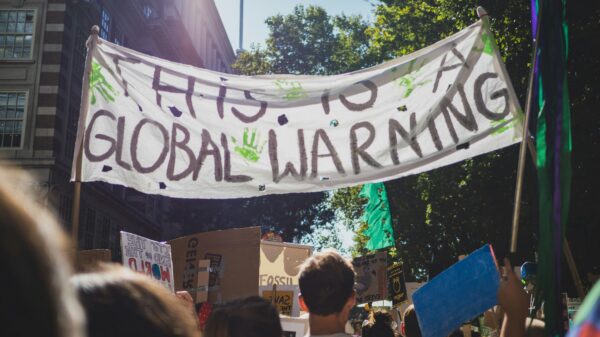
And, since we still are part of nature, as climate change worsens, more and more people are experiencing forms of eco-anxiety. The rise of social media and all the catastrophic news we are exposed to daily have only exacerbated this feeling. Still, if we do a little digging, we can piece together bits of positive news from across the world that highlight some hope for the future.
Some good news!
This year has not even come to an end and yet multiple positive actions have taken place already. In January, scientists and veterinarians in Kenya found a solution that could save the northern white rhino subspecies through an IVF embryo transfer. This species is almost extinct with a total of only two northern white rhinos in the world.
Efforts are also being put into reuniting animals with their original land. For the first time in two hundred years, the endangered Przewalski’s horses were returned to their original habitat in Kazakhstan’s Golden Steppe. Today, they are the last wild horses on Earth. Hopefully, this is one of many steps to give freedom and agency back to animals.
Finally, a Swedish company named SweGreen has been building farms inside supermarkets in order to reduce transport emissions and give fruits and vegetables a longer shelf life, which should in turn reduce waste. Currently, SweGreen can grow a hundred different crops, like dill, mint and lettuce, and each of their agricultural platforms can grow the equivalent of the produce on about three hectares of agricultural land.
New Laws for a Brighter Future
Laws and policies are also being launched to help the environment. In February, the parliament of the European Union (EU) voted to criminalise consequential instances of ecosystem destruction. They are the first EU entity to establish stricter penalties and prison sentences for crimes against the environment, such as illegal logging or the destruction of habitats.
This March, the French parliament unanimously voted in favour of a bill seeking to reduce the impact of fast fashion. The bill aims to penalise the industry to compensate for its environmental impact. They are also hoping to ban all fast fashion advertisements in France, social media influencers included. Overall, this bill would bring light to the environmental catastrophe of fast fashion and encourage consumers to shop more consciously.
Reading up on positive news is a great way to fight eco-anxiety. But poetry can provide true comfort for the soul, illustrating the resonance of all our feelings. Listed below are a few of my favourite ecopoems.
For when you are angry…
Gary Snider, ‘Front Lines‘ and ‘Mother Earth: Her Whales’. In these poems, Snyder openly criticises modern societies and the principles they are built on. He describes humanity as a disease, contrasting it with nature — a victim that maintains its agency and seniority.
For when you are anxious…
Wendell Berry, ‘The Peace of Wild Things’ and Derek Mahon, ‘Everything is Going to be All Right’. The first poem depicts a peaceful place in nature to come and rest. It portrays nature as a haven free of daily troubles. ‘Everything is Going to be All Right’ is not traditionally considered an ecopoem but it is the ultimate remedy for anxiety.
For when you are hopeless…
Chris Redmond, ‘Green Futures: The Earth is Waiting’ and Liv Torc, ‘When You Know the Water’s Coming’. The former was written in association with The Weather Makers. In this poem, Redmond proves that science has made much progress and there are still multiple ways to save the planet. The latter poem was written in association with Adapting the Levels, a project dedicated to flood prevention. This poem gives its reader hope by presenting solutions to climate change, more specifically flooding.
Exciting progress is happening all around us in the fight against climate change and positive action is within our reach. So, as we step into the new year, let’s embrace hope and positivity. Seek out the good news, make an eco-friendly resolution or two and help pave the way towards a more sustainable future!
About the author