Staff writer Timsa Bajpai covers the ICC’s arrest warrants for Israeli Prime Minister Benjamin Netanyahu, former Defence Minister Yoav Gallant and Hamas senior leader Mohammed Deif, and how the ICC’s actions are pursuing justice in a world divided over the war in Gaza.
Editor’s note: All students are invited to write for Roar. The views expressed by commentators are not those of the newspaper.
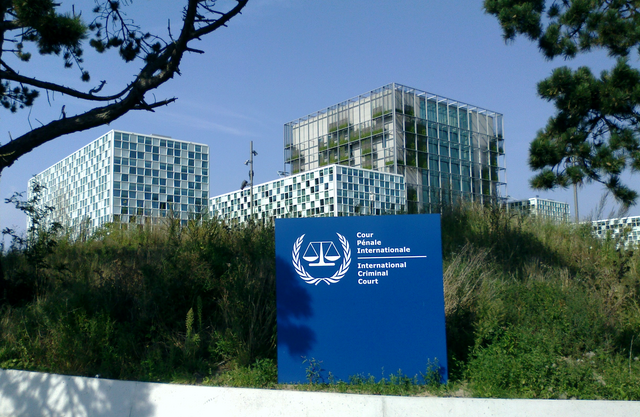
The International Criminal Court (ICC) took a progressive step in issuing the arrest warrants against Israeli Prime Minister Benjamin Netanyahu and former Defence Minister Yoav Gallant. The Prosecutor also filled applications for the warrants of now-deceased senior leaders Yahya al-Sinwar and Ismail Haniyeh, but subsequently withdrew after confirmation of their deaths. Mohammed Diab Ibrahim Al-Masri (Deif) remains the only senior leader to face prosecution by the ICC, yet it is unsure whether Deif is alive or not according to the ICC. They have all been accused of war crimes and crimes against humanity in the horrific 13-month conflict in Gaza.
The charges? In the case of Netanyahu and Gallant, the accusations include “mass starvation” and knowingly attacking civilians and medical establishments. The leadership of Hamas has been accused of the mass killing, rape and hostage-taking during the October 7, 2023 attack on Israel. The ICC’s move sent shockwaves across the globe, renewing debates on the question of justice, accountability and the convoluted politics of war.
Criminal responsibility in Gaza

The ICC accuses Netanyahu and Gallant of orchestrating a campaign where the 2.3 million residents of Gaza are being systematically denied essential items necessary for survival such as food, water and medical supplies. The court alleges that their acts caused extensive starvation and suffering that resulted in the deaths of several thousands of civilians, including children.
Meanwhile, Hamas commanders, Sinwar and Deif, were accused of executing the attack on 7 October that killed over 1,200 Israelis and 251 people were taken hostage back to Gaza. However, reports suggest that its chiefs have died: the Israeli forces killed Sinwar on 16 October and Deif is presumed to have been killed in a July airstrike. With both leaders now deceased, all eyes remain on Netanyahu and Gallant.
The ICC’s arrest warrants on Israel are rooted in a legal framework established by the Rome Statute to which Palestine became a signatory in 2015. Despite Israel’s rejectton of the courts the jurisdiction, the ICC asserts its authority, thereby maintaining the role of international law as necessary in bringing justice to alleged committed atrocities.
The ICC’s moves cement its position as a court of last resort, stepping in when domestic systems fail to hold leaders accountable. In the past, it has usually proved difficult to enforce an arrest warrant on powerful figures. To this date, Sudan’s Omar al-Bashir and Russia’s Vladimir Putin remain at large despite ICC charges against them.
Yet, the symbolic importance of this warrant cannot be overstated. It sends a message to the victims, survivors and the world that no one is above the law. In the case of Palestinians in Gaza, this warrant offers a ray of hope when viewed against the unimaginable sufferings. “Will this nightmare be over?” one resident asked Al Jazeera, reflecting the cautious optimism in many people who have felt long abandoned by the international community.
A divided world responds

Reactions to the ICC’s charges have been polarised worldwide. In solidarity to see the rule of law upheld, European states like France, Italy and the Netherlands have indicated they will respect the arrest warrant of the accused if they entered their territories. European Union’s Foreign Policy Chief, Josep Borrell emphasised that “this is not political” and that the court’s ruling must be respected. However, EU countries like Hungary have broken their ranks by inviting Netanyahu for a visit, despite being an ICC signatory. Europe remains divided.
The United States, undoubtedly the staunchest ally of Israel, has, as expected, positioned itself on Israel’s side. President Joe Biden called the warrants “outrageous,” branding the actions as unjust attacks on a democratic-ally. Senator Lindsey Graham went even further by warning of sanctions against any ally who enforces the ruling of the ICC. This devoted support for Israel highlights the geopolitical tensions brought out by this case.
In contrast, China took a more measured approach even though they are not an ICC member. While calling for objectivity, it criticised the U.S. for its “double standards,” pointing to Washington’s difference in response between the ICC’s actions against Israeli and Russian leaders.
Netanyahu’s counter
Netanyahu described the ICC’s arrest warrants on Israel as “anti-Semitic” – a label he has often used as a response to international criticism. He called this a “dark day for justice. A dark day for humanity” and accused the bias of the court suggesting Israel’s actions in Gaza were simply legitimate counterterrorism measures.
At the same time, the numbers from Gaza paint a grim picture: more than 44,000 Palestinians have been killed, more than 100,000 injured, and millions displaced. International bodies such as the United Nations (UN) Security Council and the International Court of Justice (ICJ) have repeatedly urged Israel to terminate this military action and accept a ceasefire.
In doing so, the ICC’s warrants increase the pressure and further isolate Israel internationally.
A shrinking world for Netanyahu and Gallant
Though the ICC has no police force to enforce the warrants, the legal duty of execution rests with its 124 member states. This means Netanyahu and Gallant may face increasing restrictions on their ability to travel abroad where destinations like Europe, frequently visited by Israeli leaders, is now largely off-limits. In turn, these limitations carry heavy symbolic weight. As stated by Mark Kersten, a specialist in international law:
“Their worlds shrink. They don’t get to enjoy the same kind of lives they did yesterday”
The warrants further burden diplomatic relations for those countries supporting Israeli military action. The ICC has historically prosecuted leaders who armed perpetrators of war crimes, as seen in the case of former Liberian President Charles Taylor. While direct action taken against Western leaders is unlikely, it sets a precedent to add an element of uncertainty for countries like the U.S., that continually supply military aid to Israel.
A moral stain on all sides

Amnesty International has concluded, with sufficent evidence, that what is taking place in Gaza is a genocide. Using their own definition of genocide, separate from the UN’s 1948 Genocide Convention’s definition, they found that:
“Between October 2023 and July 2024, Israel committed acts prohibited under the Genocide Convention and did so with the specific intent to destroy Palestinians in Gaza.”
This genocide has left a deep moral stain, not only on Israel, but also on those who support it. As the ICC’s arrest warrants on Israel unfold, the action of that court serves as a reminder of the human cost of unchecked violence and the urgent need for accountability. Netanyahu and Gallant may never go to trial, but their indictment has already rewritten the narrative on a global level.
The warrants magnify the international condemnation of Israel’s actions in Gaza and could be a turning point in the broader fight for justice. One editorial concluded, “The sooner Netanyahu ends this aimless, disastrous war, the better it will be for the state of Israel.”
Though for now, the message from the ICC’s is clear: the push towards justice, however fraught, is a fight worth pursuing.
About the author