Roar News writer Conor Walsh on the breakdown of government in the political capital of Northern Ireland, Stormont.
The news of Northern Ireland First Minister Paul Givan’s resignation effective from midnight on 3 February will most likely have brought back memories for the people of Northern Ireland of the three-year Stormont collapse which began in 2017 after a vocal disagreement between Sinn Féin and the DUP over the latter’s handling of the Cash for Ash green energy scandal.
Under the terms of the Belfast (Good Friday) Agreement 1998, if either the First or Deputy First Minister leaves their role, the other automatically loses theirs too. Thus, Sinn Féin’s Deputy Leader Michelle O’ Neill, the Deputy First Minister, has lost her job as well. Fortunately, however, on this occasion, these dramatic political moves will not have the same repercussions as last time of leading to the collapse of the Assembly thanks to the Northern Ireland (Ministers, Elections and Petitions of Concern) Act 2022 passed in Westminster which allows the Northern Ireland Assembly to continue without the full complement of Executive ministers for up to six months.
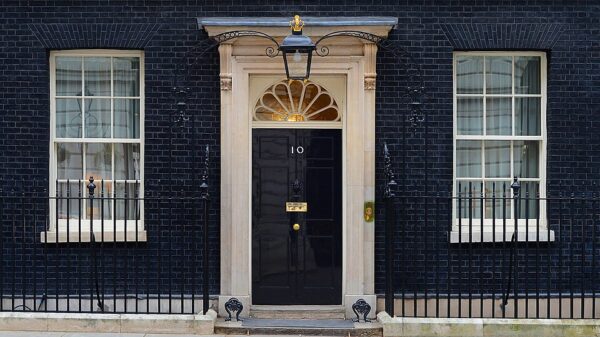
Undoubtedly though, this move from the DUP is still a head-wrecker for Boris Johnson, who will see this as further damage to his leadership position. This is because the resignation is premised on the continued effect of the Northern Ireland Protocol as part of a Brexit deal negotiated with the European Union. The Protocol requires border checks to take place at Northern Irish ports if there is a possibility the goods will enter the EU through the Republic of Ireland. Sir Jeffrey Donaldson, leader of the DUP, had threatened to pull his party out of the Executive over the Protocol since October, suggesting that it “represents the single greatest to Northern Ireland’s place in the UK in a generation”. The lack of progress with regards to striking a new deal was the straw which broke the camel’s back. The move, therefore, represents a withdrawal of the DUP’s support as to the handling of this matter by the British Government and Prime Minister Johnson, by extension. This comes at a time when Mr Johnson is already mired in controversy regarding parties held in Number 10 over the course of the lockdowns, with some of these under investigation by the Metropolitan Police. One begins to wonder whether the Northern Ireland situation will even register with Conservative MPs considering their leader’s future due to the plethora of other high-profile disasters Mr Johnson has had in recent months.
The practical implications of the resignation are not insignificant. While other Ministers will remain in their posts, the Northern Ireland Executive will be incapable of functioning fully as it will not be able to meet in the absence of a First and Deputy First Minister. Additionally, Ministers “cannot take any new decisions”. This prompted Sinn Féin Leader, Mary Lou McDonald, to call for an early Assembly election, with one originally scheduled to take place in May. The question to be answered is whether anyone really wants to see Stormont stumble on achieving nothing until the May election or whether action should be taken now. With the apology to victims of historical institutional abuse looking unlikely to go ahead in March and an inability to approve a multi-year budget, Northern Ireland has been thrown into political crisis and it would appear this can only be rescued through an early election.
Critics of Mr Givan’s decision point to the fact that it was likely motivated by party political aspirations. The DUP has recently, for the first time in the history of Northern Ireland, appeared to lose its majority support with Sinn Féin overtaking them. Consequently, it would seem that the grounds of Mr Givan’s resignation, that of protesting against the inaction over the Northern Ireland Protocol, is likely to sure up support amongst Unionist voters in the run-up to the election, in the hope that this may tilt the balance back in favour of the DUP.
One thing we can be certain of is that for the people of Northern Ireland this is yet another demonstration of the fragility of the political situation in their country. While the party-going British Prime Minister in the hope of wrestling his job back from the jaws of critical Conservative MPs, the Northern Ireland Executive and the people it represents are left to fend for themselves and hope any remaining degree of trust in Foreign Secretary, Liz Truss, will result in a Protocol deal that is acceptable to both Unionists and Nationalists. If not, it could signal the beginning of another devastating 2017 style Stormont collapse.
About the author