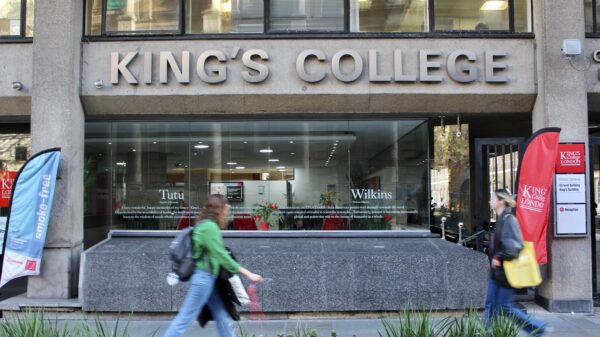
Foreign students face a raw deal as tuition fees rise (click image to enlarge).
The revenue British universities generate from tuition fees continues to climb, but at what cost?
KCL’s tuition income jumped by 15% in 2011/12, which was largely due to more international students paying higher fees. Zahra Mizra, from Dubai, was asked to pay more for her degree whilst she was still studying. She graduated last summer from King’s.
“My degree cost went from around £13,000 at the start to £14,000 a year when I finished,†she says. “I actually emailed to ask why the increase happened, and I got an email saying that increases can happen without any notice during the year, so I didn’t question it.â€
Recently, the NUS criticised the way international students were treated as ‘cash cows’ by universities. In the 2011/12 academic year, the average international student was worth over four times more to King’s than a UK/EU student.
King’s was quick to defend the amount it charges for a degree. “It is important to remember that UK students and their parents pay into the UK tax system which in turn funds HEFCE (Higher Education Funding Council England) funding for teaching, research and capital, which international students and their parents do not,†the college says.
Daniel Lee, in his final year of a degree at LSE, says British universities exploit international students. “The universities know foreign students don’t have an Oxford or Cambridge in their own countries so they can charge whatever they like,†he says. “I value my degree but why should I pay so much more than British students pay when we get the same teaching?â€
International students will find that, unlike their British and European friends, their education is not protected by government legislation. Since the tuition fee rise in 2010, universities must meet Office For Fair Access (OFFA) regulations if they wish to charge UK/EU students the maximum £9000 per year.
In the 2011/12 academic year, the average international student at King’s was worth almost four times more than a UK/EU student. A 21% increase in international applications suggests tuition income will continue to rise. The growth of international student numbers at King’s reflects a national trend. The Higher Education Statistics Agency (HESA) reported there were 1.5% more non-EU students at British universities in 2011 than the previous year.
This may seem minor, but the number of UK students in Britain has decreased by 0.6% in the same period. At King’s, applications increased by a mere 1%. Unlike British students, international students seem undeterred by the continuous rise in tuition fees. “Honestly, as an Arts student, my degree is still relatively cheaper than what my other international friends are paying for Medicine and Law,†Mizra says. “If there was an increase, it would still be worth it for me.â€
KCL was reluctant to say if international fees would go up again – despite the fact they have risen continuously in recent years. The college is under no obligation to publicly announce a rise. Clinical-based degrees are the most expensive for international students at KCL, which is one of nine British universities to charge over £30,000 per year for the pro- gramme. Since 2010/11, the price has risen from £29,400 to £35,000.
Asked if fees would increase again, King’s replied: “This is unlikely in the near future, as the current government has committed to holding undergraduate fees steady in the face of rising inflation of costs. We cannot be sure what will happen after the next election in 2015.â€
Lee says British universities should be wary of becoming too greedy and scaring away international students. “I come from China and we have a lot of new universities,†he says. “Britain might have been the home to the first universities, but in the future many students will avoid studying there if they continue to ask foreign students for more and more money every year.â€
About the author