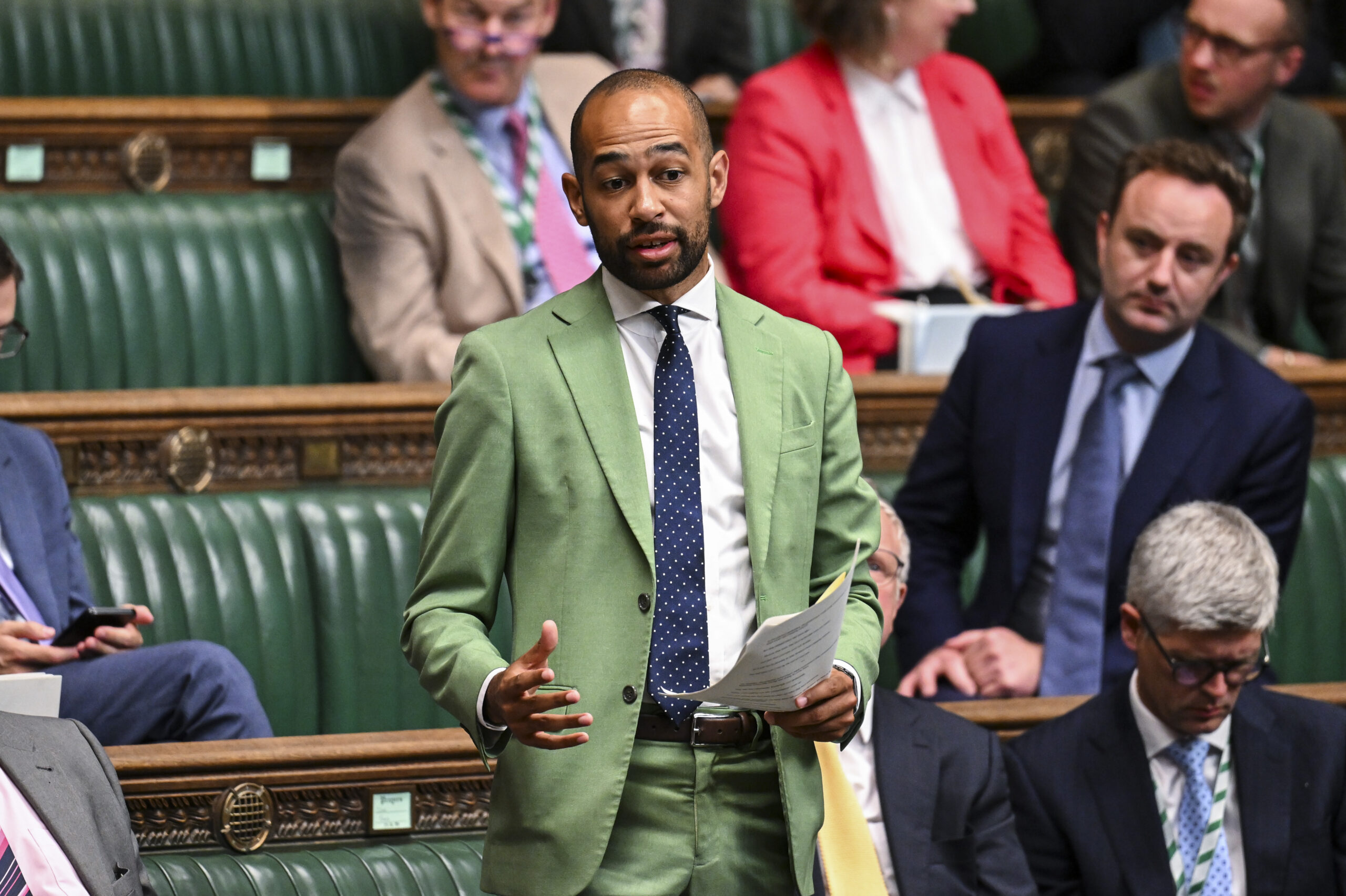
Staff Writer Saskia Catton reviews a conversation with Josh Babarinde MP on the future of the Liberal Democrats, populism and the Lib Dems’ role in British politics today.
The future of liberal politics was front and centre on Thursday evening as Liberal Democrat President and Eastbourne MP Josh Babarinde addressed students at an event hosted by the King’s College London Liberal Democrats.
In a notably candid conversation, he reflected on the pressures shaping British politics and the direction he believes his party must take to meet the demands of the moment.
“Who is the last line of defence from this populism? It falls on us”
Over the course of the evening, Babarinde returned repeatedly to a central concern for any follower of contemporary politics: the rise of populism in Britain. He described populism as an irresponsible and problematic ideology, one that thrives on a cycle of promises destined to collapse under its own weight.
Pointing to Reform UK as the clearest example of populism’s pitfalls, Babarinde accused the party of “mugging folks across the country of their deepest darkest fears” and creating division for political gain. He argued that their rhetoric is matched by a poor record in office, citing Reform-run councils that currently face budget shortfalls and an alarming loss of councillors.
Nonetheless, Babarinde asserted that populist tendencies now cut across the political spectrum – criticising the Conservatives’ “poundshop populism”, the Greens’ left-wing variant, and Labour’s failure to adequately confront it. He positioned the Liberal Democrats as the “last line of defence from this populism”, insisting that there is “no greater electoral, moral, or democratic purpose to our party” than resisting this pull of populist politics.
Liberal Democrat Strategy
Babarinde maintained that it is imperative for the Liberal Democrats to broaden their appeal beyond their traditional strongholds in the South and so-called ‘middle England’. He stressed that any path to official opposition or a role in government rests on expanding the party’s reach to a far wider audience.
Such expansion, he argued, must begin with “internally ensuring that we ourselves are representative”. Noting that party membership remains overwhelmingly older, male and middle-class, Babarinde was clear that diversification is essential to any credible strategy for growth.
As President of the Liberal Democrats, he hopes that his legacy will rest both on diversifying the party and on adopting a “megaphone president” style of leadership. He outlined a communication strategy that mixes the conventional with the provocative, referencing a tweet in which he told Donald Trump, in no uncertain terms, what he thought of him.
He also expressed admiration for Zack Polanski’s bold communication style – though he argued that the Liberal Democrats ultimately offer greater policy substance than the Greens, whose messaging he sees as effective but comparatively light on detail.
Strategy to Substance: Legislative and Policy Agenda
Babarinde was equally clear about where he wants to use his parliamentary platform. Issues of domestic abuse and violence against women and girls have been at the forefront of his work, from criticising the SDS40 early-release scheme to pushing for a formal domestic abuse identifier to prevent such perpetrators from being released early. He saw this progress as proof that impact is achievable even from the third-party benches by pressuring the powers that be.
Housing forms the other major strand of his policy agenda. A committed YIMBY, Babarinde spoke about the need to “build, build, build” and mentioned, by way of example, that he had even supported his own freeholder’s plan to build in his garden. He stressed, however, that YIMBY-ism only works if it resonates locally: building must come with the infrastructure communities need, and growth must help sustain the services they value.
On the State of Play
Not shying away from the political turbulence of the moment, Babarinde set out a stark view of the national picture. He criticised the Labour government for continuing the very “soap opera” it vowed to end, arguing that the constant churn only furthers public distrust and gives populists an easy opening. As for Keir Starmer, Babarinde struggled to see how the Prime Minister would deliver the change he promised, implicitly agreeing with Anas Sarwar’s call for him to go in the wake of the Mandelson fallout.
He added that the Gorton and Denton by-election scheduled for the end of this month could set an important precedent, giving an early read of where public sentiment sits ahead of the next general election.
During the Q&A, Roar asked Babarinde about recent reporting in The Guardian suggesting frustration among some Liberal Democrat MPs with Ed Davey’s approach. He did not dispute the sentiment but instead recast it as healthy autonomy within the party. With seventy-two MPs naturally bringing seventy-two different ambitions, he insinuated that the party is better defined by independent thinking than by strict party lines.
“Last line of defence”
As the evening drew to a close, Babarinde’s message was one of urgency as much as optimism. In his view, the Liberal Democrats are prepared to play a far more assertive role in the national conversation to ensure their voice is not lost amid the noise of populist politics. If anything was unmistakable, it was his insistence that the Liberal Democrats now see themselves as the “last line of defence” against the pull of populism.