Outgoing Editor-in-Chief Fintan Hogan argues that an unlikely source may offer lessons for dealing with climate impacts when faced with a divided electorate.
As the world creeps towards 1.5 degrees Celsius of global warming, politicians will increasingly need to reckon with the imminent and devastating consequences. The laundry list of incoming man-made catastrophes includes more frequent floods, bigger forest fires, hotter heatwaves, more powerful coastal storms and quickly rising sea levels. The sum total? Three billion “highly vulnerable” lives.
The impacts will be, of course, mostly concentrated in poor countries, but the last few years have seen climate-caused deaths and destruction in rich Europe too – see potentially tens of thousands of excess deaths in heat waves or hundreds dead in monumental floods. There are softer impacts too, like falling house values, rising insurance costs and a huge toll on the National Health Service.
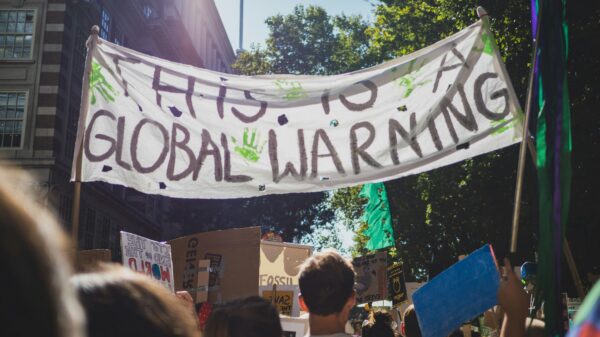
In the UK, the issue has become so pressing that we’re seeing ten year olds on marches and octogenarians taking hammers to artefacts (as well more than a few ‘soupings’). It’s also certain to be a substantial issue in the upcoming general election, with roughly 40% of Brits describing it as a ‘key challenge’ to the country. Climate policy is ‘on the ballot’, according to our (likely departing) Prime Minster Rishi Sunak, but neither party has a stellar record on the issue, with the Conservatives watering down the country’s net-zero commitments and Labour scaling back their proposed Green New Deal.
So what bold visions of a greener, fairer future can we look to? How about a place run by a man who has called climate campaigning “politicization of the weather”; somewhere that’s repealed renewable energy grants, banned offshore wind and removed all mention of climate change from state laws? Our unlikely destination? Florida.
The Florida Wildlife Corridor (FWC) Act was signed into law with (rare) unanimous support in the state legislature in June 2021. The $400 million package protected a continuous swathe of swamps, woodlands, pasture and grasslands, totalling around 18 million acres. The main aim was conservation, but not climate.
Yet a new report suggests that the FWC also provides billions of dollars worth of flood protection and lessens the impact of rising sea levels, hurricane events and heatwaves. How so? Around two-thirds of Florida’s floodplains fall within the corridor, protecting them from human development and buffering the impact of severe rainfall on surrounding urban areas. Small but significant patches of mangroves and coastal marshes are also conserved, reducing the impact of severe tropical storms. The preserved woodlands allow for more frequent controlled burns by state agencies, reducing the risk of wildfire contamination across the state – an increasingly pressing issue as the peninsula heats up.
It’s not perfect. Some are criticising complacency in instalment, with some areas of proposed land still owned and operated by private developers. Others suggest that the corridor should be longer, wider or more extensively protected. These are all probably true. What’s more, by avoiding significant decarbonisation and deliberately scaling back other climate commitments, Floridians are doubtless ducking their responsibility for the climate crisis, ignoring the legitimate appeals for help from the rest of the world.
But the Sunshine State is doing one thing well – adaptation. With citizens facing the stark and rising risk of hurricanes, coastal erosion and contaminated drinking water, even the Red team sometimes manages to see green.
The next British government – of whatever stripes it happens to be – should draw significant lessons from this. This is an opportunity to have a seriously effective climate adaptation policy that doesn’t split along party lines. The idea is already being discussed in the House of Commons and the incumbent government has committed to protecting 30% of land and sea by 2030.
But if the FWC can teach British politicians anything, it’s that the strategy should be coherent, cohesive and comprehensively sold to the public. ‘30% of land and sea’ means little to nothing to the voter on the street. A commitment to protect the East Anglian marshes, High Weald and South Downs in an elongated South East Crescent, for example, could be a sales pitch to win hearts and minds (as well as the votes of farmers and walkers).
Not only is a cohesive and visualisable policy more likely to stick, but the major benefits of the FWC came because of the conglomeration of protected areas. The fragmentation of natural habitats with wide roads or development corridors threatens not only migratory animals but also the impact of these ‘natural sponges’.
While Brits’ exposure to tropical storms sits at (next to) nil, almost a billion pounds a year have already been chalked up to flood defences over the next Parliament. Considering the billions saved by Floridians through the corridor project, a reproduction of this kind of conservation-focused soft engineering doesn’t sound like the worst strategy.
Next time you’re looking for climate inspiration, ignore the austere strategies of the Danes, Swedes and Dutch – look instead to the sunny beaches of Miami. If the adage that British politics closely follows its American counterpart hold true, then we can expect much more polarisation on the issue of climate change in this election campaign and from here on out. The next generation of green-minded politicians may need to look for a new way forward: Florida may offer a narrow corridor to success.
About the author