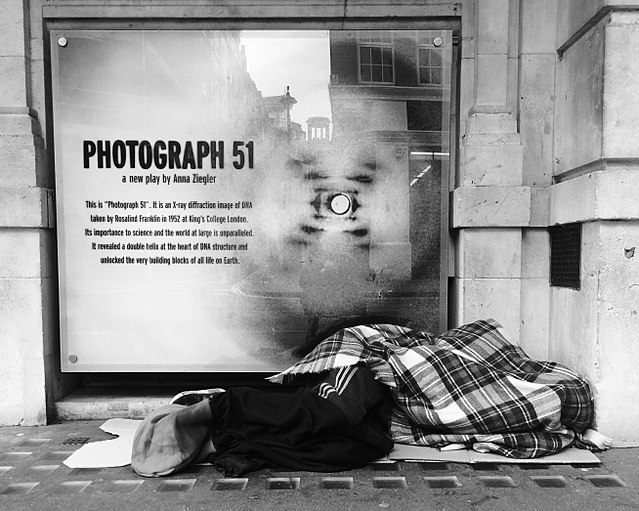
Staff writer Roxy Lees and other KCL students come together to advocate for the end of the homelessness crisis through an open letter to the MPs.
On the last day of term, 50 students gave their time to write to their MP voicing their alarm over the homelessness crisis in the UK. I had the privilege to read the many heartfelt, compassionate and eloquent letters calling for change. Six KCL societies were a part of the event, urging the government to remain focused on their responsibility to protect everyone who is in this country. We hope reading the letter will encourage other students to stand against the injustices happening on our streets today.
Our open letter
As King’s College London Students, we are aware of the large number of people in the UK, and particularly in London, who find themselves in a situation of homelessness. We consider this to be extremely concerning. More than 1 in 50 Londoners, including children, are believed to be homeless. As such they survive by using emergency accommodation, sofa-surfing, or rough sleeping. Indeed, the estimate of people sleeping rough in London has reportedly reached a record high of 11,933 people. As a result of the cost of living crisis, the number of persons at risk of homelessness is still increasing.
This situation is undoubtedly a critical emergency, but it is not inevitable. That is why we have written this letter to urge you to take action against the housing crisis, reversing unacceptable policy failures by previous governments and implementing beneficial measures, such as ‘Housing First’ solutions, endorsed by organisations like Crisis or The Connection.
The implications homelessness has for people’s physical and mental health are devastating and enduring. According to the Office of National Statistics, the average age of death for people experiencing homelessness is 45 for men and 43 for women. In addition, they are more than nine times more likely to take their own life than the general population, and almost 17x more likely to have been victims of violence.
They also have to endure constant anxiety and feelings of isolation, because their safety is not assured, they are stigmatized and they lack a place where they feel welcome. To cope with this experience, more than half of Londoners experiencing homelessness have developed a drug or alcohol dependency, which contributes to a vicious cycle not allowing them to reach their potential. In summary, for a large percentage of people, experiencing homelessness can result in immediate harm and long-lasting traumas that remain even if they manage to find safe and permanent housing, making it harder to feel present and fulfilled in their daily lives.
The causes behind the homelessness crisis are complex and diverse, but ultimately result from a depleting supply of affordable housing. This is preventable and homelessness can be ended. Many people become homeless due to a mixture of social, personal and economic factors. This includes: a lack of affordable accommodation, the inability to pay rent, an absence of support networks, unemployment, substance abuse or other health problems.
Other people are forced into homelessness after leaving prison, returning from the army or arriving in the UK as an asylum seeker without access to the right to work or any welfare benefits. Crucially, people from marginalized groups have a higher probability of becoming homeless: black people are three times as likely as people from other racial backgrounds to become homeless, women are disproportionately at risk of having to sleep rough after leaving an abusive relationship, and 25% of transgender people report having experienced homelessness.
Broad and systemic action can combat these causes and contribute to ending homelessness. We encourage you to advocate for these actions and to implement them, including: creating more good quality affordable housing; providing accessible support to people sleeping rough; allowing asylum seekers the right to work; ensuring the benefit system is sufficient to help people overcome their housing issues and always refraining from criminalizing people for being homeless, regardless of their residence status.
As it currently stands, the government is not doing nearly enough to help with the housing crisis, and it is failing thousands of UK residents who deserve a secure home. An emergency of this scale requires urgent and major policy responses, and we hope we can count on your support to end homelessness. We urge you to mobilise the Ending Homelessness Unit immediately and for the Labour government to set public targets for when you will fulfill your campaign pledge of eradicating homelessness.
Sincerely,
Krithika Soma, Lead, Centre for Social Policy, King’s Think Tank
Ilinca Balasa, Deputy Lead, Centre for Social Policy, King’s Think Tank
Eliana Covell, President, King’s Think Tank
Ramya Udaiyar, Vice President, King’s Think Tank
Marta Loscertales Font, co-president of KCL student action for refugees
Daria Nikolova, Vice President, KCL Student Action for Refugees
Sophia Ahmad, Outreach Coordinator Lead, KCL Student Action for Refugees
M Nasir Uddin, President, KCL Green Party Society
Camila Rivera Velez, Vice-President, KCL Green Party Society
Neha Veera- Co-President, KCL Minorities and Philosophy
Jenny Hurst, Co-President, KCL Minorities and Philosophy
Abbie Lorenzo, Co-President, KCL Minorities and Philosophy
Roxy Lees
About the author