Dr. Kate McMillan gives us an insight on the inspiration of her latest exhibition, The Lost Girl, highlighting themes of climate change, sustainability and forgotten history.
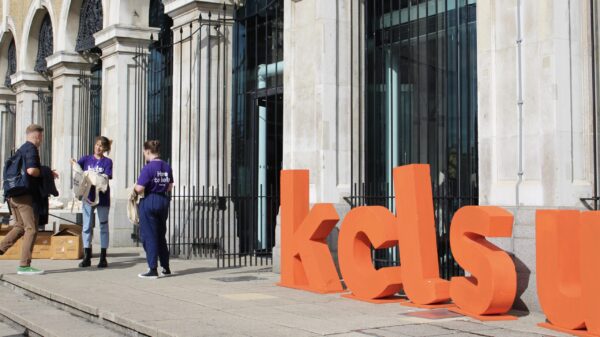
On 27 February, Dr. Kate McMillan, a teaching fellow in Culture, Media and Creative Industries, gave visitors a tour of her exhibition in The Arcade, Bush House. The exhibition consisted of a film, projected on a cardboard screen, accompanied by pieces from it (such as a blanket that came from World War II decorated with stones collected by Dr. Mcmillan herself and a handmade navigational device which were the key artifacts of this event).
The title, The Lost Girl, was inspired by D. H. Lawrence’s novel of the same name, where we try to understand what being lost is about.
The exhibition started off with a four to five-minute film, presenting a 13-year-old girl wandering around a beach, dressed in a compilation of plastic bags (literally showing humanity surrounded by plastic), picking up random objects such as a fire engine horn with a trumpet fixture. In a later scene, the girl goes to the navigational device kept in her home – a cave, which has become storage for her findings and toys, while she wraps herself up in the blanket, ending the film with her wailing into the open air. This was all filmed in Botney Bay, Kent which is the namesake of the place where the British and Gadigal people from what we know as Sydney, Australia today, first interacted.
This film can be interpreted in many ways. An interpretation that was discussed during the tour, was that the seaside would be a symbol for the refuge crisis, where it is a site of death due to immigrants making difficult and dangerous journeys, just to reach a country where they would have the chance to build a better life for themselves. The setting of this would be in a post-apocalyptic world where the little girl was living in the consequences of today’s problems that we were never able to solve. The cave in which the girl resides in is a Plato-inspired cave where the formation of knowledge, ideas, and words took place. This was also a personal memory of Dr. McMillan, as the neighbourhood in which she grew up was opposite several caves and it draws a relationship between landscape and formative years.
The navigational device was to bring awareness to the forgotten history of colonialism in Australia. It is representative of how the British used this to navigate their way through the world in order to conquer other lands. Dr. McMillan points out that this a part of history that has been suppressed and not many actually know about it, as it has been erased from the consciousness of the British and even the Australians. Coming from a Commonwealth country myself, I was able to relate to this need of bringing awareness to British colonialist history as it has a great impact on our lifestyles today. In contrast to this invasive feeling, the blanket is a symbol of protection and warmth. As humans, it is only natural that we feel safe when we are hidden away from the world, within enclosed boundaries.
What sets this exhibition apart, is the use of existing objects rather than the creation of new ones. By using existing objects, fewer materials are wasted, and new purposes are found for them. A piece that impressed me the most, was the use of cardboard as the screen for the film, which was a clear example of innovation without creation. It reiterated the importance of recycling and set an example for the way future art shows should take. After this exhibition, the pieces used would go back to where they came from, instead of being thrown out. The sounds that were used in the film were created by both Dr. McMillan and a Music student from King’s. Instead of using music, they used the percussions from normal objects as they tried to show that despite being inanimate and silent, they are still able to make sounds.
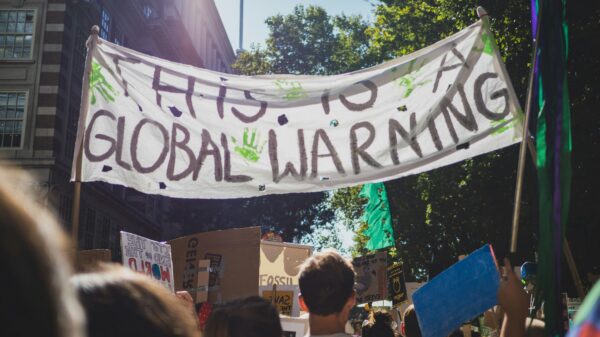
Overall, Dr. McMillan was successful in using her voice through art send a clear message that we need to have more awareness over the impact of climate change, sustainability and forgotten history; issues that we should not be ignorant to.
About the author