When many people think of Mauritius, they picture white sands, blue seas and heaven on Earth. While all of that is true, Mauritius has recently been in the news for very different reasons, gaining wider attention on the global stage due to political controversy surrounding the Chagos Islands; once a British colony, but legally Mauritian land. This article will aim to briefly touch on the untold history of the Chagos Islands, why there was a deal and why that deal is now being reviewed.
What are the Chagos Islands?
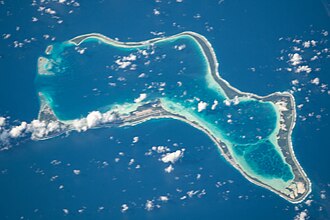
The Chagos Archipelago is located in the Indian Ocean and is about 2,000 kilometres from Mauritius. It is the homeland of the Chagossian people. Many Chagossians had worked on coconut plantations for European companies before being forcibly removed, and many still await their return home. These are people of African and Indian descent, with their own culture, music and way of life; described by those who lived it as “simply beautiful”. The forceful and inhumane displacement and shift of over 1,000 Chagossians to Mauritius facilitated British and American plans to establish a military base on the land, particularly on Diego Garcia. The islands, under British colonial rule since 1814, became a target for US military interest during the overlapping eras of the Cold War and decolonisation, a time when the U.S. was eager to strengthen its influence over the world.
By the end of 1973, the entire Chagossian population had been forcibly expelled at the hands of the US and the UK, and the islands were renamed the British Indian Ocean Territory under a deal secretly agreed between the two governments, with the UK reportedly promising the US there would be no one left “except seagulls.”
“This whole story has been shaped by secrecy, a lack of transparency and indeed lies,” says David Vine, professor of political anthropology and author of Island of Shame.
What was the deal?
In 2019, the International Court of Justice ruled that the UK should end its administration of the islands as quickly as possible. The advisory nature of the ruling meant that it took six more years for the UK government, under Keir Starmer, to finally agree to a deal transferring sovereignty to Mauritius, with the UK continuing to run the base but paying Mauritius billions of pounds over a 99-year period.
In 2023, Human Rights Watch declared that the UK and the US had committed three crimes against humanity against the Chagossians: forced displacement, the blocking of their right to return home, and racial persecution by the UK government.
In 2024, a deal was announced that would see sovereignty of the islands handed over to the Mauritian government, warmly welcomed at the time by Mauritian Prime Minister Pravind Jugnauth and the wider international community. This deal is now on the brink of collapse.
Why is the deal being reviewed?
The United Kingdom and United States both set their sights on Diego Garcia as land for their military bases. At the time, Diego Garcia was still part of Mauritius, which had not yet gained independence from Britain. The UK coerced Mauritius into giving up the Chagos Islands in exchange for Mauritian independence from British colonial rule, and Mauritius agreed.
The land remains strategically vital to the US, particularly Diego Garcia, even more so now given the US-Iran war, where bombers needed for war are housed. In reference to the deal, Donald Trump has said, “I don’t support it, I think it’s a terrible deal,” pointing to the fact that without a base, B-2 bombers would have to fly for even longer to strike Iran than they would have needed to from Diego Garcia. Trump wants to keep Iran within striking distance, repeatedly referencing the strategic usefulness of the location and arguing that a strike launched from Diego Garcia would have been far shorter than the journey his bombers made from Missouri.
What does the review mean for Mauritius?
Given the delay in agreeing to a concrete deal, diplomatic relations between Mauritius and the UK have grown tense, potentially prompting Mauritius to look toward China for support, given the strong ties between the two nations. The United States sees this special relationship as a threat to its national security.
One may ask why the US would view such a relationship as a threat to its national security, and this stems from the fact that the US sees the Chagos Islands as a great military asset. Given the military and political rivalry between China and the US, the US would ultimately want to avoid any potential Chinese influence over what they believe is land for their own use.
Whilst this is not the case as of yet, Mauritius potentially looking to China is also not all that great for the UK, ultimately meaning less diplomatic leverage in this dispute and ultimately less room for the UK to manoeuvre its own terms on the deal independently. Given the ICJ’s advisory ruling for the end of British control of the Chagos Islands, as well as pressure coming from the United Nations General Assembly, the UK is certainly under pressure when it comes to making a deal and ensuring everyone is happy.
What does this mean for UK-US relations?
Relations were already strained by the outbreak of the US and Israel’s war with Iran, given the UK’s refusal to join US military operations.
Whilst Trump initially agreed to the Islands deal struck in February 2025, by October 2025, Secretary of State Marco Rubio was flagging serious concerns for US national security stemming from Mauritius’s relationship with China. By February 2026, Trump stated that Diego Garcia should not be handed over unless Iran agreed to a deal. Under US pressure, the UK government paused the deal indefinitely in April 2026.
The UK’s failure to comply with or contribute to US military action in Iran already signalled the beginning of tense relations between the two nations. This was made evident in many of Trump’s posts on social media platform X, which expressed his disappointment in his long-term friend and ally, the United Kingdom. Thus, already bitter relations, along with a Chagos Island deal spearheaded on the UK’s terms to which Trump is strongly opposed, are not currently the best way to ease tensions. Despite this, Washington remains a superpower and key partner that the UK cannot afford to alienate.
What are the UK’s next steps?
The UK now faces the difficult task of satisfying both the ICJ, which has ruled its continued possession of the islands illegal, and the US, whose approval of the deal is also legally required. Rather than a formal review with a set deadline, the matter is being re-examined with the aim of signing a deal with Mauritius as soon as possible. To do this, an exchange of diplomatic notes is required, and the US has so far withheld from submitting any, meaning the deal cannot proceed until Washington is fully on board. Failing to satisfy Mauritius risks pushing the country toward China; failing to satisfy the US would leave any deal without legal standing. It is a genuinely difficult situation for the UK.
From all of this, it could be noted that the UK’s foreign policy relies heavily on the approval of external powers. The UK not only relies on such approvals but faces international pressure to comply with them, while simultaneously considering whether such approvals are in the interest of the UK. This shows that the UK’s foreign policy stands between commitments to international law and a dependence on its long-term ally, the US, on whom it relies for global security and influence. Whilst the ICJ ruling is advisory and is therefore non-binding, such a ruling carries ‘significant international weight’. The Chagos Islands deal highlights the conflicts that can occur within foreign policy, and shows that the UK has little room to manoeuvre independently, with each side potentially conceding a loss in this situation.
With the UK needing to find a solution to appease all sides, delay only makes things worse. The absence of a solid and signed deal gives Mauritius more reason to turn to China to step in, and also gives Washington more reason to doubt the deal, preventing any agreement in the future. The UK may now aim to open up diplomatic conversation regarding the exchange of diplomatic notes on the matter.
Conclusion
Trump has called the deal “terrible” and “an act of great stupidity”, but it is worth asking what is truly terrible about returning land to the people it always rightfully belonged to. The Chagossian people must ultimately have the right to return home, whether the islands are handed to Mauritius or not. As Vine has argued, racial prejudice shaped nearly every stage of this story, with a group of almost entirely white, Euro-American decision-makers treating the rights of a population of African and Indian descent as unimportant. Throughout, the most important voices, those of the Chagossians themselves, forcibly and inhumanely removed from their homes, have gone unheard.
For more Comments and Feature pieces click here.
About the author