
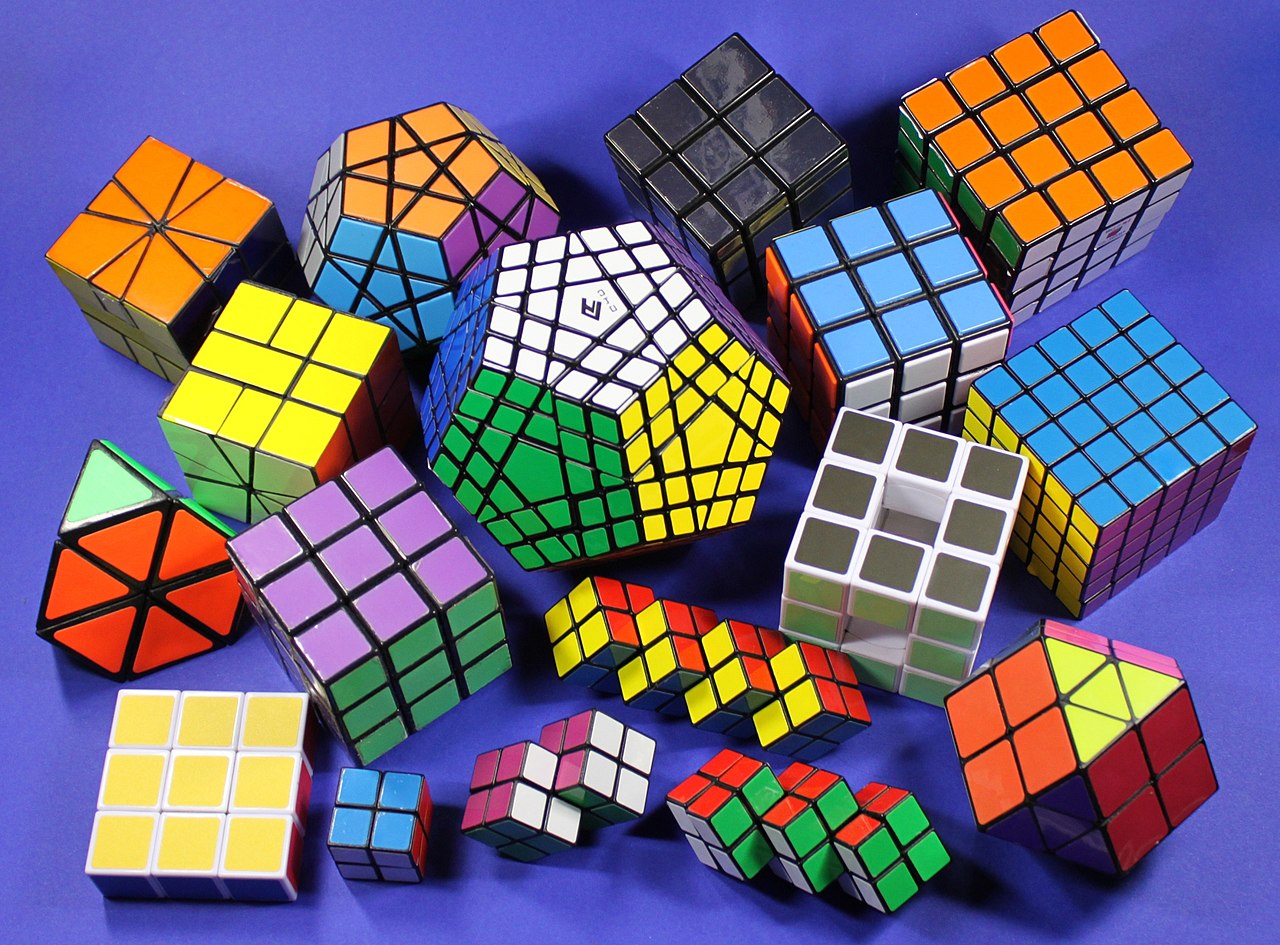
Sports Editor Abyan Memon takes a philosophical approach to speedcubing records and Moore’s Law.
Two years after the Rubik’s Cube’s 50th anniversary, we have seen our first official sub-three-second solve on a three by three speedcube. The three-second barrier was broken by Teodor Zajder with a 2.76-second single.
Nine years before Erno Rubik introduced his invention to his class, chemist Gordon Moore made a prediction about the growth of transistor counts on integrated circuits.
His revised observation, Moore’s Law, anticipates that the number of transistors used in a circuit would double every two years, growing exponentially. The increasing transistor count has played a big role in allowing us to run every digital device and keep improving their performance.
Similarly, every time the three by three world record is broken, the next prospective records become increasingly out of reach.
In this article, we will discuss the parallels between technological progress and speedcubing.
Era of Peak Acceleration
Progress is made the quickest when foundations have been built but space remains. Optimisation often follows a bell curve: starting slow, gaining momentum and eventually returning to a state of equilibrium.
Similarly, speedcubing optimisation exists mainly in the forms of better cubes, better solving techniques, faster turning and faster recognition. When adjustable screws and lubricants were introduced to the cubing world, they left room for further innovations, such as magnetic systems, to refine record times further.
In a parallel sense, the introduction of the now-standard competitive solving method, CFOP (Cross, First two Layers, Orientation, Permutation), provided a basis for speedcubers to continue innovating by optimising algorithms further.
This marked a period of rapid progress.
Computing also had its own period of rapid improvement from new manufacturing techniques, before it too slowed in progress.
Collapse of Progress
As time goes on, records become less frequent and provide diminishing returns. The same gains cost more effort and resources, and the room for innovation becomes increasingly difficult to locate. This resistance makes extraordinary strides essential for progress.
Just as at the beginning of the bell curve, opportunities for monopolies arise again. This is evident through ASML’s (Advanced Semiconductor Materials Lithography) grip on the semiconductor industry through their recent invention.
They created a new machine that flattens tin droplets into a flat disk before vaporising them for precision needed in modern chips.
Hard Limits
Unfortunately, a ceiling does exist.
No matter how quick speedsolving methods and lookahead become, the minimum moves required to solve a cube will always remain.
Hardware optimisation, too, will eventually meet physical limits and perfect architecture cannot break the minimum energy limits of computation or the scale of atoms, just as perfect humans cannot break biomechanical limits.
The good news is we will never truly be at the ceiling.
In other words, no matter how fast we get with solves or how small we get with transistors, there will always be room for improvement.
There will always be someone who can memorise algorithms and recognise cases better.
Realistically, what would we need to sustain progress?
Cultural Effects
In the culture of competition, pushing limits brings both positive and negative consequences. Limits act as goalposts, giving ambition structure and marking when a record is broken.
However, the same forces that pull competitors in can push them away.
Refinement can replace exploration in a negative way, replacing epiphany with demand. As the limit is pushed further, it can become daunting and unrewarding.
What Next?
Though records start to stagnate, mastery of the technology continues in other forms. Work on the same model can continue by prioritising other aspects of outcome, say, shifting focus from single records to average records.
Or the model can be abandoned entirely, instead focusing on a new paradigm, such as re-emerging ideas where computers are designed to work like brains.
Whilst ASML holds the lead in raw chip power, other dimensions are being explored, including at King’s College London, which joined the London Centre for Nanotechnology (LCN) in 2018, and last year developed a nanoneedle patch as an alternative to invasive cancer diagnosis methods.
Perhaps limits are the test of our innovation; when we cannot innovate a new way to push a limit, we innovate a new limit to push.