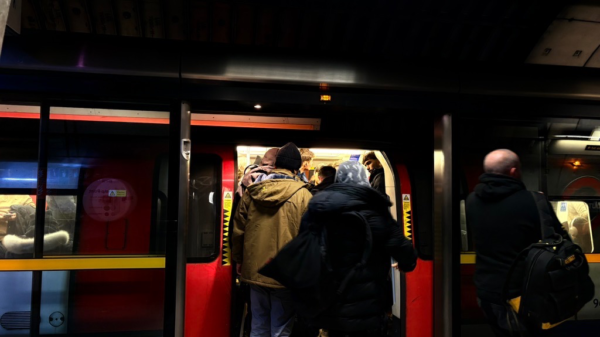
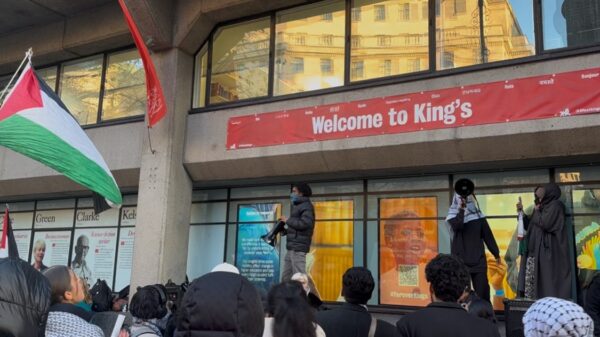
Staff writers Amal Ahmed and Saanvi Marappa interview King’s College London students to investigate the debate regarding Women-only carriages and rising harassment in London.
A new petition in the UK has reignited a decades-old debate: should there be women-only carriages on public transport? The idea was born at University College London by a 21-year-old student, Camille Brown. She was fed up with the constant harassment and overwhelming anxiety when using public transport, calling for Sadiq Khan to respond.
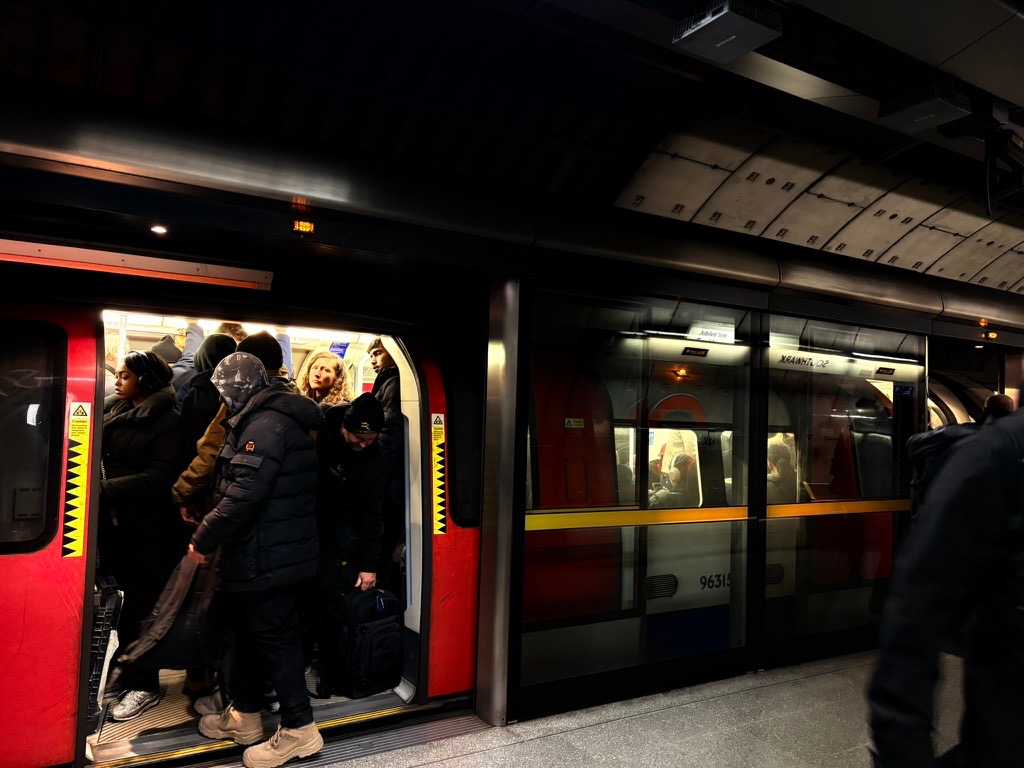
Camille Brown’s petition has gained over 10,000 signatures at the time of writing. She’s calling for the Tube network to have women-only carriages, but despite her campaign, TfL have disapproved of the idea (Source: Time Out, 2025).
Roar News interviewed students at King’s College London to gauge the general opinion on the university. It was received positively by some students at KCL who feel the petition is necessary and will help improve their experience on public transport.
Positive reactions from KCL students
“It’s a good step in the right direction“ – Ava, Student at King’s College London
Ava uses public transport daily and shares similar worries to Camille Brown regarding safety:
“I often feel limited when using public transport to the outer parts of London over safety concerns. I do think that TfL are doing a good job at the moment in having officers present at a lot of stations, but given how vast the network is, it’s natural to feel unsafe at times.
My initial reaction was positive. I do think it’s a good step in the right direction. We should definitely acknowledge how women have different experiences on the tube.”
“A practical step towards safety“ – Zara, Student at KCL
Zara uses the train almost every day to commute to university, travelling during rush hours:
“I wouldn’t say I feel unsafe all the time, but there’s always a low-level anxiety, especially when the carriage is crowded, and people are pressed too close to each other.
A man once stood far too close to me, even though there was space elsewhere. It wasn’t a physical assault, but it was definitely deliberate and intimidating.
I think the idea of a women-only carriage feels like a practical step towards safety, especially at night. Perhaps as a temporary fix, not a real solution, because it doesn’t teach men to stop harassing women.”
“Small steps matter more than perfect ones“ – Tanvi, Student at KCL
Tanvi relies on public transport as an international student, still unfamiliar with London:
“I generally feel fine during the day, but at night, it’s a different story. I try to move fast and avoid eye contact, and I always send my location to a friend.
I’ve had men stare or try to start conversations that made me uncomfortable. It’s not always aggressive, but you do get the feeling of being watched.
When I heard about women-only carriages, it felt validating and relieving. I support the idea because sometimes, small steps matter more than perfect ones. It would give women peace of mind, even if it’s not a total fix. The drawback is that it shouldn’t become a substitute for larger reforms. It’s doable if done smartly and organised efficiently, such as on specific carriages during late hours or on routes where harassment incidents are common. “
How safe is London?
While our interviewees recognise the lack of safety and comfort when using public transport, the question of how to enforce such a policy was raised repeatedly. For an effective policy, TfL would need to increase the number of officers at each station to ensure compliance and regulate behaviour. In Central London, stations are usually crowded with tourists and commuters, leaving very little room for enforcement despite the presence of multiple officers.
The tube, being an isolating place, was also mentioned during interviews. Without much connection to the world above, the risk of harassment is made worse.
London has seen an increase of more than 10% of reported sexual offences on Tubes, trains and buses across the capital, figures from Transport for London show (BBC, 2024). There were 2,418 offences between February 2023 and January 2024, representing a 10.5% year-on-year rise in reports (BBC, 2024). These statistics show the city’s increasing harassment and risks.
Concerns about the petition from students
Not all students at KCL agreed with the above opinions. Questions on effectiveness and enforceability were raised. Additionally, it questions what it would mean for societal progress towards equality and mutual respect.
“It’s segregation not progress“ – Natalia, Student at KCL
Natalia uses public transport a few times a week, mostly the tube and buses. While she doesn’t always feel safe, it’s her most convenient mode of transport:
“When I first heard about the petition, it felt like victim-blaming disguised as a safety measure. Instead of teaching men to behave, we’re isolating women.
The only ‘benefit’ I see is a false sense of security. It’s segregation, not progress. I don’t support it at all because it doesn’t challenge the culture that normalises harassment.
What happens when women’s carriages are overcrowded, and men’s are half-empty? It’s unfair and unrealistic. Gender policing on public transport is the last thing we need, and we can’t build equality by division.”
“It’s just a short-term fix“ – Noureen, Student at KCL
Noureen shared similar views as she argues the core issue is not being solved:
“It’s just a short-term fix without addressing the cause of all the problems. Young men are already being targeted online by people telling them that women hate all men and they blame their unhappiness on women.
The idea of women-only carriages would only aggravate that and add to the already growing gender division in the city. I don’t see it fixing any core issue.”
“London is too reactionary” – Raffaella, Student at KCL
“I definitely think the idea comes from a good place and would be nice to have, especially at night, but I can see people choosing to defy segregation with the intention of anti-social behaviour. I’d love to see the idea come into place, but it’s just not enforceable in London.”
The core issue highlighted by the interviewees is the feeling of helplessness. TfL may implement measures such as signs and officers on hand, but is that enough? There needs to be discussions on addressing the core issues here: the behaviour of some men on public transport. Do the vulnerable, like children, feel safe too? How do we ensure everyone can travel across the busy city without the additional stress or worry?
Accessibility on public transport
Another equally important consideration is the accessibility of support on public transport. The diversity of London and its attractiveness as a tourist destination make it essential to support those in the city. Most signs are written in English, and staff typically communicate in English. Considering language barriers, supporting travellers in various languages would be necessary to improve safety on public transport.
However, having women-only carriages in a society with a culture where men and women are not segregated in most public places makes enforcement difficult. A key concern raised in our interviews was the difficulty in comparing London with other countries where culture is arguably more accommodating to segregation rules like this.

Final Thoughts
After interviewing several students, there are some genuine supporters of the idea of women-only carriages. Despite concerns for potential misuse of the carriages, being surrounded by women would make many students feel more confident on the tube. Additionally, the expectation that children and families would gravitate towards using these spaces would potentially lower the risk of harassment, thus, a positive direction for tube riders.
The debates stemming from the petition challenge the idea that a deep-rooted problem, such as harassment, can be solved through a single policy or rule. Through interviews conducted, we found that many women share a similar belief that the public transport environment is impossibly vulnerable at times. Yet many reject the notion of segregation being the only and final solution to this issue. Whether or not the petition succeeds, it has forced a vital conversation about responsibility, infrastructure and culture in a populated and diverse city. Ultimately, the question London must answer is not whether a women-only carriage is necessary, but why many users feel it is to travel with ease and safety. Perhaps the real measure of progress will be where safety is a shared guarantee, not a separate space.
About the authors