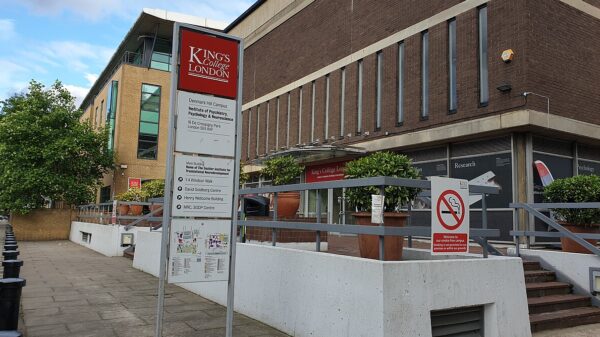
Staff Writer Lavanya Mahendrakumar discusses recent research by the Institute of Psychiatry, Psychology, and Neuroscience (IoPPN) at King’s College London (KCL). They have found that there are immediate physical benefits of viewing art in art galleries.
Participants in the study either viewed art at The Courtauld Gallery in London or reproductions of the same art in a non-gallery setting. While doing so, the researchers measured several physical parameters of the participants.
When viewing original art in a gallery, participants’ cortisol levels, an important hormone for stress, dropped by 22%. Moreover, two of their pro-inflammatory cytokines (associated with stress and chronic diseases) dropped by 30% and 28%.
However, for participants viewing reproductions of the art in a non-gallery setting, these changes were not observed at the same magnitude – their cortisol levels dropped only by eight percent and there was no change in their pro-inflammatory cytokine levels.
Viewing original artworks appears to stimulate brain regions involved in reward, self-reflection and memory. This effect was ten times greater for original artworks compared to posters. Such evidence aligns with anecdotal claims that viewing art, apart from moving us emotionally, also fosters a sense of calm and peace.
The Potential to Soothe and Heal
Engagement with art has the potential to benefit a wide variety of people. For patients it can promote recovery, improve mental health and enhance quality of life. Even engagement with music and performance related art is associated with reductions in pain and depression and improvement in quality of life. Thus, art-related programmes could also work to reduce stress on institutions like the NHS.
Beyond the healthcare setting, art may also serve an important role for students. Student mental health has been steadily worsening, with increases in anxiety and depression and a rising demand for university counselling services. For instance, wait times for counselling services at King’s College London (KCL) have increased by an average of 5.1 days from the previous academic year, with 53.3% of the survey respondents expressing dissatisfaction with the wait time.
In such cases, art engagement could be extremely helpful as preventative care, protecting students’ mental and physical health.
With further research into the relationship between art and our bodies, both universities and the healthcare industry can invest into such cultural experiences that provide opportunities to improve quality of life for all.