
Staff writer Grace Holloway examines the highs and lows of female representation in the 2024 Paris Olympics.
This article was first published in print on 16 September 2024.
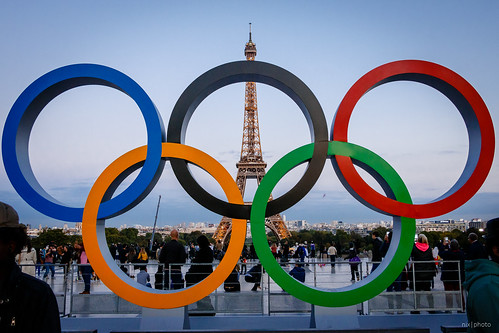
For the first time in history, the 2024 Summer Olympics welcomed an equal number of male and female athletes. The gender parity marks a significant achievement in the long-term battle for equal representation within sports, specifically to recognise the talent and achievements of female athletes. While the position of female athletes has improved, there are still areas of unequal respect and treatment that need to be addressed.
The journey to gender equality for female athletes
The first modern Olympic Games was held in 1896 without any female athletes competing. In 1900 only 22 female athletes competed, a stark comparison to the almost 5,000 competing this year!
This journey over time reflects changes in society allowing women to take part in competitive sport, as well as the movement towards gender equality in all aspects of society. This year’s opening ceremony visibly displays the shift with 96% of countries selecting both a male and female flagbearer.
Of the 32 Olympic sports, 28 have full gender equality. This shows a push to bring in the female equivalents of male-dominated sports such as boxing and wrestling, with female boxing first being held in London in 2012. These achievements for the Olympics have been encouraged by the International Olympic Committee’s Olympic Charter, created in 1991 to prevent sex discrimination and to make sports more equal.
Public interest and increased investment have worked together to accelerate the growth of women’s sports. In 2023, women’s sporting events reached a broadcast audience of nearly 47 million people. The equal representation of female competitors at the 2024 Olympics is likely to further encourage viewership of women’s sports.
Equal pay and recognition of achievements
Alongside gender parity in competitions, the financial rewards given to competing athletes in many places are also becoming more equal. In the US, a new legislation titled ‘Equal Pay for Team USA’ was recently passed, ensuring equal rewards for male and female athletes. This includes payments for medical care, expenses and compensation.
Both the World Athletics and the International Boxing Association (IBA) have also promised financial rewards for male and female gold medallists. This demonstrates how a gold medal is viewed in the same high regard without considering gender differences.
A spotlight on remarkable female athletes at Paris 2024
Across the competition, female athletes have continued to make history. They have overcome more than just sporting obstacles. The push for equality in the Olympics allowed them to celebrate at the highest level.
This Olympics saw the first medal awarded to the Olympic Refugee team, with boxer Cindy Ngamba claiming a bronze medal. She currently resides in the UK, after leaving Cameroon due to her sexuality and their strict anti-LGBTQ laws.
For Great Britain, female athletes continued to exceed expectations. Keely Hodgkinson made headlines after winning the 800m gold medal, highlighting her incredible journey after she suffered a tumour in her head, back in 2015, which caused her to become deaf in one ear. Bryony Page achieved Team GB’s first-ever gold in trampolining, while Amber Rutter won silver in the skeet shooting only three months after giving birth.
In gymnastics – one of the most watched sports, Team USA star Simone Biles continued to shine. She won three gold medals and one silver and has continued to use her platform to raise awareness of the importance of athletes’ mental health battles. Becoming a household name in many countries, she is undoubtedly one of the greatest Olympic athletes of our generation.
Aside from medal achievements, a number of female athletes competed while pregnant. This included Nada Hafez, who competed in fencing for Egypt, and Taylagul Ramazanova, competing in archery for Azerbaijan. Both their strength and determination have pushed the taboo on the amount of physical activity women can do while pregnant.
More to be done
While many female athletes have been celebrated for their strength and achievements, some have faced unnecessary discrimination and criticism in the public eye.
Algerian boxer Imane Khelif has born a heavy amount of online abuse and speculation regarding her gender identity. She has faced tons of hateful comments and false allegations suggesting she is transgender, despite her being a cisgender female and owning a female passport from a country where homosexuality is punished by law.
The source of this outrage lies in the disqualification of both Khelif and Taiwanese boxer Lin Yu-ting from the Boxing World Championship last year. This came after they allegedly failed a gender eligibility test, set out by the IBA. The result and the nature of the test have not been disclosed to the public; however, the IBA itself has been discredited in recent years over corruption, fight-rigging and ties with Russia. Due to their unfit standards as a regulator, the IOC has been in charge of boxing at this year’s Olympics. Khelif has now launched a legal battle against X (formerly Twitter) and individuals who have been firing online hate.
Both boxers who have been targeted by this abuse are women of colour, which is a common theme in criticisms of the gender and performance of female athletes. In the past, even well-known athletes like Serena Williams have been the subject of racist and transphobic statements. It seems as if when female athletes are strong, dominant in their sport and differ from a slim, white, ‘athletic’ stereotype, they are accused of not being a woman at all.
The online hate has also cast a spotlight on the ongoing abuse against female athletes’ appearances, with many being told they look too ‘manly’. Team USA Rugby star Ilona Maher was one of those athletes subject to criticism based on her appearance. She managed to stand up for herself and successfully showed how female athletes come in all different body types.
”I think there’s this idea about what female athletes are and this need to be lean and fit. But, no, there’s athletes of all shapes and sizes competing at the Olympics.”
Ilona Maher – Tik Tok
Many female athletes have used their platforms to show how they can be strong and feminine in their appearances. British weightlifter Emily Campbell is a great example of this, as she continues to wow the audience with her creative hairstyles and makeup. This year she managed a total lift of 288kg while having the Team GB colours and the Olympic rings embedded in the back of her hair.
Discrimination is also rife within the host country – France. All female athletes who choose to wear a religious headpiece have been banned from representing France, displaying a clear and ongoing Islamophobic culture. In a country that takes pride in its rich cultural heritage, it is disheartening to see women’s choices being eroded, creating further barriers to their participation in competitive sports.
Misogyny and sexism still rife
Women have still been subject to disrespect and misogyny through the commentating at this year’s Olympics. During the 4x100m freestyle relay, a Eurosport commentator made a remark about Australian swimmers ‘hanging around, doing their makeup’ after finishing the race. This continues to place emphasis on athletes’ beauty and appearances rather than talent, as well as clearly displaying sexism through the commentating.
Parity far from equality
While women are being given an equal stage at this Olympics, equality has a long way to go.
Many countries have successfully moved towards equal recognition of achievements via rewards for accomplishments. However, since there is no set prize internationally for medals or for participation, many countries may choose not to give equal pay to female athletes.
Even within countries that provide equal recognition of achievements, there are still barriers to sport for women, especially surrounding access to funding and sponsorship deals. Forbes reports that men’s sports still receive 90% of sponsorship deals, and with most athletes having to self-fund their journey to the Olympics, this can be a deciding factor for women to not take part.
Beyond this, in some countries, female access to sport is completely restricted. In Afghanistan, under Taliban control, women are banned from participating in sports — the three female athletes representing Afghanistan in Paris were refused recognition from the government.
What’s next?
Between now and LA 2028, it is uncertain what major changes we will see to female representation in sport.
Hopefully, the next Olympics will maintain the 50:50 parity that has made history but also go further. Women need to be treated as athletes: not sexualised or compared to male beauty standards, or being subject to unnecessary transphobic abuse.
We also need to see a further breaking down of barriers which make sport less accessible to women, for example through better investment and sponsorship deals. A prolonged effort to recognise the remarkable achievements of female athletes is needed to get to a point where the Olympics goes beyond gender parity and actually achieves equity for its female participants.
About the author