Culture writer Lamisa Worthy reviews Maggie Gyllenhaal’s take on the story of Frankenstein’s Bride
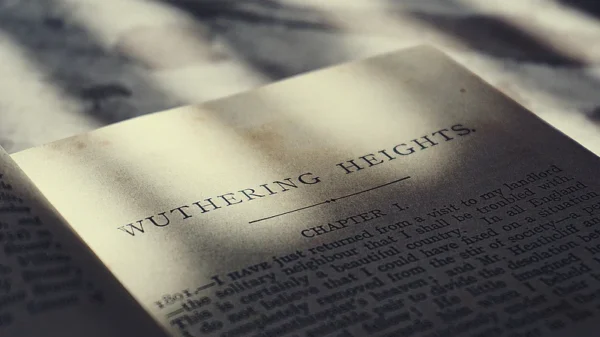
Mary Shelley’s Frankenstein has been on something of a cultural comeback tour. In the past few years alone, we’ve had Yargos Lathinmos’ surrealist Poor Things, Zelda Williams’ teen-goth Lisa Frankenstein, and most recently Guillermo Del Toro’s much-anticipated Frankenstein.
Into this trend steps Maggie Gyllenhaal’s The Bride!, a loose reimagining of the 1935 classic Bride of Frankenstein. With an $80 million production budget and an incredible cast starring Jessie Buckley as the titular figure and Christian Bale as Frankenstein’s Monster. Expectations were understandably high.
Surprisingly, early reactions have been largely negative.
The film opens with an intriguing flourish, with the ghost of Mary Shelley herself entering the narrative and possessing a young woman named Ida. The possession is violent and uncanny—Ida convulses, her speech flipping between her natural American accent and a polished British cadence that presumably suggests Shelley’s voice breaking through. In her trance, Ida proceeds to discuss the criminal activities of crime boss Lupino, and so his henchmen Clyde and James discreetly dispose of her soon after.
From there, the film pivots to Frankenstein’s Monster, who travels to 1930s Chicago. Lonely and starved for companionship, he convinces the groundbreaking scientist Dr Euphronious to create a partner for him. Their candidate? A freshly buried Ida. Paying homage to the original mad creator, they dig her up, reanimate her, and what follows becomes something like a gothic fever dream: part outlaw romance, and part anarchic spectacle, resting somewhere between Bonnie & Clyde and Joker: Folie à Deux, with a feminist revolt angle that never quite hits the mark.
It’s an undeniably unusual premise, and to Gyllenhaal’s credit, she commits to the strangeness in a way that is refreshingly faithful to the extremes of Gothic storytelling and its grotesque flair. The film is visually bold, with strong performances across the board and an interesting musical score that heightens the operatic tone and anchors the film’s weaker elements. In an era where horror often arrives polished and restrained, The Bride! is messy, gory, and unapologetically theatrical.
Its biggest flaw, however, is the attempt to juggle too many tones and ideas at once, and the result feels less like a carefully orchestrated collision of genres and more like a narrative traffic jam with equally chaotic editing. Gyllenhaal pulls on multiple threads: the outlaw couple dynamic between the Monster and the Bride, a tale of revenge, a noir-tinged detective subplot, and mob entanglements. Yet none of them coheres. It would be fair to fault The Bride! for its structural chaos, as Gyllenhaal often takes big swings but doesn’t quite land the axe correctly, if at all.
Even the feminist revolt gestured through the imaginative tale of a scorned woman reinvigorated would have been very interesting to follow, particularly in light of the gender and consent issues of its source. After all, Buckley’s Bride is granted far more agency than her predecessor in the 1935 original. Even the title signals this shift: The ‘Bride!’ rather than ‘Bride of Frankenstein‘. The difference is subtle but telling, gesturing toward a less possessive, male-oriented framing of the character. This complements the feminist imagery we encounter, particularly heavy in the second act, which works well against the 1930s backdrop. Yet, ultimately, the film only offers brief flashes of this idea and never fully commits to it.
Similarly, the detective plot, although it had interesting performances led by Peter Sarsgaard and Penélope Cruz, ends up feeling strangely peripheral. Had their storyline been developed more fully, they might have served as a compelling mirror to the Monster and his Bride, another pair navigating obsession and morality.
Again, Gyllenhaal picks up a fascinating angle with Mary Shelley herself drifting through the narrative like a ghost suspended in purgatory. Though narratively? It’s disjointed, and we never quite reach a consolation, origin, or explanation.
Still, there is something admirable about a film willing to be this strange and excessive. Even when it misses, it misses in a way that you respect the ambition while wincing at its unsatisfactory execution.
Was it wholly a good movie? Debatable. Was it a good time? Absolutely. If nothing else, The Bride! certainly has the potential to find a second life as a cult classic.
At times, it feels less like a conventional narrative and more like a cinematic collage, stitched together from disparate parts. Which, strangely, makes it oddly appropriate. Like Frankenstein’s creature itself, The Bride! is assembled from multiple bodies. The trouble is that while the monster in Shelley’s story eventually learns to walk, Gyllenhaal’s creation never quite finds a secure footing.