Comments Editor Dahlia Farzi outlines how Britain’s failing schools are leaving students neglected. In the absence of support, violence becomes their relentless refuge.
As an English Tutor, I see what statistics cannot. I see the desperation in students’ eyes, the quiet pleading for belonging that no test score can measure. Numbers and mid-term assessments cannot capture the loneliness, the anxiety or the crushing weight of feeling misheard, misunderstood. Invisible. They cannot show the endless hours a young person spends preparing mentally to read aloud in class, or the fear before that one Mathematics paper that determines the rest of their life.
Their blank stares and restless movements, the itches to leave the classroom, to escape the walls and the chairs that confine them, are almost tangible. Every glance towards the door, every suppressed sigh 30 minutes into a lesson, carries the weight of a desire for freedom from a system that ignores their struggles.
Yes, it is frustrating as a Tutor to witness students disengaging with GCSE Language, Question 5 Creative Writing. Yet, I see a reflection of myself. I see myself as a young Year 10 girl, also in a classroom, itching to escape walls that felt too tight, expectations that felt too rigid and a system that measured me in grades from 9-1 rather than potential.
However, in Year 10, a teacher once saw me. Not as a numerical pawn, not as a rebellious, irrational girl, but as a being with curiosity that stretched beyond the confines of Macbeth. She was my mentor, the one who turned English into more than a subject and proved that it could see me beyond my grades.
I couldn’t say the same for the others. But it’s not their fault.
A Teacher Wellbeing Index published in 2025 found that approximately 66% of teachers who considered leaving education over the past academic year, due to pressures on their health and wellbeing, cite volume of workload as the main reason for thinking about leaving their jobs. Department for Education’s (DfE) Working Lives of Teachers and Leaders (WLTL) survey data also suggests that the number of teachers who are considering leaving increased by 44% in 2022/23 compared to the previous year.
In classrooms shaped by burnout and a retention crisis, neglect becomes a mutual relationship between both teachers and students: teachers are forced to work as robotic machines devoid of emotion, while students feel abandoned by the adults meant to guide them. When teachers are driven to the brink, and students are left searching for recognition, what remains of the classroom?
In 2023/24, stress, depression or anxiety accounted for 46% of all work-related ill health. In the education sector, this represents 2.5 million working days lost due to work-related illness at an economic cost of £1.8 billion.
As teachers battle exhaustion and illnesses without care, the attention and emotional availability children rely on begin to erode. If teachers aren’t supported by an infrastructure that prioritises their well-being, how can we expect students to behave rationally?
Data from WLTL shows that teachers’ and leaders’ perceptions of pupil behaviour in their school have worsened considerably since 2021/22. It also highlights a substantial rise in the number of teachers reporting that they spend ‘too much time’ dealing with behaviour incidents – from 50% in 2022 to 59% in 2025. Another Student Behaviour Report conducted in 2024 found that more than 25% of teachers are looking to leave the profession because pupil behaviour has become so bad and will continue to get worse. The report found 87% of teachers think pupils are addicted to their phones and 88% think mobiles are a distraction for them.
Mobile phones have become more than a trivial distraction in classrooms; they are catalysts that increase impulsivity and amplify tensions between students and teachers alike. Arguments that begin in the classroom often spill onto digital platforms, validating students’ heightened emotions and creating unchecked echo chambers of resentment. Minor slips escalate into personal vendettas, with the instant feedback loop of social media fuelling conflict and aggression. In classrooms that fail to protect teachers, students cannot pause or regulate their emotions, so social media becomes a surrogate friend. A friend who offers attention and a sense of control when no adult is available to listen. A small telling-off quickly spirals into a full-blown confrontation where violence feels like the only way to be heard.
New data collected by NASUWT, The Teachers’ Union, found that 20% of teachers surveyed have been hit or punched by pupils and 38% had been shoved or barged, with 25% of teachers experiencing pupil violence at least once a term. With more than 60% of threats of assault with a weapon coming from pupils of primary school age, it’s no surprise that teachers declare a pupil behaviour emergency.
On Tuesday, 6th January, teachers at Lily Lane Primary School in Manchester and Ravensfield Primary School in Tameside began strike action due to a culture of violence and intimidation. At Lily Lane Primary School, teachers argued that leaders are ignoring teachers’ concerns over the unmet needs of pupils with highly complex special needs. Assaults on staff and pupils are an almost daily occurrence but leaders are failing to consistently employ an effective behaviour policy. When teachers raise concerns, they have been subject to adverse management practises, including suspension and unrenewed contracts. At Ravensfield Primary School, teachers similarly argue that pupils bite, kick, hit and spit at staff, as well as throwing furniture and bringing knives to school. Incidents of pupil aggression have led to classes being put in lockdown.
If this is the beginning, what happens by the end of high school?
On 3rd February 2026, members of NASUWT, The Teachers’ Union, at Tewkesbury Academy in Gloucestershire launched the first of five planned strike days, protesting the school management’s failure to tackle abusive and disruptive behaviour. Also on the 3rd, a teenage girl was found guilty of attempting to murder two teachers and a pupil following an incident at Ysgol Dyffryn Aman in Carmarthenshire. At the same school in 2023, a 15-year-old boy who stabbed a teacher in a school corridor after telling friends he wanted to kill somebody and researched how to buy firearms in the UK was given a 14-month detention and training order.
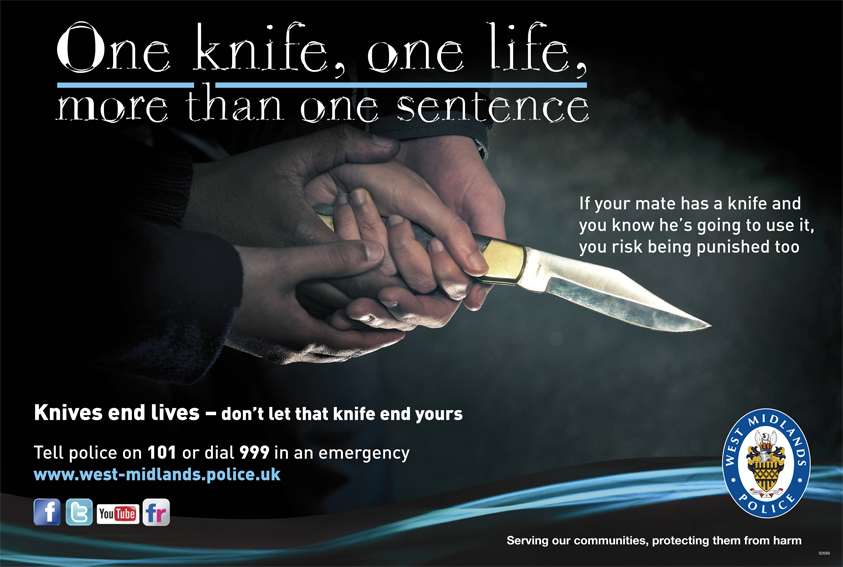
ITV News has gained exclusive access to figures from police forces across England and Wales on knife possession in schools, covering the years from 2019 to 2025. They include two grim statistics: a total of 975 under-16s have been reported to police for owning a knife or bladed article in school. In 2025, the youngest person to be arrested after being found in possession of a knife or bladed article in school was aged seven.
According to a Sky News survey, around one in five UK secondary school teachers have witnessed pupils carrying knives or other bladed articles in school. In April 2025, Channel 4 FactCheck obtained figures exclusively showing police recorded 150 stabbings or other knife crimes causing injuries at schools across England and Wales last year. This is equivalent to four per school week. As just over half of police forces were able to provide data, the true extent of school violence is likely to be even greater.
Knife crime in schools is more than a numerical metric; it is a symptom of a system that has failed its teachers and its students. Classrooms should be spaces of learning and safety, not arenas where teachers (and pupils) have to fight for their lives. Every day, they wonder: could this be their last?

English Undergraduate at King’s College London. Passionate about all things Comment!