
Staff Writer Ben McWilliam outlines what Jenrick’s defection to Reform UK means for the Conservatives.
The opening weeks of 2026 have ushered in renewed drama for the Conservative Party, which is still reeling from its historic electoral defeat in July 2024. During that election, the Labour Party gained a substantial majority of 174 seats, securing a total of 412, while the Conservatives only won 121 seats, marking their worst performance in terms of seats in their near 200-year history.
Following this loss, former Prime Minister Rishi Sunak addressed the nation outside Downing Street on July 4th, stating, “To the country I would like to say first and foremost I am sorry,” and that, “I have given this job my all but you have sent a clear signal that the government of the UK must change, and yours is the judgement that matters.” In a significant shift since then, four high-profile Tory figures- both current and former MPs- have recently defected to high-rising Reform UK, raising anxious eyebrows within party ranks.
First to make the leap was Nadhim Zahawi, the former Chancellor and Education Secretary, whose time in office was marred by controversy surrounding an HMRC investigation into unpaid taxes linked to his shares in YouGov, a polling company he co-founded. Zahawi later settled the matter for nearly £5 million.
His decision to join Reform UK on January 12th comes despite the party’s vaccine-sceptic stance. Figures such as Aseem Malholtra, an ally of RFK Jr., and Professor Angus Dalgleish, a former UKIP candidate in 2015, have previously claimed that the Covid-19 vaccines contributed to King Charles’ cancer. Malholtra argued, “It’s highly likely that the Covid vaccines have been a significant factor in the cancers in the royal family.” This viewpoint stands in stark contrast to Nadhim Zahawi’s strong support for the COVID vaccine rollout during his time in office, raising concerns among members of Reform UK.
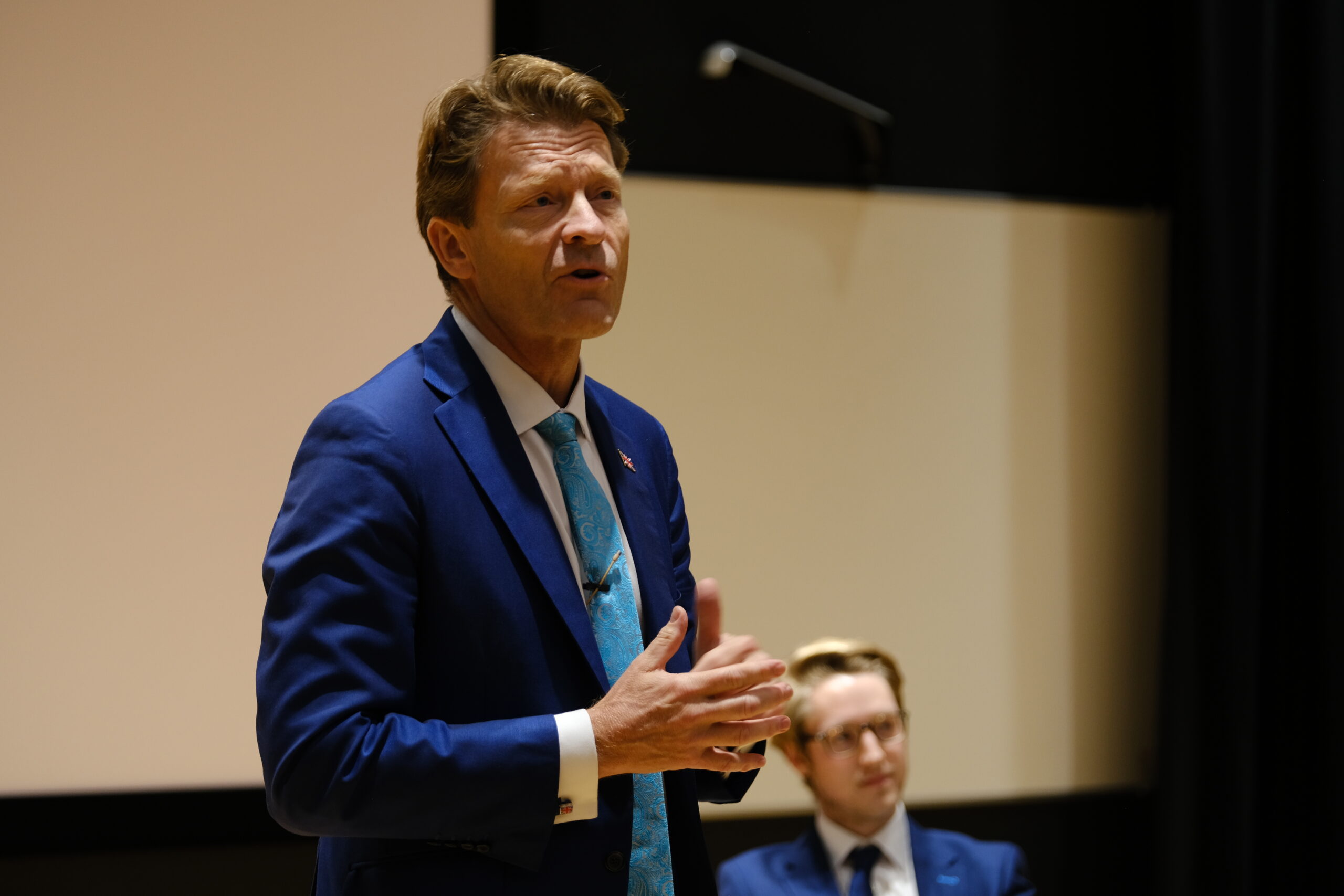
Shadow Justice Secretary, Robert Jenrick followed suit, making his move to Reform UK on January 15th. His defection has sparked questions about his political self-interest, with Guardian parliamentary reporter John Crace calling him “just a needy homunculus for hire,” which raises concern around the credibility of Reform UK promises.
Jenrick’s record as Immigration Minister, included oversight of asylum hotel expansions and the controversial Rwanda scheme. This scheme proposed that asylum seekers who entered the UK illegally would be sent to landlocked Rwanda to have their asylum claims processed there. The British government allocated around £290 million to support this scheme and assist with Rwanda’s economic development, as payment. However, it faced numerous legal challenges that hindered its implementation, and it was ultimately scrapped by Labour after their election victory in 2024.
As Jenrick oversaw these large amounts of illegal migrants crossing the channel and housing them in hotels, he drew significant criticism from figures like Nigel Farage and members of the Reform Party. In August 2025, the official Reform UK X account labelled him “a fraud,” adding another layer of irony into the mix, especially now that the two individuals will work together.
Andrew Rosindell, a long-serving Conservative MP since 2001, and Suella Braverman, a prominent Tory figure and former Home Secretary, are the latest to defect from the party, as of the 26th January 2026. Rosindell mentioned the Chagos Islands deal as the final straw that led to his decision to leave. He stated, “The failure of the Conservative Party both when in government and more recently in opposition to actively hold the government to account on the issue of Chagossian self-determination and the defence of British sovereignty, represents a clear red line for me.”
Suella Braverman’s recent defection is a move that rivals Jenrick’s high-profile exit, highlighting the worsening issues within the Conservative Party. She cited her reasons for leaving, stating that the Conservatives had failed to effectively implement Brexit while also overseeing a rise in illegal immigration and high taxes during their tenure. Braverman expressed that she felt “politically homeless for the best part of two years.” With her joining other Reform MPs in Parliament, Reform UK now has a total of eight sitting MPs, and this number is continuing to grow.
Under the leadership of Kemi Badenoch, the Conservative Party is attempting to revitalise its image and capitalise on growing public concerns over immigration, with 933 migrants reported to have crossed the Channel since the beginning of the year (1st-26th January 2026). The party is also seeking to exploit fiscal missteps by Labour, which has led to persistently high taxes breaking post-war records. The Conservatives’ strategy includes promises of responsible tax cuts, which they claim will be funded by reducing excessive state spending and prioritising ‘living within our means.’ A key proposal is the abolition of stamp duty on primary residences, aimed at easing the financial burden on homeowners.
Additionally, the party plans to repeal the Climate Change Act of 2008, a move that would eliminate the legally binding target for net-zero emissions by 2050. Badenoch has been a vocal critic of the net-zero target, arguing that it imposes unaffordable costs, stifles economic growth, and increases household energy bills without meaningfully reducing emissions.The party rightly intends to cut red tape surrounding energy policies and are advocating for the expansion of nuclear power, viewing it as a future solution for providing stable, low-carbon energy in the UK.
However the hopes of revitalisation have taken a major hit following Jenrick’s defection to Reform UK. Under Nigel Farage’s leadership, Reform UK has rapidly expanded its influence, amassing over 270,000 members. Jenrick’s departure is particularly concerning for the Conservatives, as he was not only a prominent opposition figure but also a runner-up in the party’s leadership contest. Jenrick said discussions had started with Reform in September, and was on the cusp of exit just hours before a Reform UK press conference on January 15th. An event Farage claims was not specifically coordinated for Jenrick’s arrival.
Conservative leader, Kemi Badenoch, was provided with documents highlighting “clear, irrefutable” evidence of his ambitions to leave in the most dramatic and damaging way possible for her party, shortly before the ensuing drama led to his dismissal from shadow cabinet duties. Farage reacting to the chaos, amusingly claimed she had “jumped the gun.” Reports indicated that Jenrick had still not made up his mind about leaving and, in Farage’s words, “He wasn’t going to join today. He wasn’t going to join tomorrow. He wasn’t going to join next week!”
Conservative Party members cannot be blamed for becoming increasingly concerned about the party’s prospects of recovery following Jenrick’s defection. Known for his natural leadership qualities, Jenrick tried to rally in hard-right factions on critical issues such as immigration, welfare and the economy. His proposals include advocating for the UK’s withdrawal from the European Convention on Human Rights (ECHR), implementing stringent immigration caps, and promoting essential welfare reforms. He previously warned that the removal of the two-child benefit cap would cause further economic strain. Though, since defecting to Reform, he now follows a confusing party line of avoiding welfare reform discussions altogether.
Moreover, his nationalistic agenda resonated strongly with party members, as well as his acknowledgements of past Conservative missteps that contributed to electoral defeats. In May 2025, he admitted on his X account, “I have been painfully honest about my Party’s failings on immigration,” and that, “I resigned as Immigration Minister because we weren’t moving far or fast enough to reduce legal and illegal immigration.“
Jenrick’s distinctive approach had positioned him as an effective gatekeeper, preventing disillusioned party members from drifting toward Reform, thanks to his pragmatic, Reform-like policies and views. Many within the party, including myself (despite voting for Badenoch!), viewed Jenrick as a leader-in-waiting. His appeal spanned both the hard and centre-right, particularly among young Conservatives who had been drawn to his proactive strategies. This included viral media campaigns aimed at curbing nearly 1 in 25 people dodging fares in London’s tube stations. The former Shadow Justice Secretary confronted petty criminals who avoided payment, asking questions like, “Do you think it’s alright not to pay?” and “Do you want to go back and pay, like everybody else?” In return, he often faced hostile responses, such as “F*** off.” This proactive and hands-on approach will surely be missed. But while the loss of Jenrick is seen as a significant blow to the Conservatives, I believe that it is not necessarily a fatal one for the party’s future.
The party has experienced a slow and discreet recovery since Kemi Badenoch became its leader. Polls conducted by More In Common in January 2026, indicate that, for the first time in a year, the Conservatives are projected to gain seats. This improvement is partly due to Labour’s poor governance regarding the growing issues surrounding immigration. A significant point of contention, more recently, was the return and release of “British”- Egyptian extremist Alaa Abd el-Fattah from an Egyptian jail. His controversial posts, uncovered shortly after his release, included anti-White, anti-Semitic, anti-British, and homophobic tweets. This sparked widespread outrage and rightly led to calls for his deportation from prominent figures like Farage and Badenoch despite his facetious apologies. Labour’s refusal to act on this issue and the Prime Minister’s reluctance to withdraw his “delight” regarding the “return,” has further damaged their reputation.
They can also find some ease in the fact that an IPSOS poll, conducted in January 2026, shows Kemi Badenoch having a 22% public satisfaction score compared to the Prime Minister’s 15%. While another poll recently updated by Politico on January 26th, indicates that the Conservatives are polling just 2% behind Labour, while Reform is performing strongly at 28%. So while I don’t believe the Conservatives should have any worries about not surviving the next election, they are still far from reclaiming a party fit for government.
I believe there is only one viable path for the Conservative Party if it hopes to stand any chance of electoral success post-August 2029. This path involves developing a clear and no-nonsense alternative immigration policy. The policy should build on the Rwanda initiative and maintain a commitment to leaving the European Convention on Human Rights (ECHR). Additionally, it should impose strict immigration caps that prioritise those who will contribute positively to British society and, more importantly, integrate well. We’ve seen many foreign nationals, including illegal immigrants, struggle to integrate: consequently leading to increased crime, strained public services, and a heavier tax burden on hard-working Brits. The party also needs to reclaim its reputation as the party of economic competence. This will be challenging, given its previous 14 years in power, but I believe Rishi Sunak’s positive economic recovery efforts, in-spite of Labour’s debatable claims of a £22 billion ‘black hole’, following Truss’s catastrophe, offers a solid foundation for the party to build upon.
Lastly, and most importantly, the Tories need to adopt a tougher stance on welfare, as the current system is broken. Britain is not as productive as it should be. Too many individuals, who are capable of working, are choosing not to and instead are exploiting our failing welfare system. Therefore, the party should implement measures to counter this trend. These measures should include reinstating the two-child benefit cap, restricting benefits for lower-level mental health conditions such as anxiety or ADHD, and, most crucially, significantly increasing face-to-face assessments for the Work Capability Assessment (WCA). This would ensure proper checks are conducted to prevent individuals from deliberately exploiting the system.
The Conservative Party isn’t fading into the background, but make no mistake—it won’t reclaim power anytime soon unless it undergoes some serious reforms. Change is essential; without it, they’ll remain stuck on the sidelines while the political landscape evolves around them.

Economics & Politics Writer / MA International Political Economy