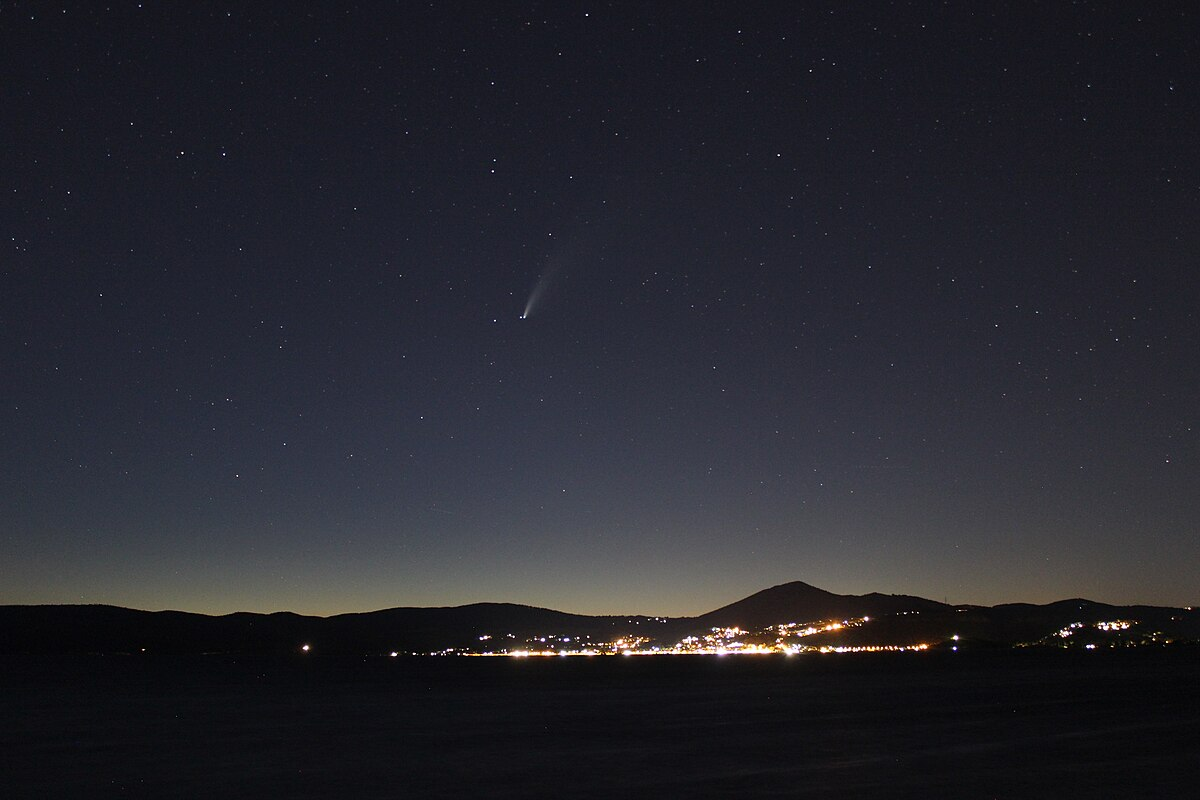
The Asteroid Terrestrial-impact Last Alert System (ATLAS) has detected a rare object from beyond our Solar System, giving astronomers the chance to closely study worlds beyond our own.
In 2017, astronomers in Hawaii spotted the first ever interstellar comet observed by humans. This visitor from beyond our solar system was named 1I/’Oumuamua, meaning “a messenger from afar, arriving first” in Hawaiian.
Two years later, an amateur astronomer from Crimea discovered a second interstellar comet. Once the object’s existence was confirmed by the European Space Agency (ESA), it was dubbed 2I/Borisov after the aforementioned amateur astronomer.
A third comet from beyond our solar system has now been found.
On 1 July 2025, the Asteroid Terrestrial-impact Last Alert System (ATLAS) in Chile spotted an object with a suspicious trajectory. They have named it 3I/ATLAS.
With modern technology, objects in space can be observed through multiple wavelengths of light beyond what is visible to human eyes. In visible light and near-infrared (lower energy wavelengths than visible light), the red colour of the object seems comparable to that of Oumuamua.
The ESA’s Planetary Defence Office has commissioned ESA astronomers across the world to keep track of the comet and scour their databases for evidence of previous detections.
3I/ATLAS is not considered a threat to Earth, but its trajectory near the Sun is reason to study the object as quickly as possible; if it gets too close to the Sun it may vaporise.
The interstellar comet is visible in the night sky until September, when it will disappear behind the Sun. However, it should reappear in early December, giving astronomers more opportunities to study it.
The curiosity behind interstellar objects stems from the fact that it is a rare chance to closely look at the remains of other planetary systems and compare them to our own.
With ATLAS’s ongoing sky surveys, perhaps more chances to study strange new worlds will become more and more prevalent.
About the author