
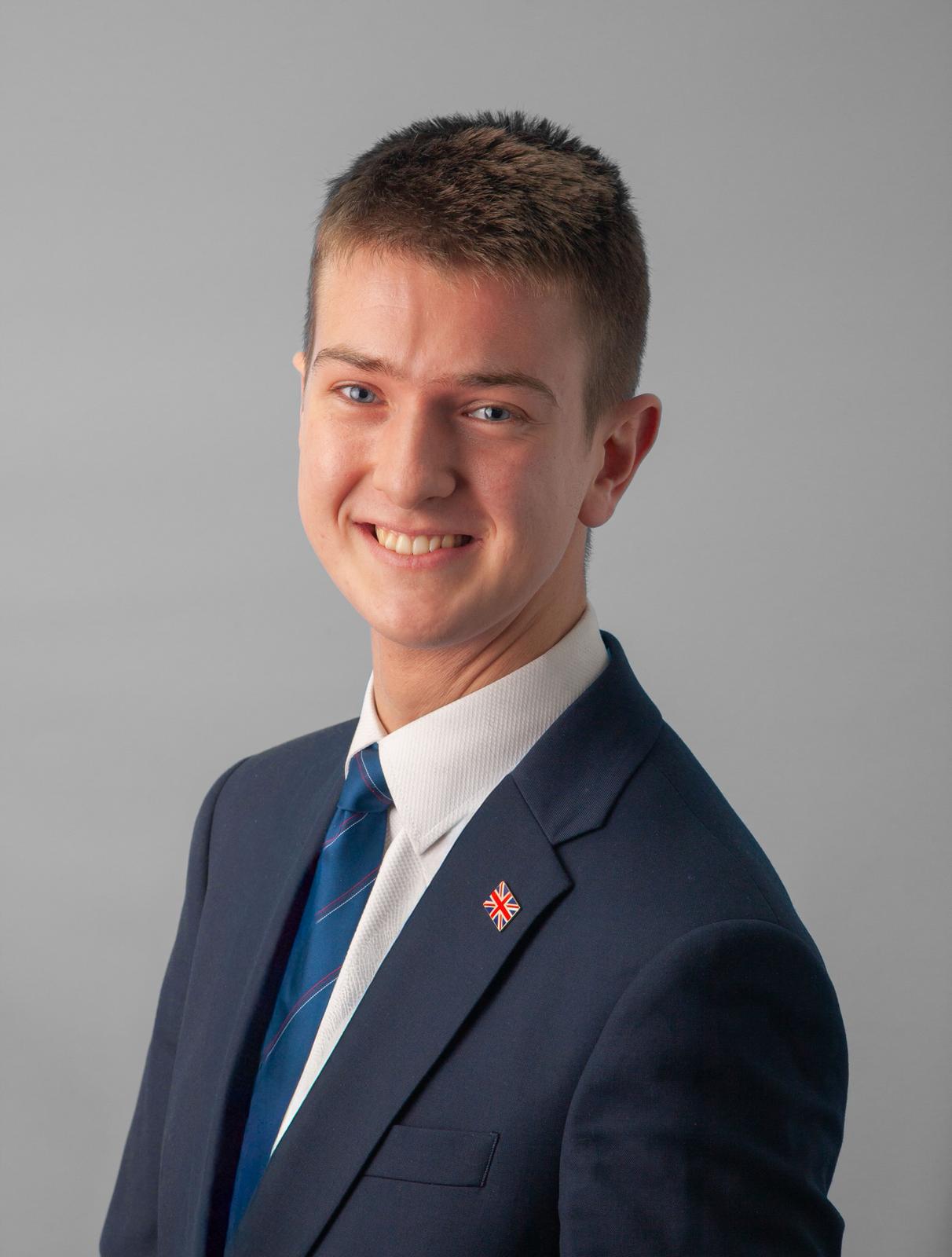
Staff writer Polly Symes talks to Lucius Vellacott, a student at King’s College London, about his responsibilities as District Councillor.
In 2023, at just 18 years old, Lucius Vellacott, now a third-year BSc Politics student at King’s, was the youngest councillor to be elected in the UK. I met Lucius over coffee (or Chai in my case) to discuss the responsibilities the role entails, the journey that led to it, and his perspective on the current challenges in British politics.
Roar: Can you explain to our readers what your job is, and what it involves?
Vellacott: I am the District Councillor for Soham South and Wicken, which means I was elected by people in the South part of my town, Soham, and a little village, Wicken, to represent their interests on the District Council. One of our most public-facing jobs is to make policy decisions. But I would say the most important function of a councillor is to be accountable – whether it’s local issues or bigger issues, whether it’s something as small as a pot-hole or as big as a council tax issue… that’s the most important part of my job.
R: When you were elected in 2023, aged 18, you were the youngest councillor to be elected in the UK. How did that feel?
V: It was a completely surreal moment. It’s amazing how many people in schools I’ve visited have said, “I know that if I want to get involved, my age is not a particular barrier”. Nobody did it before. Although the next year I was beaten by a lady in the same county in Peterborough, so that’s fantastic! It’s great to have more people involved.
R: Alongside your job, you are a third-year BA Politics student at King’s College London. When did you first become interested in politics?
V: It was as I was leaving secondary school. My parents had divorced a year before. And I came to this realisation that no one was going to do my life for me. Initially, I got involved by joining my local party – it was amazing how quickly they took me under their wing, given that I was sixteen and didn’t know very much about the world! From there, it spiralled. When my dad moved up to Soham, I knew there were elections in the next year, so I just called the local campaign manager and said, “Let me know if I can give you a hand”. And then she goes, “Actually, there’s a vacancy. You won’t win it. We’re going to put you there, if you want to stand”. And I thought, “That would be really cool… to say I’ve stood in a public election, and then go and study politics”. When I won, I decided I was going to give it everything, which has been appreciated by residents but also made me a more rounded person.
R: On the note of giving it “everything”, as you put it, what has been the most rewarding part of your role?
V: It’s a little bit of a cliché, but knowing that, in a small way, you have altered the way people live their lives for the better. It can be really small things. I had parents contacting me because ducks were being run over on the high street. So last year I started a campaign to get duck-warning signage put up around Soham, which was successful and is still ongoing. Or, for example, the little rural village I represent, Wicken, hadn’t had a bus service for ten years. When I saw an opportunity, I said, “can we explore running this service through Wicken?”. And now people with special educational needs children, who’ve never used public transport before, are able to get to school. It’s a small difference. I’ve been trusted with something – that’s pretty special.
R: Moving on from the positive aspects of the role, what about it has challenged you?
V: There are always people who think you’re corrupt and won’t listen to you. This especially comes out when you’re dealing with planning applications. We’re a growing country, we’re a growing economy, and we have to have some kind of development. They always go “councillors are having backhanders!”. That frustrates me because I genuinely am trying to help. People who say, “MPs do nothing” -they don’t. They’re all there for good reasons (the vast majority are). Also, being a very young person, the very first thing anyone who is opposed to you says is “how on earth can you claim to have authority when you have no experience?” And I say, “I do have experience. I have valuable experience from what it’s been like to grow up as a young person in the latest generation.” I also say, “don’t judge me by my age, judge me by my what I do.”
R: According to the National Centre for Social Research, in 2022, Labour was the most popular political party for under-35s. You are a part of the Conservative Party, bucking that trend. What made you join the Conservatives?
V: When I was sixteen, and my parents had divorced, my mum was living in this small rental house. I was sleeping on the kitchen floor, and I had that realisation that no one was coming to help. The very first thing I did was cycle to the next village at 6 am every morning to do a paper round. From that, I got some savings and bought my car (and my freedom). I think, if there is any way I can help people to take better control of their own lives, then that is what I want to do. If I can do a tiny bit to make local government, national government more focused on trying to help people help themselves, that’s what I want to do. I want to include everyone. There are parties, especially Reform, that don’t want to include everyone. I didn’t go down the route of Labour because Labour’s founding philosophy is that the government can do a lot of things better than people. I fundamentally believe in the value of the individual. I saw it in myself -I could change where I was going. I really want to ensure that we’re a country that has that for everyone.
R: Within the Conservative Party, Kemi Badenoch has recently passed one year as leader of the opposition. What are your opinions on her accomplishments so far?
V: I think she is very understated and very competent. She’s one of those leaders who is not just going to leap into things and say “we’re going to do this and we’re going to think about it later”. That problem has really broken trust, and in fairness, we did it as well. We said things that we weren’t sure how we were going to do, and we failed to do a lot of them. It’s what Labour did when they got into government, it’s what Reform is founded on. I like Kemi because she’s changed that approach. For me, my conviction doesn’t change based on the number in the polls. I think she’s doing a good job.
R: Nonetheless, in recent opinion polls, Reform UK is in the lead, followed by Labour, and then the Conservative Party. What’s your opinion on that?
V: When you lose a general election that hard, I don’t think that’s a quick fix. The unfortunate effect is that, in the interim, you have this gap, where people who are really annoyed with the Conservatives, but Labour aren’t offering any change for the better, and there are people like Nigel Farage and Reform who have come forward and filled that gap with what have to be said are largely empty promises. While Reform support is high, it’s very weak. It only takes one genuine plan that undermines Reform’s to change the game.
R: Keir Starmer has recently been spending much of his energy trying to counter the rise of Reform UK. Despite this, he’s ranked among the lowest in opinion polls for Western leaders. Why do you think that is?
V: Keir Starmer fundamentally had a plan to win, got in, and very quickly realised that governing is incredibly difficult. I believe that, since then, he hasn’t cared about the truth. He hasn’t cared about what is possible for the government to do. If you’re not governing with a strong direction, you get these situations where we’ve got massive needs for tax rises. It’s not even in line with core Labour values -that’s why Keir Starmer has become so unpopular. The only thing I agreed with was that something needed to change, but it certainly didn’t entail how he has governed.
R: In September, Tommy Robinson led what he termed (ironically) his ‘Unite the Kingdom’ marches. Arguably, these were fuelled by Nigel Farage and Reform UK. What do you think has led to this extremism?
V: I think there’s a gap where people in this generation are feeling that their children are not going to have a better life than they do. That starts with a question: have we got solid communities? In many places, we absolutely do. In some places, we need to revive that sense of community. It also comes down to whether people feel that they’ve got more money in their pockets and more control over their own lives. We’re starting to see a situation where that’s not the case anymore. I think Reform are dangerous. I don’t think Reform is full of incredibly far-right people. But I do think they are a platform that allows that kind of thing in. Saying things like, “people, based on the colour of their skin, are not part of British identity” is ridiculous. I don’t want to live in a country where we are once again dividing groups of people based on the colour of their skin. It’s why I’ve stayed with the Conservative Party. If you don’t have a slightly right-of-centre position which says “we judge people on merit”, then you allow for a massive gap on the far right. I don’t want to live in a country like that.
R: To end on a more positive note, what’s is on the agenda at your next Council meeting?
V: The next full council meeting is in November on the 18th. We’re dealing with a situation where the government’s reorganising local councils, so we’re presenting our business case for a more rural authority. We’ve just agreed to fund neighbourhood development plans and freeze council tax for as long as we can (we’ve already done if for twelve years, which is the longest in the country!). There’s always a lot of procedural things to get through. And we’ll always have councillors from the opposition, or from us, putting motions forward, so, more of that!

Second-year undergraduate at King’s College London reading Culture, Media and Creative Industries.