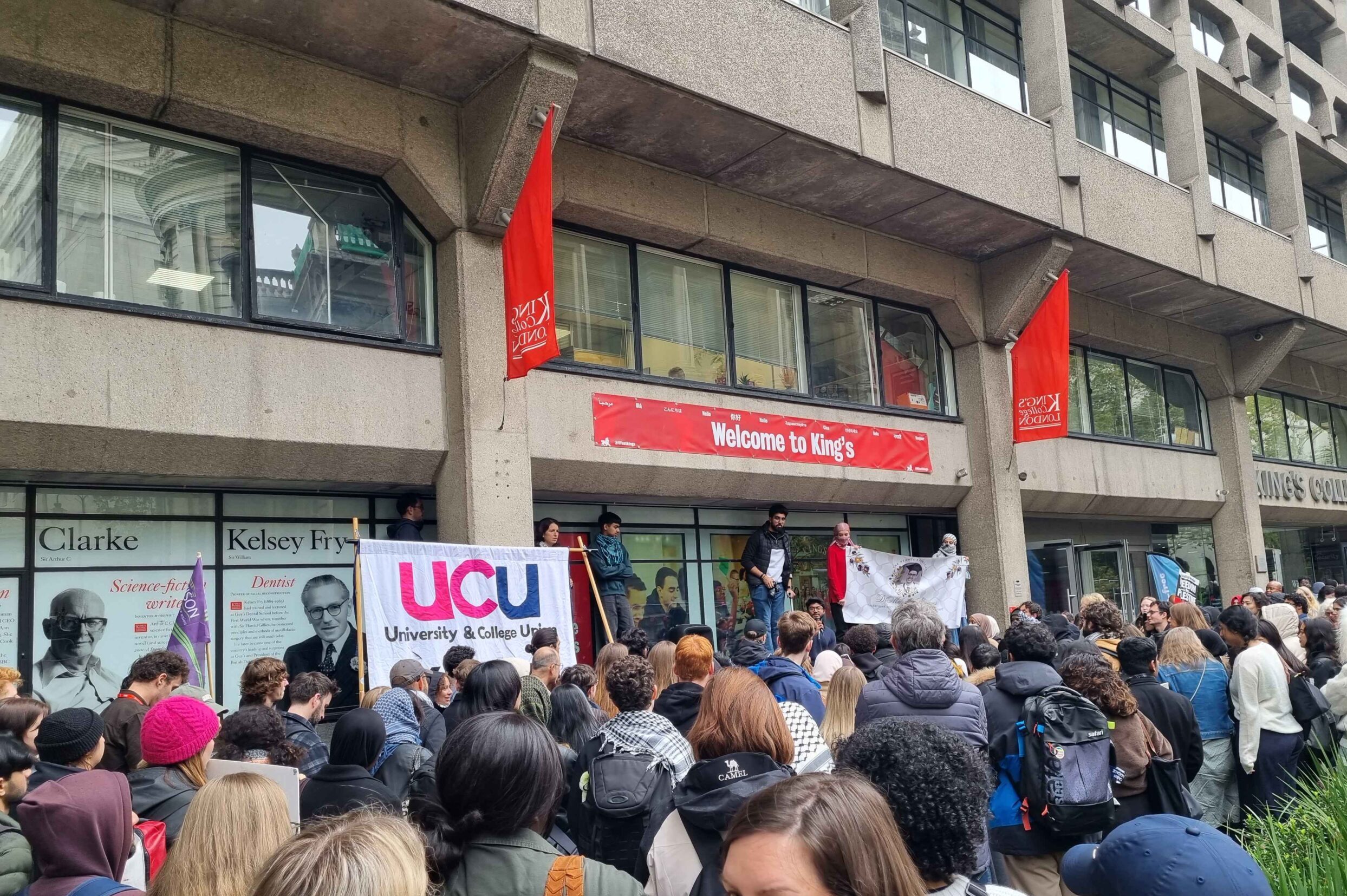
In November, the King’s College London branch of the University and College Union (KCL UCU) opened a formal ballot over a local trade dispute with the University. The union cites “glaring contradictions” in the University’s policy of “values-based impartiality,” a perceived “democratic deficit” in its governance structures, and what it describes as insufficient action to safeguard staff working conditions and academic freedom.
According to KCL UCU, 70.5% of those who voted supported strike action. However, turnout reached 49%, falling one percentage point short of the 50% threshold required to mandate strikes.
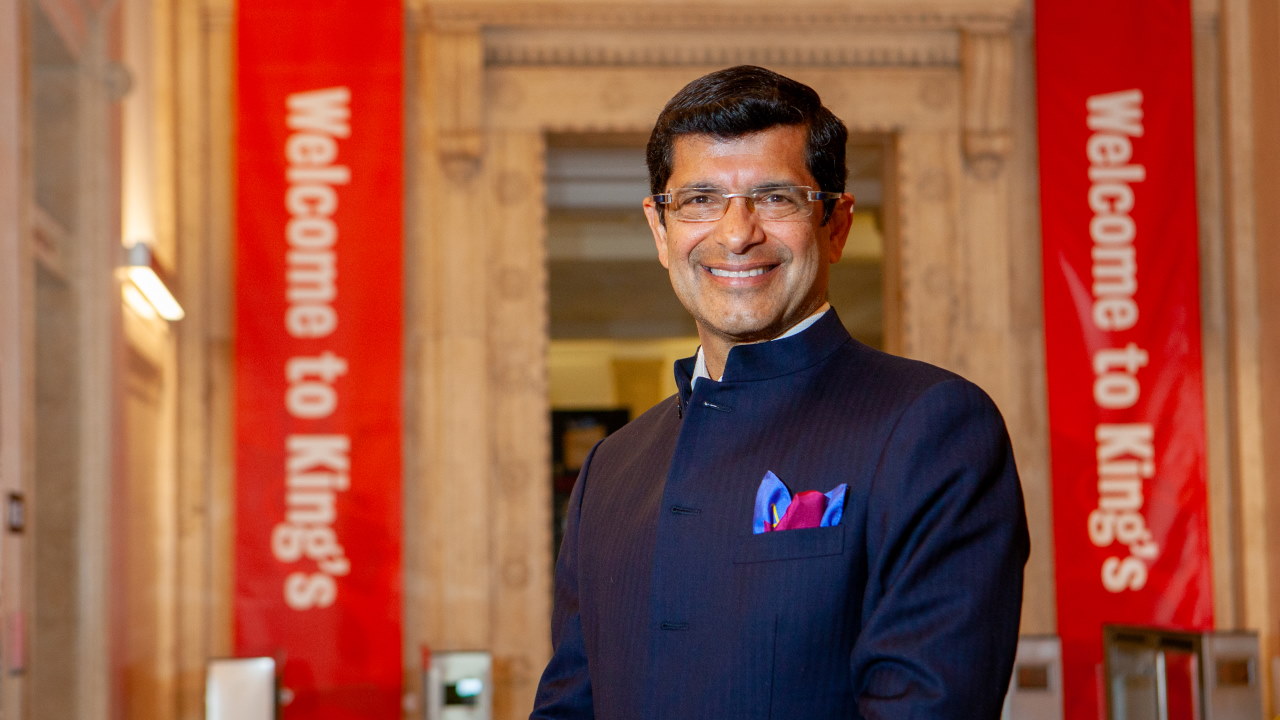
In March 2025, KCL UCU issued a Formal Notification of Trade Dispute to KCL President and Vice-Chancellor, Professor Shitij Kapur, citing what it described as failures to protect staff welfare and safety, shortcomings in complaints processes and inadequate safeguards for academic freedom.
In their trade dispute notice, the union branch required the University to take immediate steps to protect staff targeted for their pro-Palestine positions, publicly reaffirm its commitment to academic freedom and a harassment-free environment, and commission an independent investigation into the mishandling of complaints and broader issues of intimidation and academic freedom.
The trade dispute came as an investigation by the University into the conduct of Palestinian academic Dr Rana Baker, reopened in November 2024, concluded in her favour.
A student in a seminar taught by Dr Baker made an unauthorised recording of a class on post-colonial approaches to Middle East history which included an excerpt from a document produced by Hamas as seminar material, alongside opposing extracts written by important figures of Israeli history including David Ben Gurion, Theodore Herzl and Ze’ev Jabotinsky.
The recording was first shared with the University as the basis for a complaint against Dr Baker. The complaint was dismissed following an investigation, which found in her favour.
The student then shared the recording with The Jewish Chronicle, in a breach of university policy. Following the paper’s publication of an article, King’s reopened its investigation into Dr Baker – a move that has been strongly criticised by KCL UCU, and many academics and students at the University.
The student argued that the use of the extract in the seminar was an example of “indoctrination” and that extracts had been selected to “paint a picture of Israel as being born in original sin”.
However, writing in Roar, Karin Samokovlisky, former president of KCL Israel Society, defended Dr Baker, arguing that “…engaging with content directly from Hamas is crucial”, and adding: “In studying Israel’s history, especially its turbulent nature, is it not as necessary to study the texts that led to its founding as those that stand against it?”
The second investigation also found no wrongdoing on the part of Dr Baker.
In its consultative ballot, KCL UCU lambasted the University’s lack of support for staff, including Dr Baker, referring to “a prolonged campaign of targeted harassment and intimidation against staff, involving the abuse of KCL’s complaints system, doxing of staff and students, unauthorised recordings of teaching shared with right-wing media, targeted harassment and intimidation at rallies, and death threats.”
After negotiations with the University over these demands broke down, KCL UCU first held a consultative ballot, which showed strong support, before proceeding to a formal ballot of members. While the formal ballot was intended either to strengthen the union’s negotiating position or, if necessary, to secure a mandate for industrial action, it ultimately failed to reach the turnout threshold required for immediate strike action.
Demands Presented by the Union
KCL UCU called on King’s to make serious organisational change and take action to protect staff. In addition, the union branch demanded that the University divest its large endowment from companies involved in Israel’s alleged genocide in Gaza and the illegal occupation of the West Bank.
KCL UCU demanded, “A clear public statement reaffirming KCL’s commitment to academic freedom, anti-racism and the protection of its community from intimidation, harassment and discrimination.”
Driven by the lack of support to Dr Baker, the union branch also demanded an independent investigation into potential mishandling of the complaints procedure.
As part of their bid to protect academic free speech, KCL UCU calls for a clause in staff contracts to “allow employees to conscientiously object to participation in any activity connected with the military, the arms trade, fossil fuels and genocide.”
Additionally, KCL UCU calls for divestment from companies which it alleges are “demonstrably enabling the genocide in Gaza and the oppression of the Palestinian people,” as it argues such investments compromise members’ beliefs and academic freedom.
A recent investigation by Roar found that KCL holds investments in ICL Group, a firm associated with the production of white phosphorus munitions for the US government, which has sold white phosphorus munitions to the Israeli military.
The investigation also found continued investment in companies listed by a UN report among those involved in Israel’s illegal occupation of the Palestinian West Bank and East Jerusalem, and Palantir, which has developed AI technology for the Israeli military to identify targets in Gaza.
Of the investigation, a spokesperson for KCL UCU said:
“Roar’s investigation shows that the exclusion of ‘controversial weapons’ does not go far enough in preventing KCL investment in companies implicated in genocide.”
Other demands included a call to address what the union branch described as a “democratic deficit in KCL’s governance structures” by ensuring that at least 50% of King’s Council is elected by staff, a proposal that remains unresolved following a local dispute in 2023.
Notably, the union branch recommended a pause in the implementation of King’s Strategy 2030 to allow for a full consultation with staff that would include commitments to non-compulsory redundancies, as well as improving staff terms and conditions within this strategy.
Unresolved elements of the branch’s 2023 local dispute were also included within the ballot demands, noting that negotiations are “unfinished” around recommendations designed to support fixed-term contracted staff from casualisation and migrant members who the union branch said are offered no real assistance from the University in the face of rising visa fees.
From Negotiations to Impasse
Consultation with management occurred in early October 2025, but did not meet the UCU’s demands. No new policy on safeguarding or a public statement on academic freedom and staff protection was established, and an independent review into the complaints process was refused.
While the union branch recognised that KCL made reasonable adjustments to staff’s ability to conscientiously object to participation with: the military, the arms trade, fossil fuels or genocide when protected beliefs are in play, they opposed including a clause in all employee contracts.
KCL also refused to reopen negotiations on divestment, citing that a decision on the matter had already been made by the King’s Council.
However, this falls short of UCU’s detailed recommendations. Suggestions to reform the King’s Council were also rejected. In the implementation of King’s Strategy 2030, KCL UCU said there was no commitment to pause for consultations with the union branch.
Could Strike Action Still Follow?
According to the branch, the strong vote of support for the ballot strengthens negotiators’ leverage with KCL management, potentially allowing the union to “make tangible gains and reach an agreement that is acceptable to our members,” without requiring strike action.
However, a source with knowledge of earlier negotiations suggested to Roar that the University is unlikely to shift its position, noting that previous discussions on the ballot’s demands have repeatedly stalled, with little substantial movement from management.
As turnout fell just short of the 50% threshold, the union branch cannot mandate strike action without holding a further ballot in legal compliance with the Trade Union Act 2016. However, with turnout at 49%, the additional 1% required may be easily achievable in a second vote.
KCL UCU last undertook industrial action in 2023, including a marking and assessment boycott during a two-year dispute regarding pay rises for the cost-of-living crisis, pension payments, parental leave rights and childcare subsidies.
Roar approached King’s College London, but the University declined to comment.
Roar will continue to report on this story as it develops. Follow updates on our website and Instagram.


Grace Holloway is Roar's editor-in-chief managing the editorial side of our operation. She has gained valuable experience from Bloomberg as well as writing for Breaking Media, the Non-League Paper and Politics UK.