Roar writer Arjan Arenas looks back at “Paris, Texas”, a beloved film about a man haunted by the demons of his past.
Warning: If you haven’t seen “Paris, Texas” (which I highly recommend you do), this article contains spoilers.
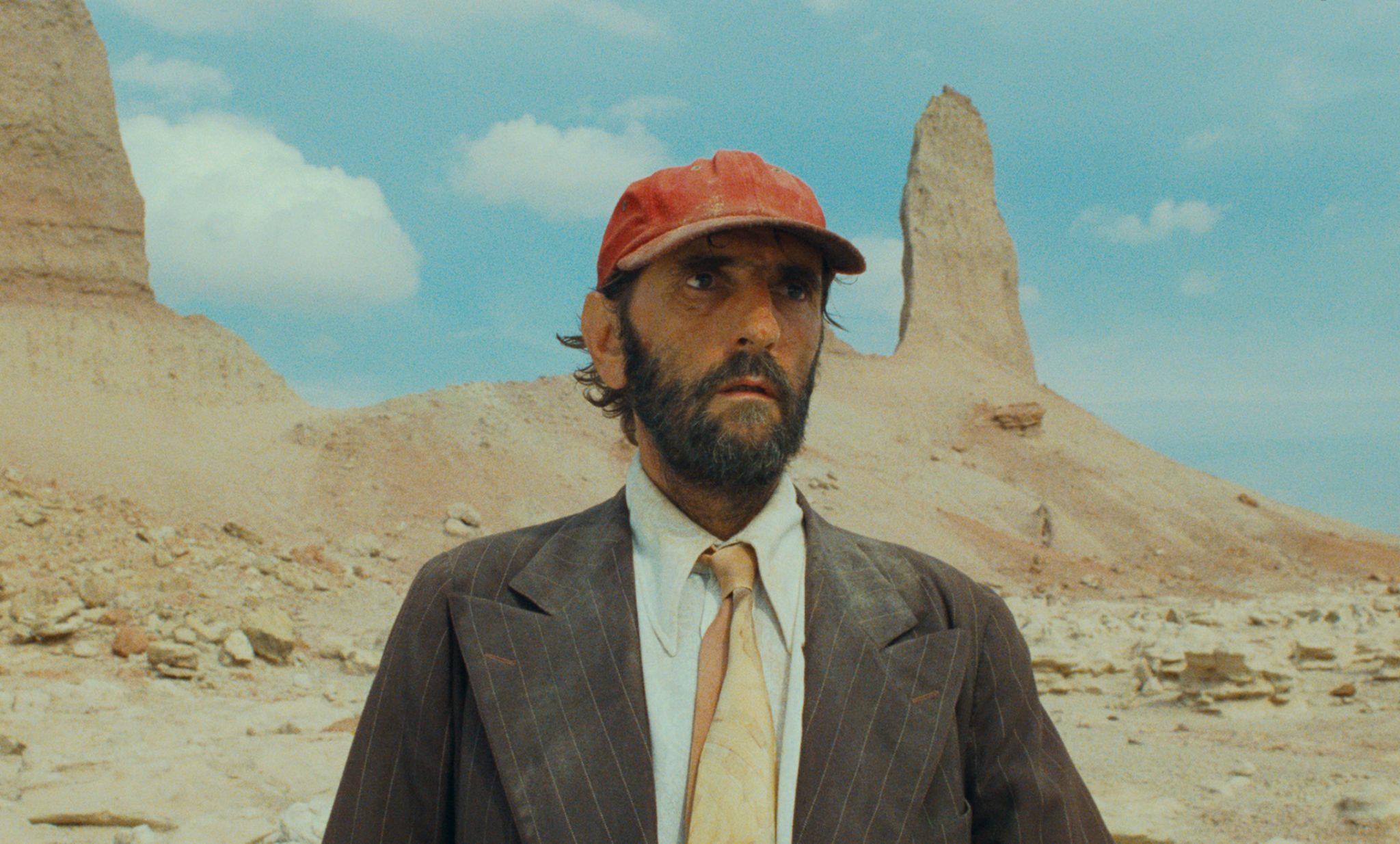
The camera pans over a sweeping landscape of canyons in a desert, under a bright blue sky and a blazing sun. Before long, a man emerges – alone, dishevelled, silently wandering across the barren landscape. This is the striking opening shot of “Paris, Texas”, the classic 1984 drama directed by Wim Wenders, which was recently re-released in cinemas and released on the Curzon streaming platform. A movie beloved by hardcore cinephiles – film critic Mark Kermode lately reminisced that during his undergrad years, the film’s poster adorned every student’s bedroom wall – it had been on my must-watch list for ages.
When the BFI Southbank first announced that they would be screening “Paris, Texas”, I leapt at the chance to finally watch it. I asked some fellow film-lover friends if they fancied joining, but they all proved either unavailable or unenthused. Nevertheless, I was determined to see it, and so I duly made the journey across the river from the Strand campus to see it alone. My expectations were high, and I wasn’t disappointed.
The man from the opening shot is the film’s protagonist, Travis Henderson (played by Harry Dean Stanton). He emerges from the Texas desert after four years as an aimless nomad, haunted by the breakdown of his marriage. Initially mute, Travis is met as he returns from self-imposed exile by his brother, Walt (Dean Stockwell), who brings him back to Los Angeles to reconnect with Travis’s 7-year-old son, Hunter (Hunter Carson, the son of one of the film’s screenwriters). After a rocky start, the father and son form a heartwarming and close bond, but the two feel they can’t be a real family again without Jane (Nastassja Kinski), Travis’s estranged wife and Hunter’s mother, who left the boy in Walt’s care after Travis vanished. Eventually, Travis and Hunter head off on a road trip back to Texas to find Jane.
Why does “Paris, Texas” resonate with viewers nearly forty years on? Other than being simply well-directed by Wenders, well-written by screenwriters Sam Shepard and L. M. Kit Carson, and well-acted by the cast (all of which it is), it’s very subtle and feels unhurriedly naturalistic. For example, the heartfelt conversations between Travis and Hunter about Jane on their journey to Texas are punctuated by the space-obsessed Hunter explaining the Big Bang to his dad. There are also plenty of light-hearted moments as Travis slowly readjusts to normal life, with varying degrees of success.
When “Paris, Texas” was first released and won the prize for best film at Cannes, critics praised its strongly European sensibilities for a movie set and shot in the States. The film conveys a strong sense of being an outsider (appropriately enough, given Travis’s situation) as German director Wenders explores this engagingly bleak slice of Americana, shifting between deserts, pleasantly dreary LA suburbs, and ultimately, the shining, foreboding skyscrapers of Houston, where Travis and Hunter search for Jane. The real stars of the movie are Robby Muller’s phenomenal cinematography, which beautifully captures the soaring backdrops of Texas and California as well as the depths of the characters’ emotions, and Ry Cooder’s hauntingly evocative, guitar-driven score, used sparingly to devastating effect. In a uniformly brilliant cast, Stanton – a veteran character actor in a rare leading role – stands out as Travis, offering a beautifully nuanced portrayal of a man confronting his many demons, and finally finding some solace. As Walt, Stockwell also deserves special mention for doing his utmost in a fairly limited role, perfectly conveying both the frustration of a man trying to reconnect with his brother and his relief when he seems to have succeeded.
There is an underlying sadness throughout “Paris, Texas”. The titular location – an actual town in Texas, where Travis believes he was conceived – represents a hollow fantasy which proves emotionally damaging, as when Travis recalls his father joking that Travis’s mother was from the other Paris, then coming to actually believe this. It also represents Travis’s lost hopes and ideals; we learn that he wanted to buy a plot of land in the town of Paris, where he would blissfully bring up his family, but of course, this was not to be.
The reasons for the failure of Travis’s marriage remain a mystery for much of the film, a grim shadow which hangs over him. However, towards the end, Travis reveals that it was destroyed by several factors, the most important being his own misguided dreams for him and Jane, which evolved into crippling jealousy, then alcoholism. Just as that plot of land in Paris was abandoned, Travis ultimately brings Jane and Hunter back together, then vanishes again from their lives, now secure in his belief that he was the spanner in the works which prevented them from being a happy family. It’s this deeply bittersweet resolution of the film’s central drama that provides the heart and soul of “Paris, Texas”, a sensitive, touching film with an emotional heft that continues to endure among film lovers.
About the author