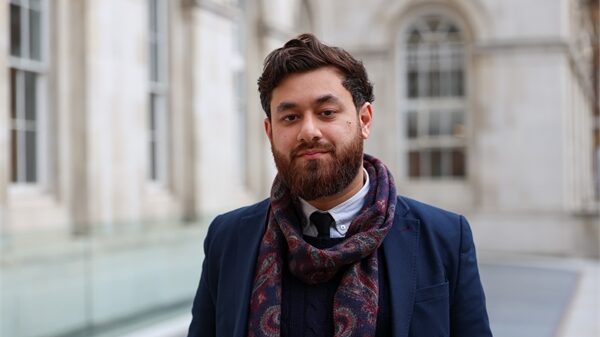
Comment Editor Deborah Solomon problematises the fabrication of an ideal 2016 by the “2026 is the new 2016” social media trend.
For the last few months, the internet, particularly TikTok, has been pre-occupied with the notion of bringing 2016 back. Initially, I thought it was mostly Gen Alpha posting inaccurate TikTok slideshows to the Rio de Janeiro filter of their imagined 2016. However, as I collected anecdotal and introspective evidence for this article, I realised that many of my friends, aged between 9 and 13 in 2016 (and therefore old enough to have a better recollection of 2016), had a hazy and heavily overlapping memory of the mid to late 2010s.
Responding to whether she misses 2016, one of my friends (Nigerian-British, aged 12 in 2016, at KCL) stated that she “honestly doesn’t remember enough of it to miss it”. My flatmates agreed, with one (Indian, 10 in 2016, KCL) noting that Covid “probably messed around” with our “collective memories as a generation” causing “everything before it to blur together”.
This blurring of course, varies in degree for each individual. I remember 2016 quite well and credit that year as being the one where I became more politically aware/concerned, especially during and after—you guessed it—that US election. What a time to be alive. Nearly all of the interviewees noted Trump’s election as the worst thing to happen in 2016 and/or one of the year’s most memorable events.
Understandably, some have cautioned against viewing 2016 with rose-tinted glasses, as 2016 was in many ways the year that helped send us on the sociopolitical road we were already on, just at breakneck speed. Freelance writer Coco Khan comments how that year was the “last year before ‘unprecedented times’” and the “last year of optimism” for everyone, but especially Gen Z, which has endured little else since.
Nevertheless, like most years, 2016 was not all bad. Say what you will about the style or makeup, but for pop culture, it was an iconic moment in time. Perhaps it’s easier for today’s tweens and teenagers to focus on that year’s legendary cultural moments rather than the unpleasant realities and devastating events that 2016, much like any other year, brought with it. As we said of 2020 (which some are already nostalgic for), the teenagers and adults of 2016 seemed to believe that, “2016 will be remembered in the history books as the worst year ever.”
My concern is not that 2016 is being romanticised—that was inevitable. Even this collective psychosis we are currently enduring may someday become trendy and sorely missed. My concern is rather that, if we allow ourselves to be trapped in a halfway fabricated past, we actively prevent ourselves from creating a present that is worth being nostalgic over in the future.
When asked what they miss about 2016, nearly all of the interviewees responded that they miss being younger and how much “easier” being a child was. Life “felt a little lighter” and “I didn’t have to worry about anything” (Ugandan-Danish, 9 in 2016, University of Southern Denmark). Khan, a millenial, stated that, “…people in their mid-20s feeling that their best years are behind them…is very depressing.” And she is not wrong.
If the last decade is going to be any indication, there is no telling how much worse things might become before they (hopefully) begin to improve. Each year seems worse than the last, and each year, we look back at the past wishing we could go back.
As tumultuous as the rest of our lives may well be, we can be certain that nostalgia will be a constant friend, or foe. While it may not do to dwell in the past so much that we forget to properly live in the present, I think we can long for our seemingly simpler childhoods, as long as we remember that things only seemed simpler. As grim as things seem, there will be moments from these “unprecedented times” that we will miss, as we miss our most beloved memories from 2016.
For my interviewees, these favourite memories included: meeting their future best friends for the first time, graduating from primary school whilst wearing braids for the first time, going to the beach, the ice cream truck in the summer, playful social media, family reunion, and summer camp. Some of these memories may have seemed so mundane and normal at the time, but clearly, they left an impression that lasted a decade. Perhaps the lesson to be learned is that 2016 was in fact terrible for many reasons, but we cherish parts of it nonetheless, for better or for worse. If 2026 will almost certainly meet that same fate in a decade, perhaps we should not take it for granted today.
For more comment analysis, click here.