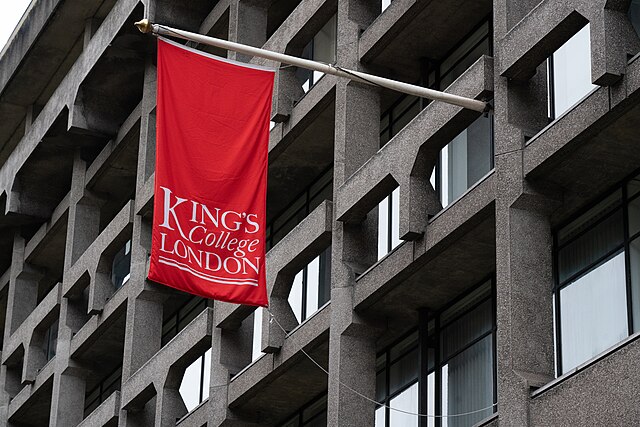
On 29 January, the King’s College London (KCL) set out an outline of goals to be undertaken as part of King’s Strategy 2030, an initiative to adapt and improve in five key aspects over the next five years.
Enhancing Student Success
King’s reiterated its commitment to facilitating student success in and beyond their time at university as competitiveness grows in the job market. King’s Strategy 2030 emphasised “widening participation”, providing “pathways for a diverse and talented student community” and “continuing to ensure fair access to study at King’s and equal chances of success throughout their time” at university.
This will be achieved through the extracurricular initiative King’s Edge which offers personalised career support as well as industry informed training. Alumni are to play a substantial role in the support of students, through mentorships and professional networking events.
Implementing AI Across Student Life
The strategy places emphasis on the implementation of artificial intelligence to enhance student learning experience. While they plan on doing so, they also wish to ensure that “staff and students are confident, creative and capable in their use of AI and digital tools.”
Additionally, the strategy aims to change the way in which assessment processes support learning in a “world where AI disrupts” it. This is further supported by the introduction of the Transforming Assessment for Students at King’s (TASK) initiative. The project is designed to improve how students and staff experience the practice and process of assessment, though the initiative has been widely criticised by students.
The framework aims to ensure that all assessments are fair and supportive of student learning. It also addresses the need for ongoing assessment validity, while allowing for adaptation in a rapidly evolving technological landscape.
Increase Sustainable Philanthropic Action
Increasing philanthropic income through fundraising campaigns sits at the heart of this strategy. Through these financial donations, King’s plans to “enhance education, advance research” and contribute to the financial sustainability of the university and its ambitious long-term goals. This is further justified by the developing financial pressures for UK universities.
Further Investments in Infrastructure and Study Spaces
King’s furthers its financial investments in campus facilities. This includes new spaces for “interdisciplinary science, expanded health facilities and the opening of key buildings within the Campus Futures programme.” This aims to create a more welcoming environment.
There is also a push for less reliance on external venues. This includes developing the current laboratories, investing in “new and flexible teaching spaces,” and expanding informal study areas so that students and staff “have the facilities they need to succeed.”
Strengthen Collaboration with Other Partners and Social Partnerships
King’s aims to increase its impact on students and research by strengthening partnerships across healthcare, education, government and industry.
Existing collaborations, such as King’s Health Partners, the Francis Crick Institute, the SC1 London Innovation District, and international campuses in China and Indonesia, show how joint working expands opportunities.
There are plans to support local communities by widening access for students and improving wellbeing. King’s aims to contribute to economic growth in London and the South East through skills and research, which will enhance clinical and research excellence, building strategic global partnerships that extend learning opportunities and achieve wider social contribution.