Staff Writer Kaya Newhagen explores the societal and political costs of pay-to-access journalism.
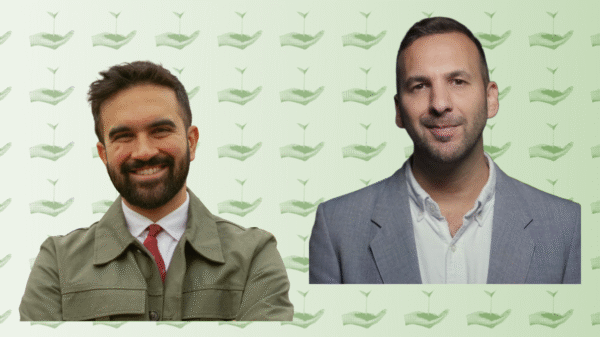
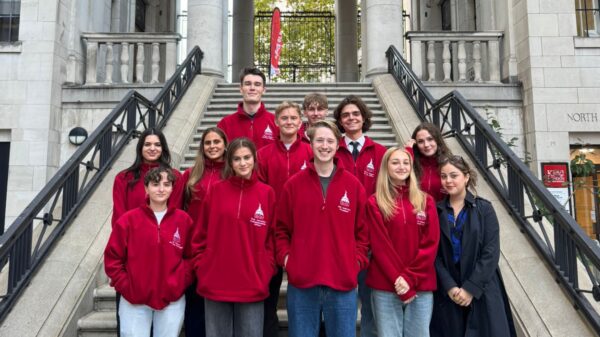
A few weeks ago, I attended a talk on Women and the Power of Global Communication with Iona Allan, hosted by the Women in Politics Society at King’s College London. Allan, a KCL alum, is now assistant editor at The World Today at Chatham House. With experience at the UN and NATO in communication-focused roles, she sits at the intersection of journalism, diplomacy and public messaging.
During the event, the idea of journalism as a “dying industry” surfaced. It’s a familiar and contested claim. Speaking with Allan one-on-one afterwards, our conversation shifted toward the future of journalism, the consequences of digitalisation, and how the strategies media organisations adopt for survival often end up harming us, the readers.
That conversation lingered with me, pushing me to examine more critically whether journalism is truly “dying” or simply transforming. Journalism has always been a volatile industry, often mirroring the state of the economy. But recent decades have seen a sharper decline. Newsroom employment in the US has fallen by 26% since 2008, and newsrooms, which once embodied the core of media companies, now make up a minority of staff. Yet the industry is not necessarily shrinking in total. Podcasting, newsletters and digital storytelling have exploded. The real question is whether these growing sectors can compensate for the collapse of cable, radio and print.
Many well-known outlets have not escaped the downturn: BBC, NPR and The Washington Post all announced major layoffs in the past year. In the US alone, over 3,000 journalism jobs were cut in 2023. The country has lost two-thirds of its newspaper-related positions since 2005. Most of these losses come from local and rural outlets, creating vast “news deserts.” Losing local papers may seem trivial, but they provide diverse perspectives, community accountability and basic informational choice. These are all necessary for democratic values, media literacy, and balanced agenda-setting.
Even metro newsrooms feel the pressure. Journalism is now one of the most regretted university majors in the US, and students are understandably discouraged from entering an industry described as collapsing. Each new technological disruption: the internet, social media, now AI, has been predicted to kill journalism. And yet, people still read articles, consume news, and turn to trusted outlets. So how bad is the situation, really?
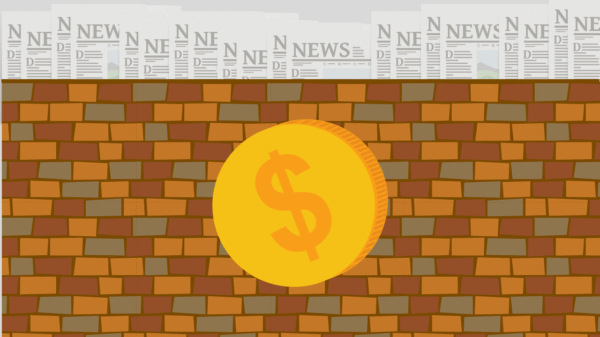
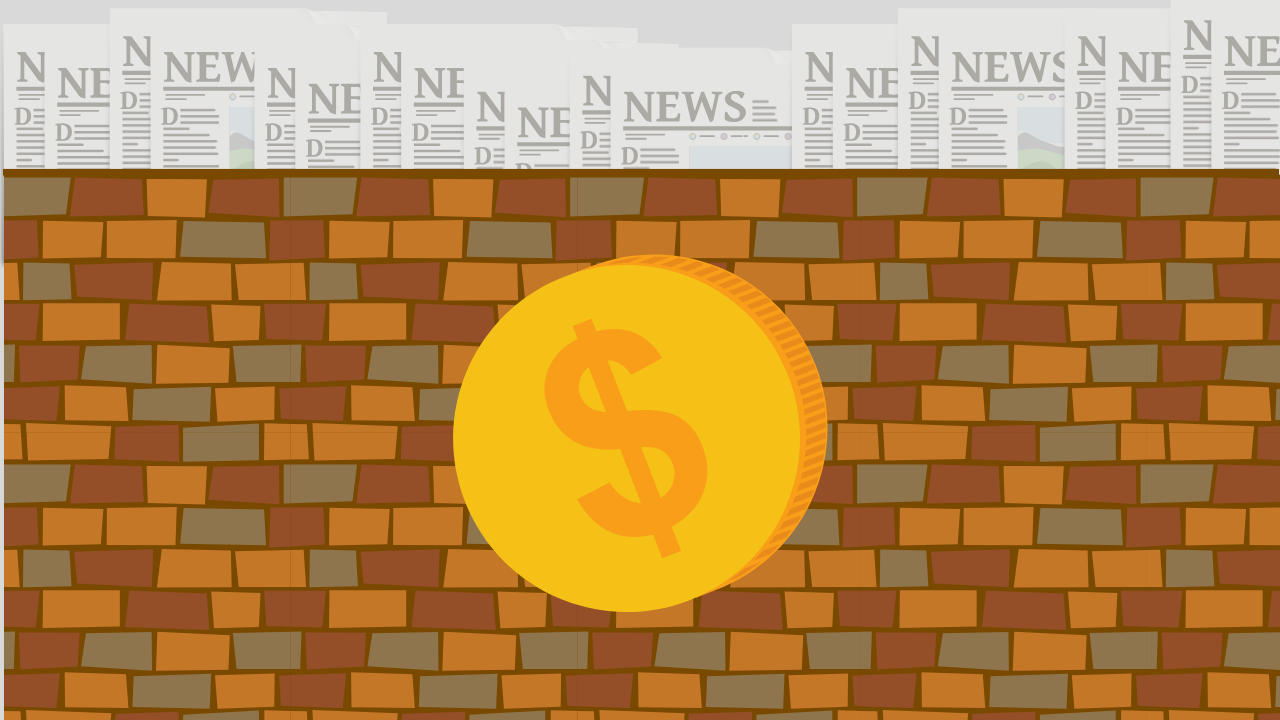
One answer lies in the subscription-based model that dominates the industry. Paywalls have been widely adopted. The Wall Street Journal introduced the first one in 1997 and other outlets quickly followed suit. Today, only about 6% of major outlets use a fully free-access model. Paywalls intended to compensate for the collapse of print advertising succeeded in many ways, but they also transformed journalism’s relationship to its audience.
Instead of information functioning as a public good, it now operates as a private service. With physical newspapers, there was a chance of encountering different viewpoints at a café, dentist’s office, or workplace. With digital subscriptions, readers are far less likely to maintain multiple sources. This reinforces confirmation bias: outlets learn what subscribers click on and tailor content accordingly. Echo chambers then reinforce themselves.
This trend appears across countries. Global media distrust is rising. Readers increasingly choose a single trusted outlet and rarely deviate. Journalism itself is not the cause of this distrust, it is the symptom. Economic volatility, shrinking budgets, and the chase for clicks in an attention-driven economy push outlets toward provocation and hyper-specific targeting. Social media platforms reward engagement, not nuance. This pushes news organisations to prioritise high-reaction content over depth; not out of ideology, but out of necessity.
The result is a growing inequality of access to trustworthy information. Allan herself stated “people are accessing only the information they can access”. Those who can afford subscriptions choose outlets like The Economist, The New York Times or The Financial Times. Those who cannot pay rely on social media platforms, TikTok, Reddit, Twitter/X, or the small handful of remaining free outlets. When accurate information becomes a luxury good, misinformation fills the gap. Algorithms are built for virality, not truth; cheaper access tends to mean lower accuracy. This is not the fault of journalists but of market conditions.
Is the situation just this dire in the US? The UK offers an interesting contrast. Despite political pressure, the BBC remains a free-access public broadcaster. The BBC has certainly faced its fair share of backlash – perhaps now more than ever – but it does create a baseline of information available to all. The Guardian remains one of the few major outlets not behind a paywall and produces internationally recognised journalism. Even outlets like The Economist impose ownership structures that limit shareholder voting majorities to preserve editorial independence. Britain still faces high levels of media distrust, but free-access options prevent the extreme information inequality seen elsewhere.
The US, however, has no equivalent to the BBC. NPR and PBS are underfunded, reaching only limited audiences. Many local papers have been gutted by hedge funds. The country has one of the lowest media trust rankings among Western democracies. Ownership structures shape coverage: Jeff Bezos’ acquisition of The Washington Post raised questions about editorial independence, while partisan outlets dominate online spaces. With no robust public-service alternative, Americans are left navigating a heavily paywalled and highly polarised landscape.
So, rather than journalism dying, perhaps the traditional form is simply fading, replaced by a new, uneven ecosystem, creating a split between those who can pay for quality information and those who cannot. That is the deeper democratic concern. “Do you meet people where the conversation is being had or do you keep doing what you’ve been doing well?” Allan asked. It seems to be less a question to be solved for the future, but one whose consequences have already been inherited.
For more political analysis, click here.