
Staff Writer Salomé West analyses how Italy’s Femicide proposition falls short of protecting women and ensuring their safety.
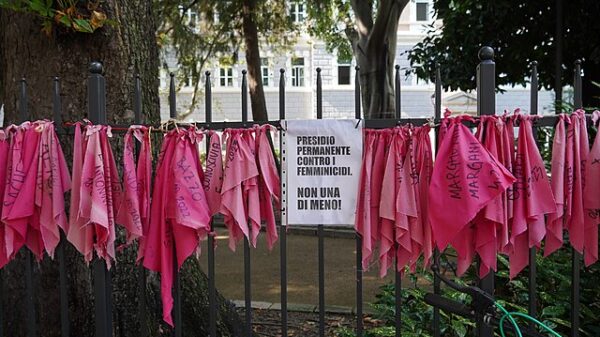
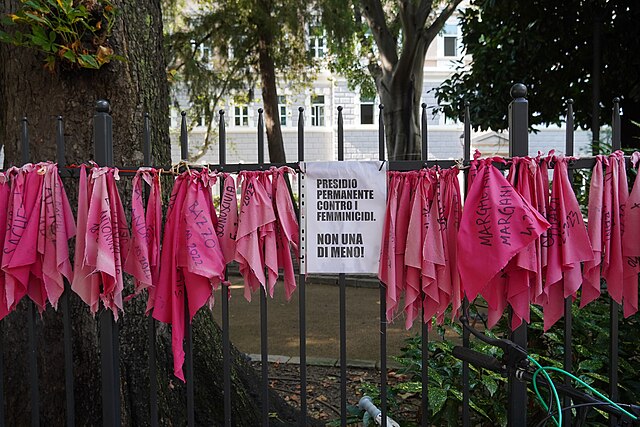
In late November of 2023, 22-year-old university student Giulia Cecchettin was stabbed to death by her ex boyfriend, Filippo Turetta. Her body was found wrapped in bags and later recovered from Lake Barcis. In December of that year, Giulia’s family spoke out about the tragedy, urging loved ones and strangers alike to protest against the worldwide phenomenon of gender-based violence. Floral tributes were tied to the railings behind her, and a torchlight procession attended by thousands of well wishers were under way. But Elena, Giulia’s sister, was not looking for sympathy. “Don’t hold a minute of silence for Giulia – burn everything,” she said. “We need a cultural revolution to ensure that Giulia’s case is the last.”
Among the thousands of people present at Giulia’s funeral, there was also a young woman from Vicenza, eight months pregnant. She declared “My baby girl will be named Giulia,” paying homage to the twenty-two-year-old killed by her ex-boyfriend. Giulia’s tragic narrative ignited a catalyst for national outrage and an urge for transformation, evident on an individual and legislative scale.
Turetta exercised nothing but a symptom of patriarchal convention, misogynistic learnt behaviours passed down through generations of traditional men and ‘boys will be boys’ culture. Many in Italy and surrounding countries protested against these violent crimes, supported by Prime Minister Giorgia Meloni. “We all wished Giulia was still alive, but sadly our worst fears came true. Killed. I feel great anger and sadness,” she declared after the body of Cecchettin was found. CCTV footage emerged a few days later showing Turetta beating his former partner in a car park close to her house in Vigonovo, near Venice – according to the investigating judge. Elena Cecchettin, played an important role in initiating the protests and she also underlined that Filippo Turetta is not a monster rather, he is a “healthy son of patriarchy.”
Italy’s lower house on the 25th November voted unanimously to approve a law that introduces the crime of femicide to be punished with life in prison. The law won bipartisan support from the center-right majority and the center-left opposition in the final vote in the Lower Chamber, passing with 237 votes in favour. Large crowds gathered in Milan and Naples, and there was gridlock in the centre of the capital, Rome: one of dozens events. In a symbolic move, lawmakers approved the bill on the International Day for the Elimination of Violence against Women, a day designated by the UN General Assembly. The brutal killing of Giulia marked the 105th femicide of 2023 in Italy. The 2025 Femicide brief, from the United Nations Office on Drugs and Crime (UNODC) and UN Women, confirms that femicide continues to take the lives of tens of thousands of women and girls worldwide, with no sign of real progress. 83,000 women and girls were killed intentionally last year. 60 per cent – or 50,000 women and girls – were killed at the hands of intimate partners or family members. This means one woman or girl is killed by a partner or family member almost every 10 minutes. In contrast, just 11 per cent of male homicides were perpetrated by intimate partners or family members during the same year.
Introduced by Prime Minister Giorgia Meloni, the law was backed by her own hard-right government as well as opposition MPs. Many wore red ribbons or red jackets to remember the victims of violence. The Violence Against Women in the EU Briefing claims that one-third of women in the EU are affected by violence. This takes many forms, including psychological violence, harassment, physical and sexual violence, female genital mutilation (FGM), forced marriage, forced abortion and sterilisation, sexual harassment, and ‘honour’ crimes. However, this definition of violence does not preclude a more concrete analysis of specific forms and causes of violence against women, thus making it hard to legislate on.
Judge Paola Di Nicola, as a forefront of Italy’s call to action, co-drafted the Femicide law, helping to review 211 recent female homicide cases to identify patterns and features before finalising the framework. Italy is now one of 3 EU countries that have instilled femicide within their criminal codes. Nicola emphasised its significance: “Femicide will now be recorded, studied, and understood in its real context. This law ensures that such crimes are recognized for what they truly are—rooted in power and control, not in romantic obsession or jealousy.”
Should Italy receive a standing ovation for its recent progressiveness? Could this femicide legislation be just a bandaid solution for a deeply ingrained societal dysfunction rooted in misogyny? Hundreds and thousands of violent gendered crimes go unreported or deemed a falsity, due to a lack of adequate evidence. Only 13.9% of women reported the incident or the threat of violence to the police. However, more than half of the women (63.7%) shared the episode with a friend or a close person, highlighting a mistrust with government officials.
In October 2025, Swedish girl Meya Åberg was assaulted and raped by African migrant Yazied Mohamed while on her way home from work at McDonald’s in Skellefteå when she was only 16 years old. Despite the migrant being sentenced to prison, he will escape deportation, with four judges out of a five-judge panel citing that the rape did “not last long enough” to merit deportation. Societal backlash, protesting and cyber-outrage surged as a result of the normalisation of rape culture, with Donald Trump Jr, the son of US President Donald Trump, asking, “What the hell is going on in this world?” Fortunately, beyond femicide, the Italian government has also supported other legislation to protect women, like anti-stalking laws. The government also significantly increased funding for existing anti-violence facilities and the creation of new ones.
The femicide legality passed with roaring success in Italy’s recent jurisdiction; potentially bringing at least some relief to the victim’s family. Will femicide legislation cultivate in lower rates of violence against women, even worldwide? We must wake up every day with fresh eyes demanding change: teaching, befriending and raising the young generation of men to reject misogyny, in every form it arises. In the words of Giulia’s father, Gino Cecchettin: “When schools are silent, social media speaks, toxic models speak, and the silence of adults speaks. We have a duty to provide young people with tools to orient themselves, not just knowledge to study.”