Staff writer Alexandra Green immerses herself in the new student exhibition which highlights the importance of a dying club culture in the UK
On the 18th of December 2025, ‘Echoes of the Dancefloor’, a student-led exhibition on nightlife culture, took place at the Science Gallery on Guy’s Campus as part of the CMCI Winter Festival, combining live music, exhibition stands, and guest talks at a time when nightlife spaces across the UK are facing increasing pressure.
Organised by Grace Smith, a third-year BA Culture, Media, and the Creative Industries student, the exhibition framed nightlife as more than entertainment, positioning it as a space shaped by student life, queer communities, and grassroots culture. Smith invited visitors to reflect on “what the dancefloor means to them” at a moment when rising costs, venue closures, and increased regulation are reshaping nightlife across the UK. The exhibition highlighted how club culture has historically offered spaces of connection, expression, and safety — particularly for queer people — while also functioning as a key social and creative outlet for young adults.
Bringing the Club to the Gallery
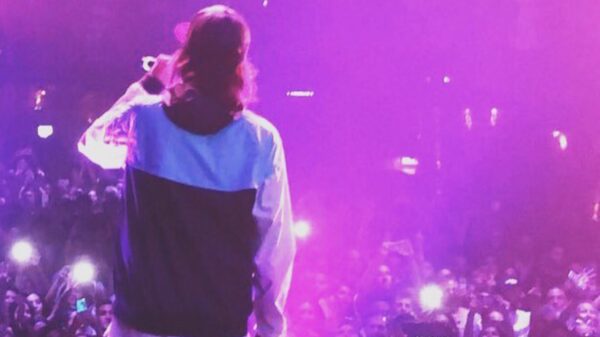
A live DJ set immediately drew visitors into the rhythms and atmosphere of club culture. Lights shifted as garage music echoed through the room, visitors swaying or nodding along as they moved between the exhibition stands. Smith said the aim was to “bring the energy of the dancefloor” into the gallery. While the intensity of a club couldn’t be fully replicated, she noted that the live elements and carefully curated tracks — described as “the soundscape of London club culture” — helped recreate some of that energy while “balancing” it with exhibition space.
Mapping the History of the Dancefloor
Around the gallery, visitors drifted between stands, tracing the evolution of music, dance and nightlife across cultures and decades. One stand explored music and movement through history, beginning with the Chinese Lion Dance in 206 BC and moving through to breakdancing in 1970s USA, placing contemporary dance culture within a long global and historical context.
Nearby, another stand drew attention to the rise of daytime raves in 1980s Britain, particularly within British South Asian communities. Framed as a response to the ‘moral vigilance of immigrant parents’, daytime raves were presented as a way for young people to participate in club culture while navigating intergenerational expectations. QR codes conveniently linked visitors to curated Spotify playlists, extending the exhibition beyond the physical space and into everyday listening.

Elsewhere, visitors gathered around a stand titled “The Dancefloor”, which examined the legacy of illegal raves in the 1990s. Through posters and archival references, the display highlighted how underground movements shaped the freedoms, aesthetics, and communal ethos now associated with nightlife culture.
Audience participation played a central role throughout the exhibition. In a club-style bathroom installation, colourful lighting washed over mirrors covered in neon pen, where visitors were invited to write what the dancefloor meant to them. The familiar setting echoed real club bathrooms — often spaces of confession — turning the installation into a shared archive of memory and emotion.
Ballroom culture and drag history were also foregrounded. A stand dedicated to drag balls, voguing, and ballroom culture sat alongside a gown designed by William F. Henderson, whose work has featured on RuPaul’s Drag Race and has played a significant role in shaping drag aesthetics and queer nightlife. The dark green gown, trimmed with polka dot fur, was corseted through the body with long flared sleeves and a trailing tail that pooled along the floor, drawing attention to the theatricality and craft at the heart of ballroom culture. Together, the display emphasised nightlife as a space for self-expression, performance and community-building.

A Culture Under Threat
The exhibition’s political focus became more explicit in a stand titled ‘Echoes of the Dancefloor’, which paid tribute to now closed venues including Shoreditch’s Plastic People. Beside it, another display looked ahead to 2030, warning that club culture could disappear entirely. Statistics presented claimed that one in three clubs have closed since 2020, raising questions about whether UK nightlife can survive in the current economic climate. A petition invited visitors to take action in defence of nightlife spaces.

Two guest talks expanded on these themes. Dr Jamie Hakim, Senior Lecturer at King’s College London in Cultural and Media Studies, spoke about the historical importance of queer nightlife, describing it as a space of resistance and creativity with a major influence on global culture. Drawing on research into London’s queer nightlife, Hakim addressed the sharp decline in LGBTQ+ venues, and also noted that contemporary queer events have become increasingly political, from explicit trans inclusivity to care teams focused on safety and wellbeing.
Elie Low, a manager at United Talent Agency, offered an industry perspective shaped by his experience as a DJ and festival organiser. Low reflected on nightlife as a space where people from different backgrounds intersect through shared experience. He also addressed the pressures facing nightlife today, including rising costs, changing audience expectations, and the disappearance of smaller, community-based events. Despite shifting trends, Low emphasised that the core of nightlife remains unchanged: creating spaces where people can connect and feel part of something larger than themselves.
Rather than solely leaning into nostalgia, ‘Echoes of the Dancefloor’ positioned nightlife as something living and increasingly under threat. By combining history, industry insight, and audience participation, the exhibition made a clear case for why nightlife matters and needs defending.
If you would like to sign the petition, please click here.