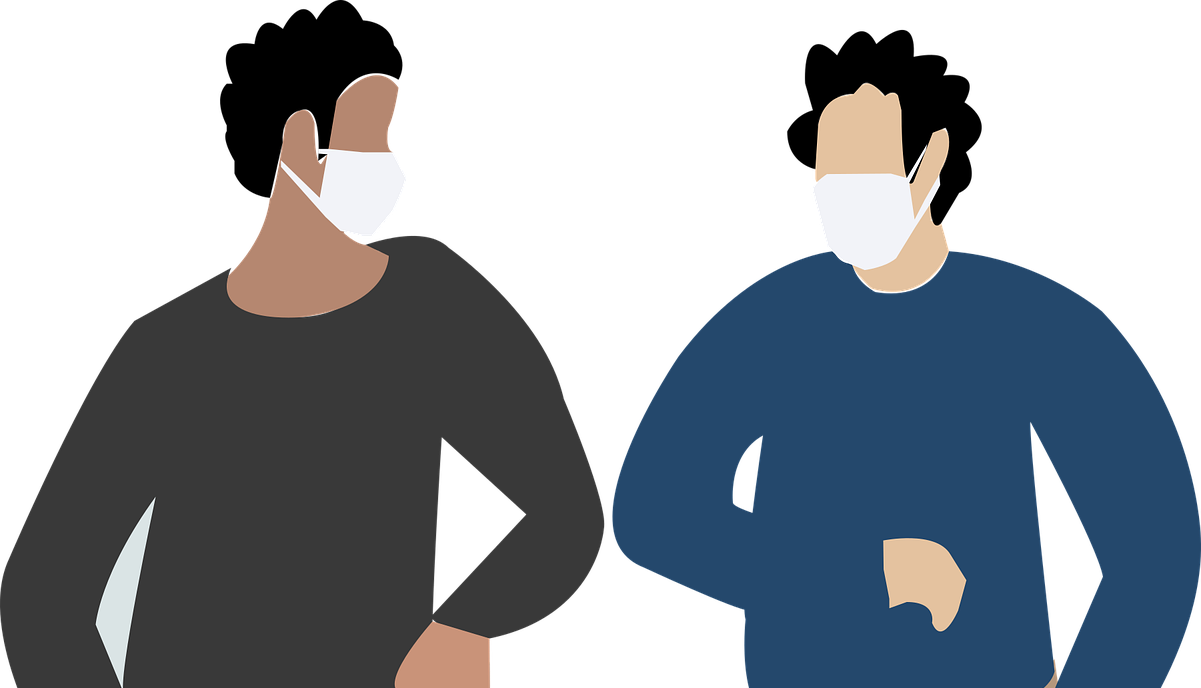
Roar writer Bébhinn Cogan on how the pandemic has changed our relationships with each other.
Last April, my father started a weekly video call with two of his friends. By the third week, two more mutual friends were added to the call list. And by the summer, a large group of friends, family, neighbours had joined in, many of whom were previously strangers to each other. This call served an almost ritualistic function, giving the group a sense of routine and a regular point of “outside” contact. And so, friendship, solidarity, and yes, love in the time of corona emerged.Â
New normal?
Many relationships, whether romantic or platonic, have had to make the move online, redefining what it means to be intimate. In fact, the nature of corona-era relationships has already been captured on-screen in the cringe-worthy television series, Love in the Time of Corona (2020). Is this, to use a belaboured and hackneyed term, the ‘new normal’ of relationships, and what does it mean?Â
Loneliness
According to a study carried out by Dr Michelle Lim and her colleagues (2020), one in two Australians and two in three Americans and British people reported feeling lonely during the first lockdown. This is no wonder, as the pandemic required us to shrink our social networks and limit our contacts. How can relationships blossom when meeting up with friends or going on a first date is discouraged or even illegal? Indeed, conflict and antagonism have arisen in some relationships as friends struggle to see eye-to-eye on whether to bend the rules and break restrictions in order to meet.Â
Some have managed to leverage their existing relationships and move them online, even strengthening their connections through regular video calls or voice messages. “Because the majority of social interaction occurred online,†Lim notes, “it meant that socialising with people who live locally was just as easy as socialising with people who live on the other side of the world.†For those ex-patriots living abroad, more frequent group-calls with hometown friends are very welcome.Â
High stakes
Others, unfortunately, have struggled to maintain relationships while relying solely on technology to mediate. In addition, micro-interactions with people in our university or local community have also largely been lost, as it is nearly impossible to facilitate the casual post-lecture gossip and joke online. These tertiary relationships with classmates and co-workers and general extra-peripheral contact is a significant loss for many. Journalist Rebecca Watson posits that the pandemic has ‘upped the stakes’ for relationships. What might once have been only a fracture becomes a break without the buffering effect of physical closeness.Â
Together Apart
However, all is not lost. There have been many heartwarming cases of social solidarity and kindness with people shopping for elderly neighbours, hosting outdoor bingo or quizzes, and singing for their block or housing estate. Others have set up book clubs, coffee mornings, and “When Harry Met Sally” style movie-watching online. Those on the hunt for a romantic partner have had to think up creative date ideas; socially distanced walks, phone calls, etc. For some, the enforced distance has compelled people to draw their friends virtually closer, refuting the assumption that a pre-requisite for emotional intimacy is liminal space or physical proximity.Â
Undoubtedly, when it is safe to be together again, we will indeed come together. It is human nature to revert to our social groups. Will my father continue his weekly video calls with his new community, or will the ritual simply become a fond memory from a tough time? Certainly, this Valentine’s Day it is heartening to know that love does persist, and in some cases thrive, in the time of corona.Â
About the author